
Kitchen Layout Ideas for Every Space and Lifestyle

By Nicholas McDonald

Discover which kitchen layout suits your room size, lifestyle, and space. Learn about layouts, the work triangle, zoning tips, and common mistakes to avoid.

Contents

1. Why Kitchen Layout Matters

2. Start With Your Kitchen Layout and Space

3. Choose a Kitchen Layout That Fits Your Lifestyle

4. Kitchen Layout Basics: Work Triangle and Zones

5. Match Layouts to Common Room Types

6. Kitchen Layouts for Small Kitchens

7. Galley Kitchen Layout Ideas

8. Shaped Kitchen Layouts Explained

9. Kitchen Layouts With an Island

10. Kitchen Layout Design Mistakes to Avoid

11. How to Choose the Best Kitchen Layout

12. Conclusion: Your Ideal Kitchen Layout
1. Why Kitchen Layout Matters

Kitchen design often starts with the fun bits; like the cabinets, colours, worktops you simply can’t stop admiring.

But long before any of that, the kitchen layout quietly gets to work.

If the layout is wrong, even the most beautiful kitchen can feel awkward to use. 

If it’s right, everything flows more easily. Cooking feels smoother. Moving around feels natural.

And everyday moments, like making a quick cup of tea or cooking for friends, feel far less chaotic.

Your kitchen layout is more than how the space looks. It’s about flow, function, and how well the room fits around your real life.

Whether you cook every night, juggle family routines, or enjoy lingering at the island with a glass of wine, the right kitchen layout makes daily life feel simpler and more enjoyable.

Let’s walk through the layouts that actually work, how to choose between them, and how to find the one that feels right for your space.

2. Start With Your Kitchen Layout and Space

Before choosing a kitchen layout, it’s worth taking a step back and looking at the room itself.

The size, shape, and fixed features of your kitchen will influence what layouts will feel comfortable and which ones might feel forced.

Here’s how different room sizes typically guide layout choices.

Small or narrow kitchens

In smaller or narrower spaces, layouts that keep everything close together tend to work best.

Single-wall and galley kitchen layouts are often the most practical, as they make efficient use of limited space and keep everyday tasks within easy reach.

Medium-sized kitchens

Medium-sized kitchens offer a little more flexibility.

L-shaped and compact U-shaped kitchen layouts usually provide a good balance of storage, prep space, and room to move without the kitchen feeling crowded.
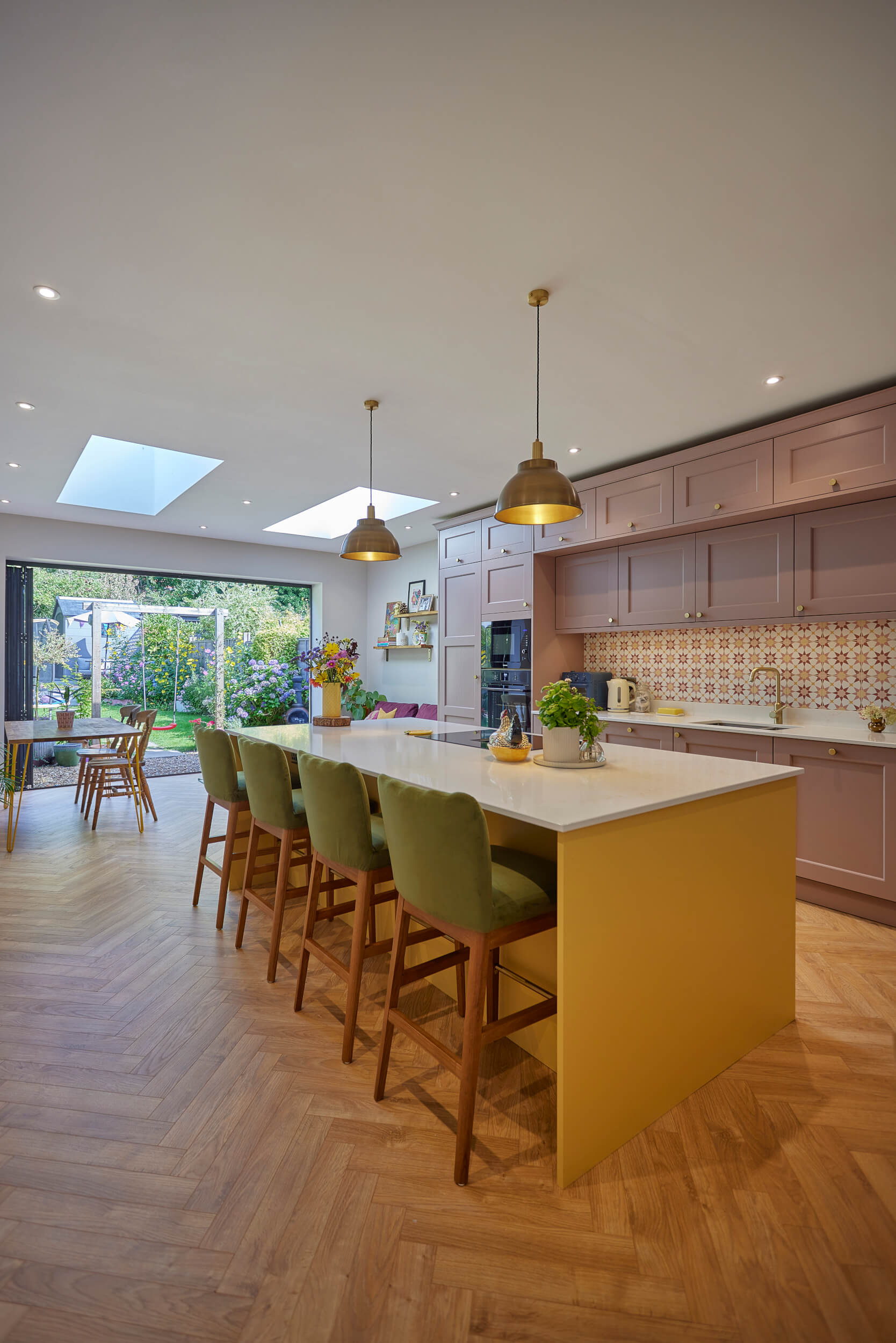
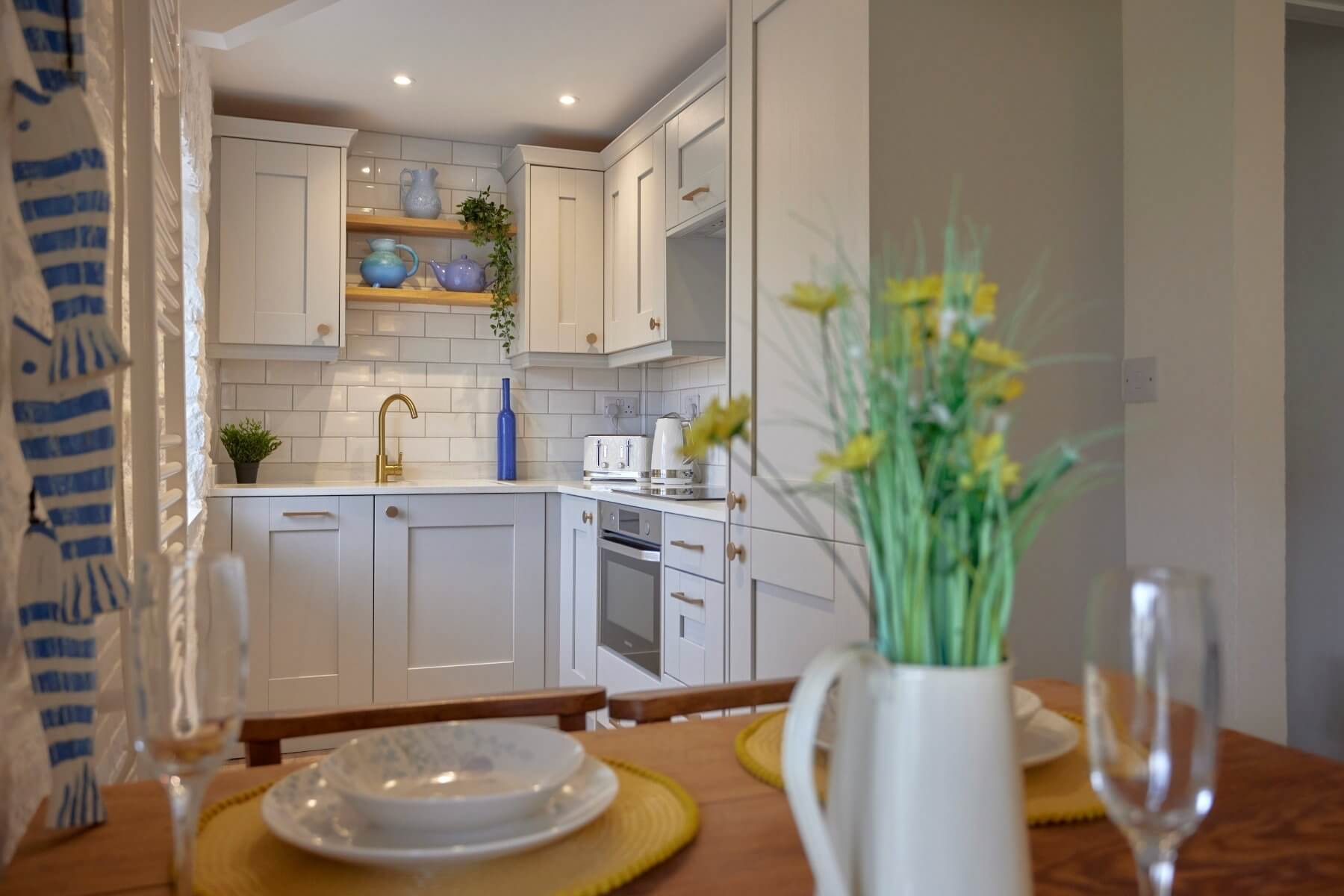
Jenson in Doll and Bespoke F&B Sudbury Yellow

Large or open-plan kitchens

Larger or open-plan spaces allow for more expansive layouts.

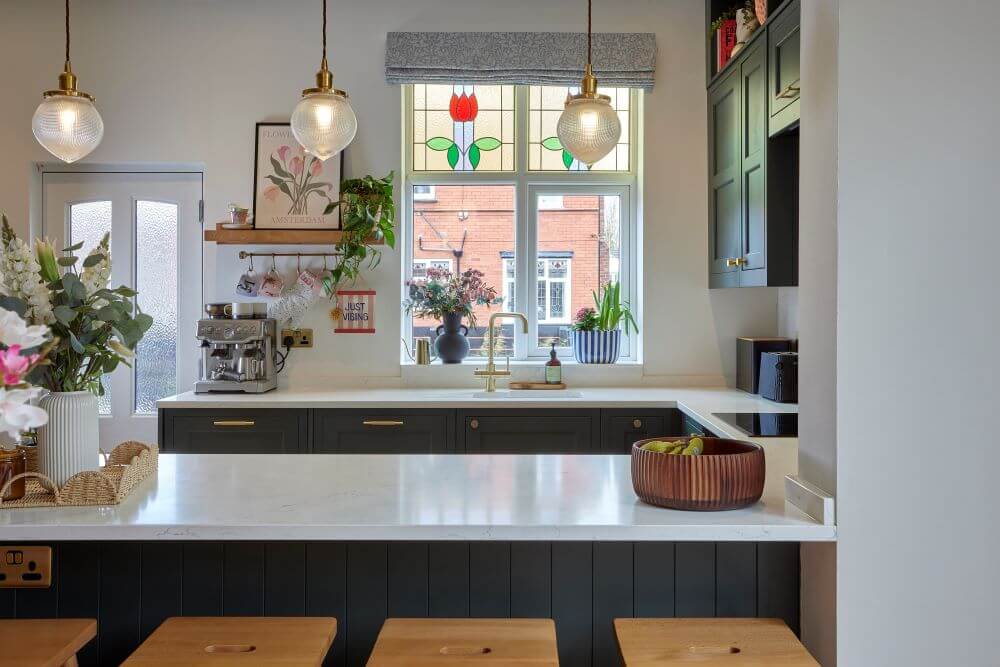
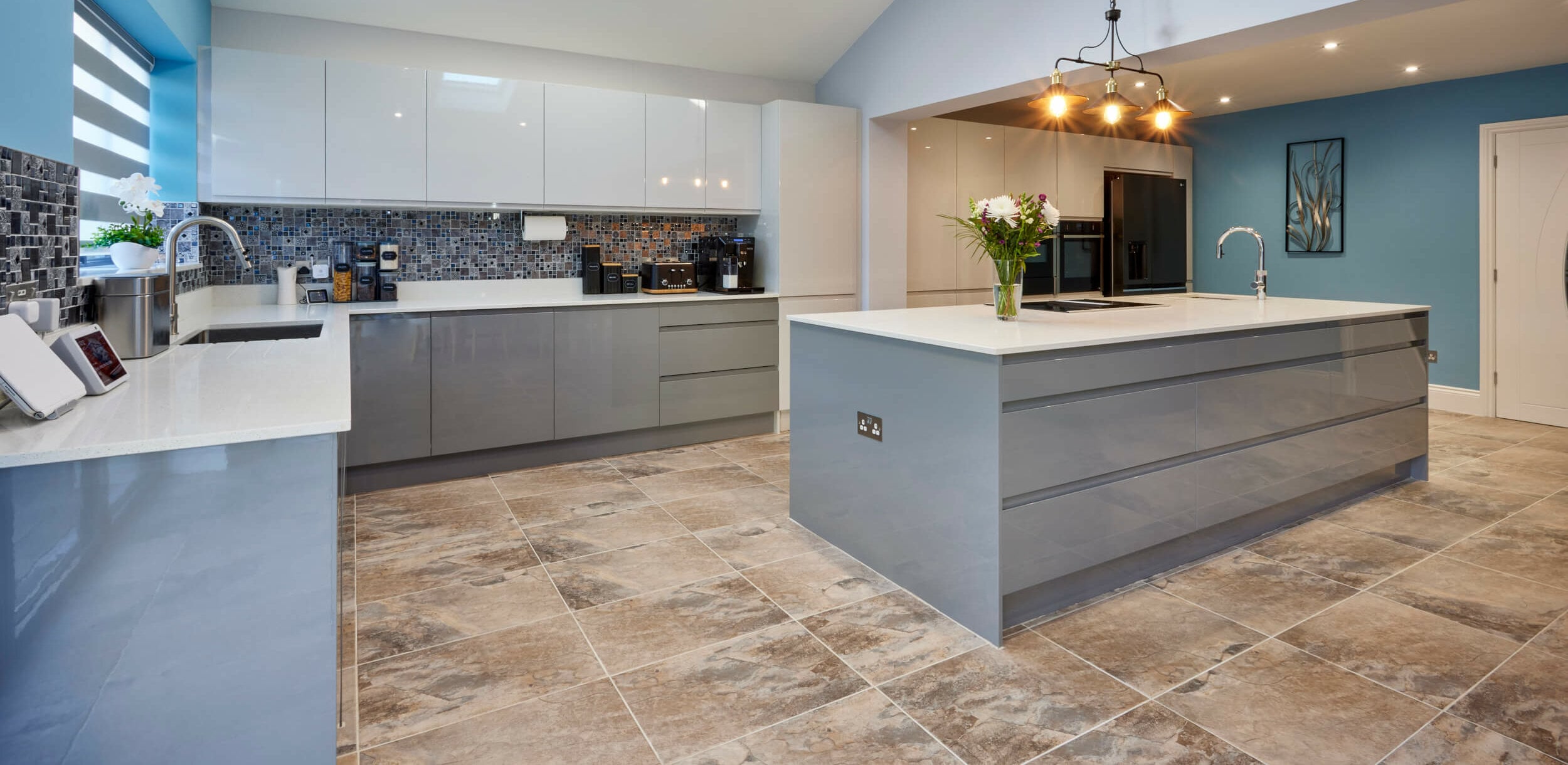
U-shaped kitchen layouts with an island, or kitchen layouts with island seating, help define the cooking area while keeping the space social and connected.

Fixed features to consider

Doors, windows, radiators, and structural walls often determine what can and can’t move.

Working with these elements rather than against them usually leads to a more comfortable and practical kitchen layout.
3. Choose a Kitchen Layout That Fits Your Lifestyle

A kitchen layout should support how you live day to day, not just how the space looks when it’s perfectly tidy.

Thinking about who uses the kitchen, when they use it, and how busy it gets will help you choose a layout that feels right long after installation day.

Here’s how different lifestyles can influence layout choices.

If you love cooking

If cooking is a regular part of your routine, uninterrupted worktop space and a smooth route between the hob, sink, and fridge are essential.

Layouts that keep everything within easy reach make cooking feel calmer and less tiring.

If your kitchen is a family hub

In busy households, layouts that allow more than one person to move around comfortably work best.

U-shaped or L-shaped kitchen layouts with a peninsula or island help manage traffic while keeping the kitchen functional.

If you enjoy entertaining

For those who love hosting, a kitchen layout with island seating or a peninsula creates a natural place for guests to gather.

This allows people to chat and perch nearby without standing exactly where you need to be. Everyone stays involved, and no one blocks the fridge.

4. Kitchen Layout Basics: Work Triangle and Zones

Most well-planned kitchen layouts are built around a few simple principles that make everyday tasks easier.

Two of the most important are the work triangle and zoning.

The work triangle

The work triangle focuses on the relationship between the hob, sink, and fridge.

These should be close enough that moving between them feels easy, but not so close that the kitchen feels cramped. Ideally, the triangle should avoid crossing main walkways where people regularly pass through.

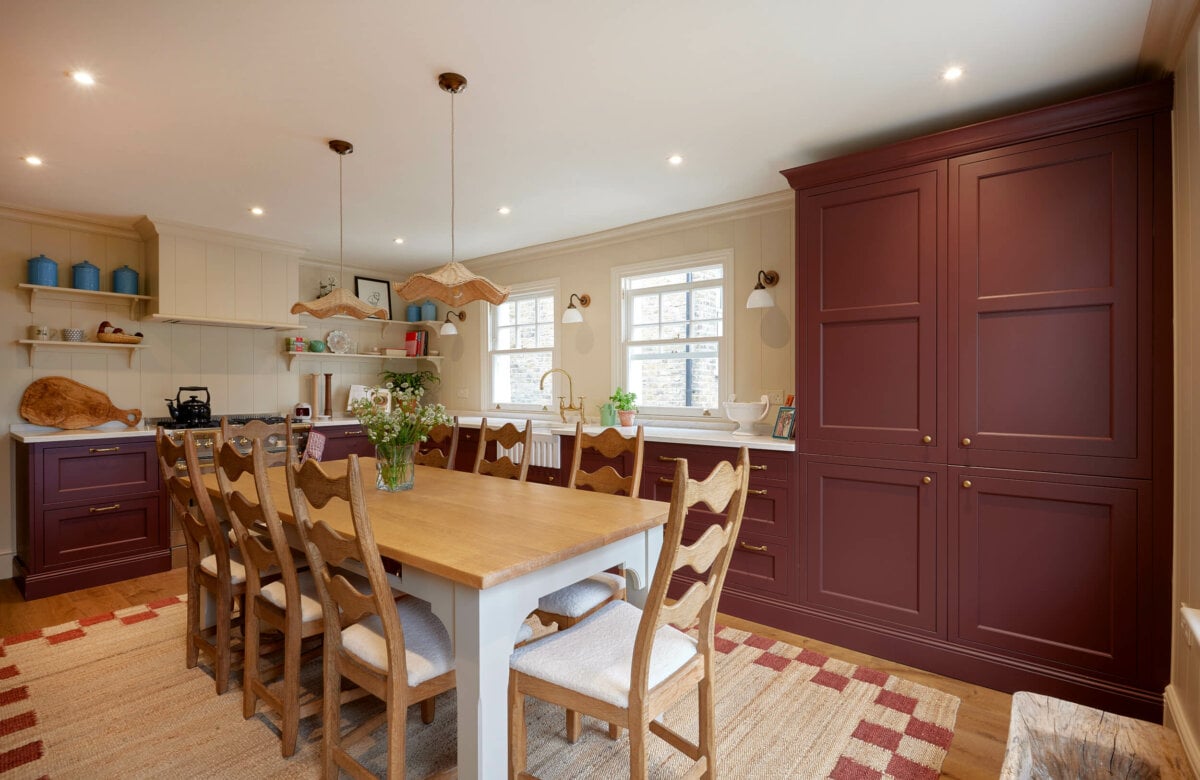
Purple Kitchen

Kitchen zoning

Beyond the triangle, zoning helps the kitchen feel organised and intuitive.

Most successful kitchen layouts include:

– A prep zone near the sink

– A cooking zone around the hob and ovens

– A cleaning zone with the sink and dishwasher

– A storage zone with the fridge and pantry

– A social or coffee zone if space allows

When zones are planned logically, the kitchen feels calmer to use. You spend less time walking back and forth, and more time actually enjoying the space.
5. Match Layouts to Common Room Types

Choosing a kitchen layout becomes much easier when you look at how different layouts naturally suit different room shapes and sizes. 

Some layouts thrive in compact spaces, while others need a little more breathing room to work comfortably.

Here’s what to consider for different kitchen types

Single-wall kitchen

Best suited to very small or studio spaces, single-wall kitchens keep everything in one line

They are simple, compact, and cost-effective, but offer limited worktop space and storage and can feel less social.

Galley (double) kitchen

Ideal for narrow rooms and small to medium-sized kitchens, galley layouts are highly efficient, with everything within easy reach.

They can, however, feel tight, so it’s important to avoid doors or walkways cutting through the space.

L-shaped kitchen

Well suited to small through to large rooms, especially open-plan layouts, L-shaped kitchens are flexible and adaptable.

They work particularly well if you’re planning to add a dining area or an island, but overly long runs can increase walking distance.

U-shaped kitchen

A strong option for medium to large rooms and busy family kitchens, U-shaped layouts provide excellent storage and a compact working triangle.

They can feel enclosed if overfilled, so it’s best to avoid adding an island unless space allows.

Island kitchen

Best for larger or open-plan spaces, island layouts add valuable prep space, storage, and seating, making them a natural social hub.

They do require generous clearance on all sides to keep movement comfortable.

Peninsula (G-shaped) kitchen

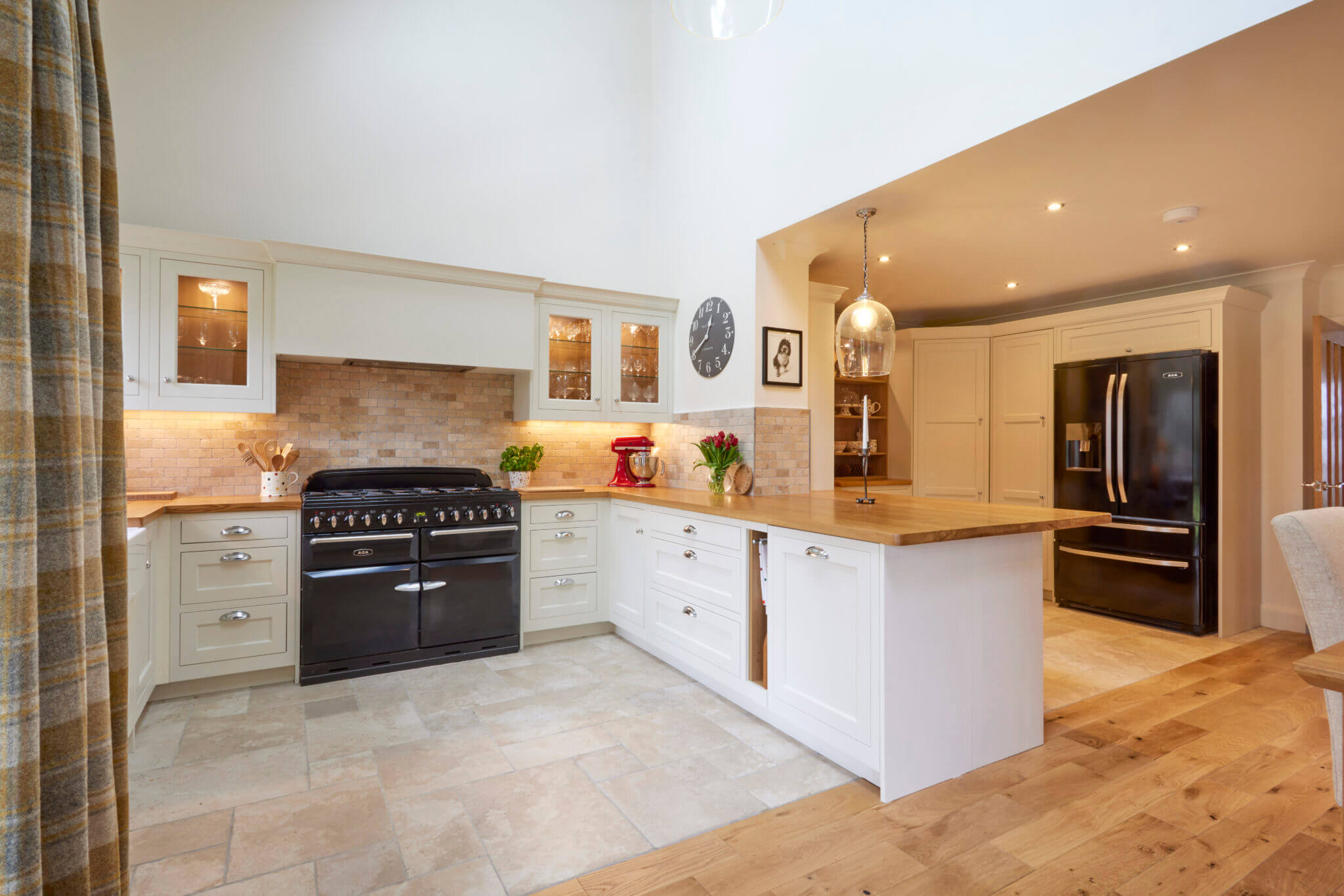
Ideal for medium to large, semi-open rooms, peninsula kitchens offer an island-style feel where space is tighter.

They work well as a room divider, but narrow openings can disrupt flow if not carefully planned.

6. Kitchen Layouts for Small Kitchens

Small kitchens benefit most from layouts that prioritise efficiency and ease of movement.
The aim is to make the space feel calm and practical, rather than trying to squeeze in every possible feature.

Here’s how different layouts work in smaller kitchens.

Single-wall kitchen layout

Best suited to very small kitchens and studio spaces, single-wall layouts keep everything along one wall.

They are simple and space-saving, helping the room feel more open. Storage and worktop space are limited, but clever cabinetry and integrated appliances can make a big difference.
Galley kitchen layout

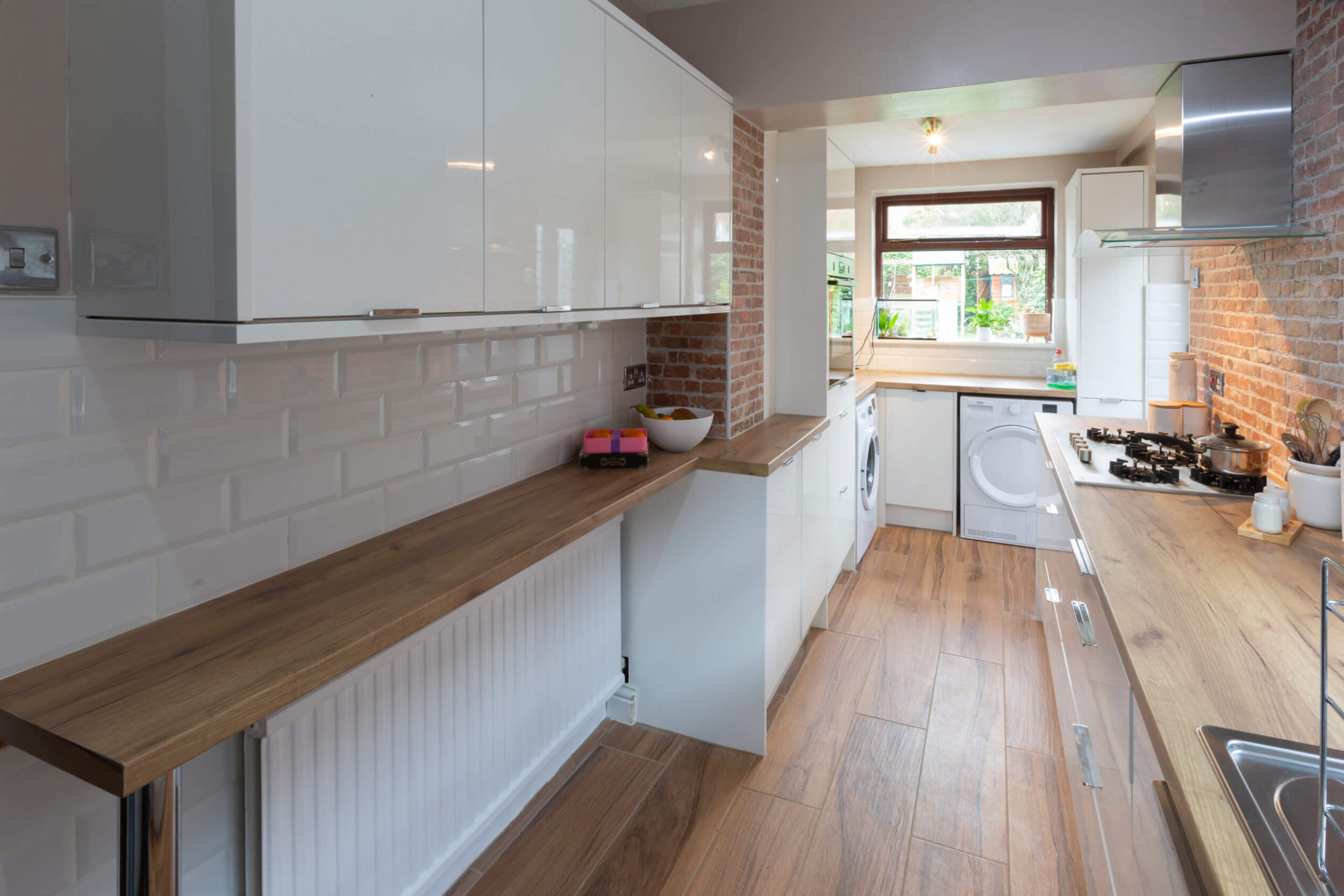
A strong option for small kitchens with enough width for two runs, galley layouts keep everything within easy reach.

They are highly efficient for cooking, but it’s important to allow enough clearance between runs so movement doesn’t feel cramped.

L-shaped kitchen layout

L-shaped layouts can work well in small kitchens when planned carefully.

They offer more worktop and storage than a single wall while keeping part of the room open for light or dining. Long runs should be avoided to prevent the layout feeling stretched.
7. Galley Kitchen Layout Ideas

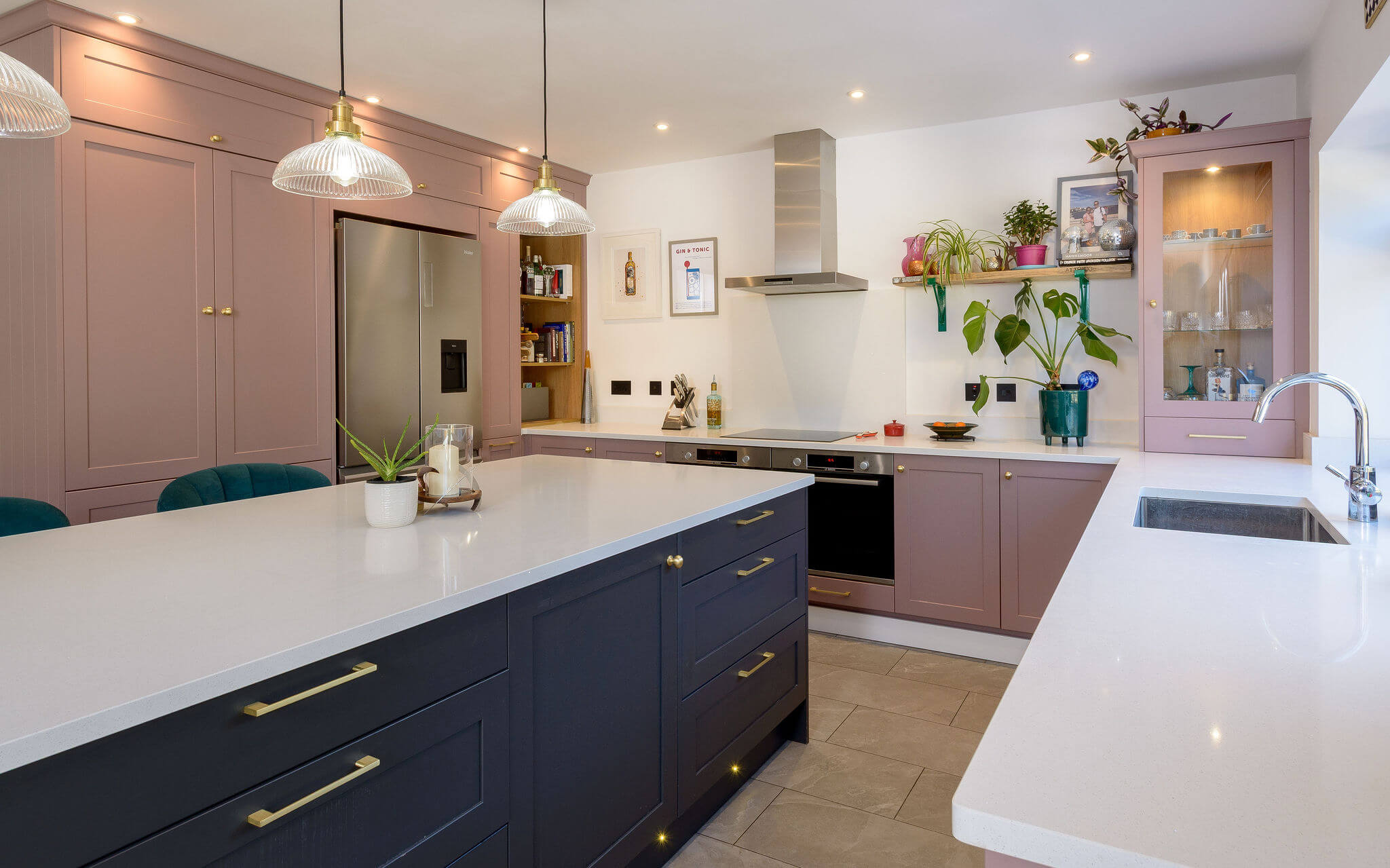
Galley kitchens are often overlooked, but they are one of the most efficient kitchen layouts available.

They work particularly well in narrow rooms where other layouts simply don’t fit comfortably.

Why galley kitchens work

With worktops and appliances facing each other, movement is kept to a minimum. Everything you need is close at hand, making cooking feel quick and straightforward.

What to watch out for

Clearance is essential in a galley kitchen layout. There should be enough space for doors and drawers to open fully and for people to pass comfortably.

If possible, avoid doors at both ends of the kitchen, as this can turn the space into a thoroughfare rather than a working kitchen.

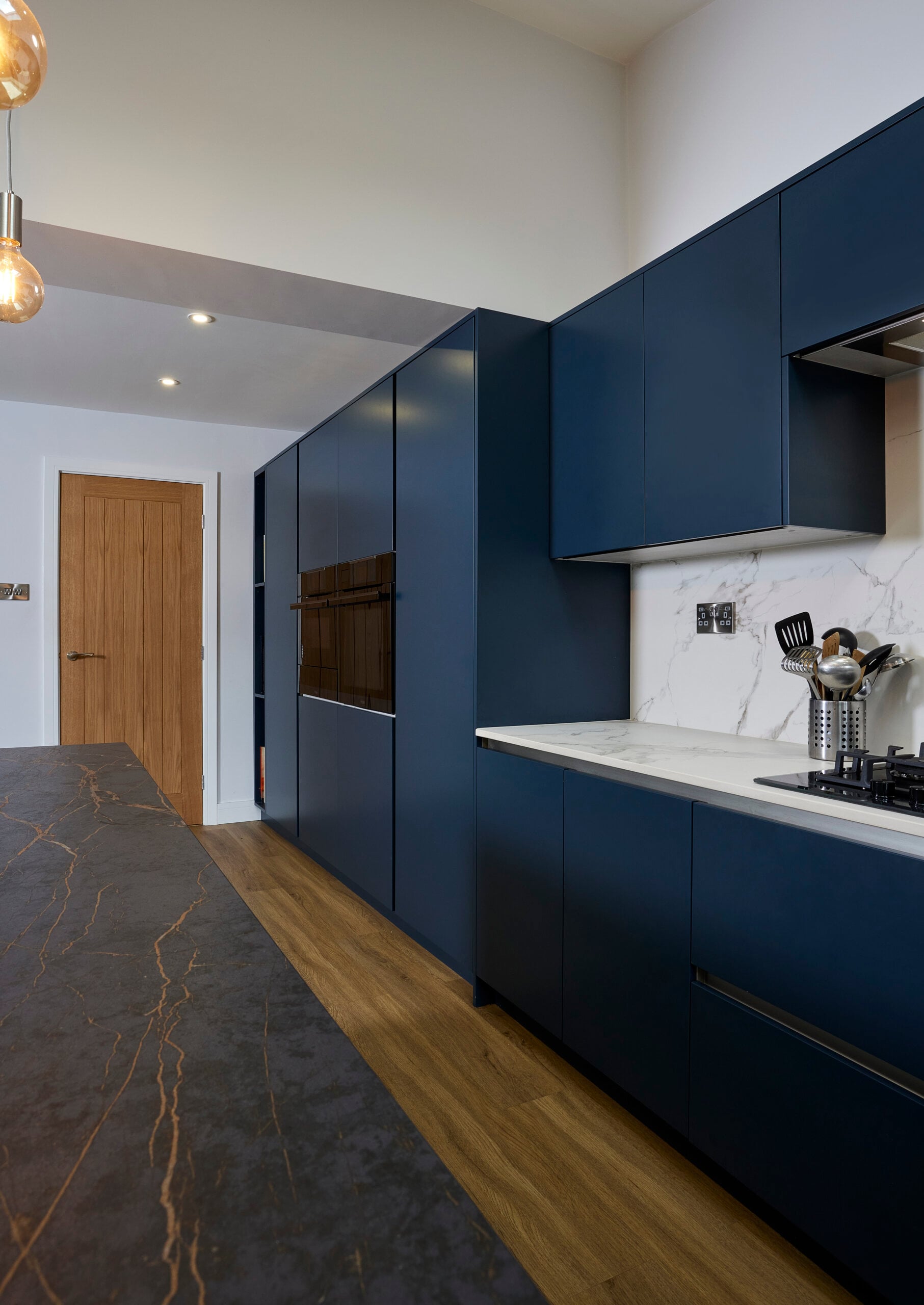
Vard in Doll and Onyx

8. Shaped Kitchen Layouts Explained

Shaped kitchen layouts are popular because they adapt well to a wide range of room sizes and layouts.

Each shape offers different benefits depending on how open or enclosed you want the kitchen to feel.

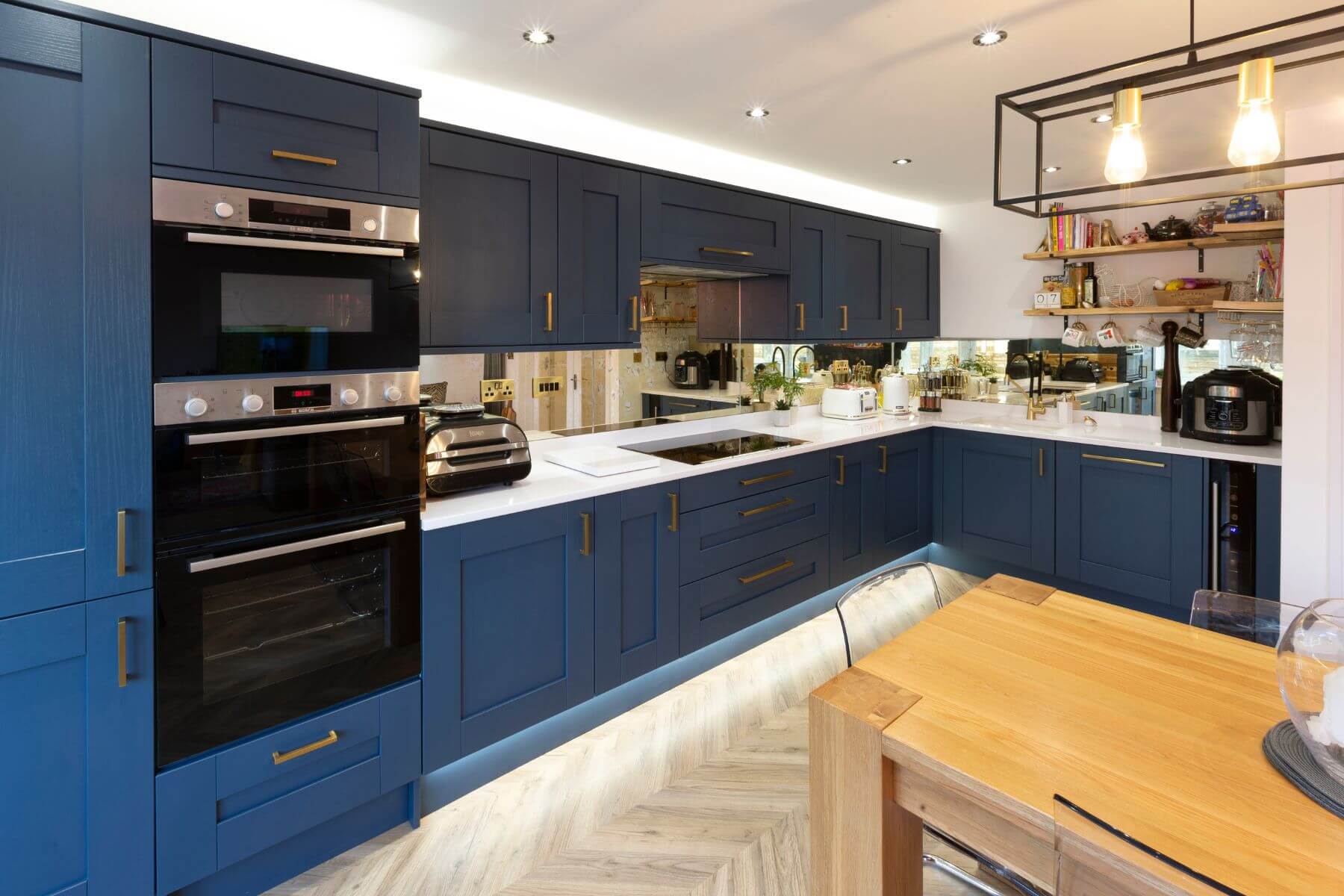
L-shaped kitchen layout

Suitable for small through to large rooms, L-shaped kitchens are flexible and versatile.

They work well in open-plan spaces and allow room for dining or an island if space permits. Overly long runs can increase walking distance, so balance is key.
U-shaped kitchen layout

Best suited to medium to large kitchens, U-shaped layouts offer excellent storage and a compact work triangle.

They are ideal for busy households, but can feel enclosed if overcrowded. Adding an island should only be considered if the room is generous in size.

G-shaped or peninsula kitchen layout

Peninsula layouts suit semi-open spaces where a full island may not fit.

They provide additional worktop space and help define zones, but openings should be wide enough to maintain good flow through the kitchen.
9. Kitchen Layouts With an Island

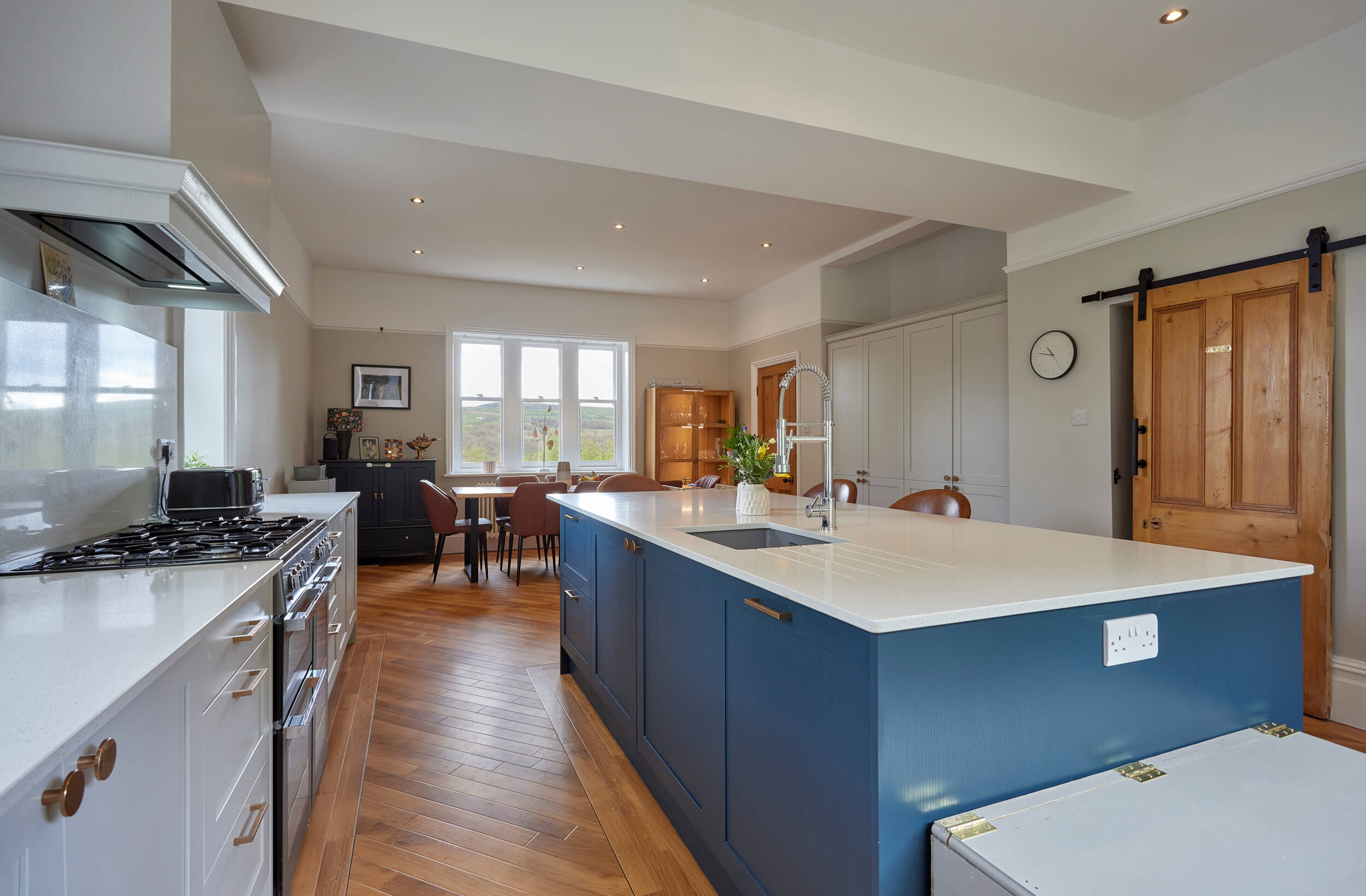
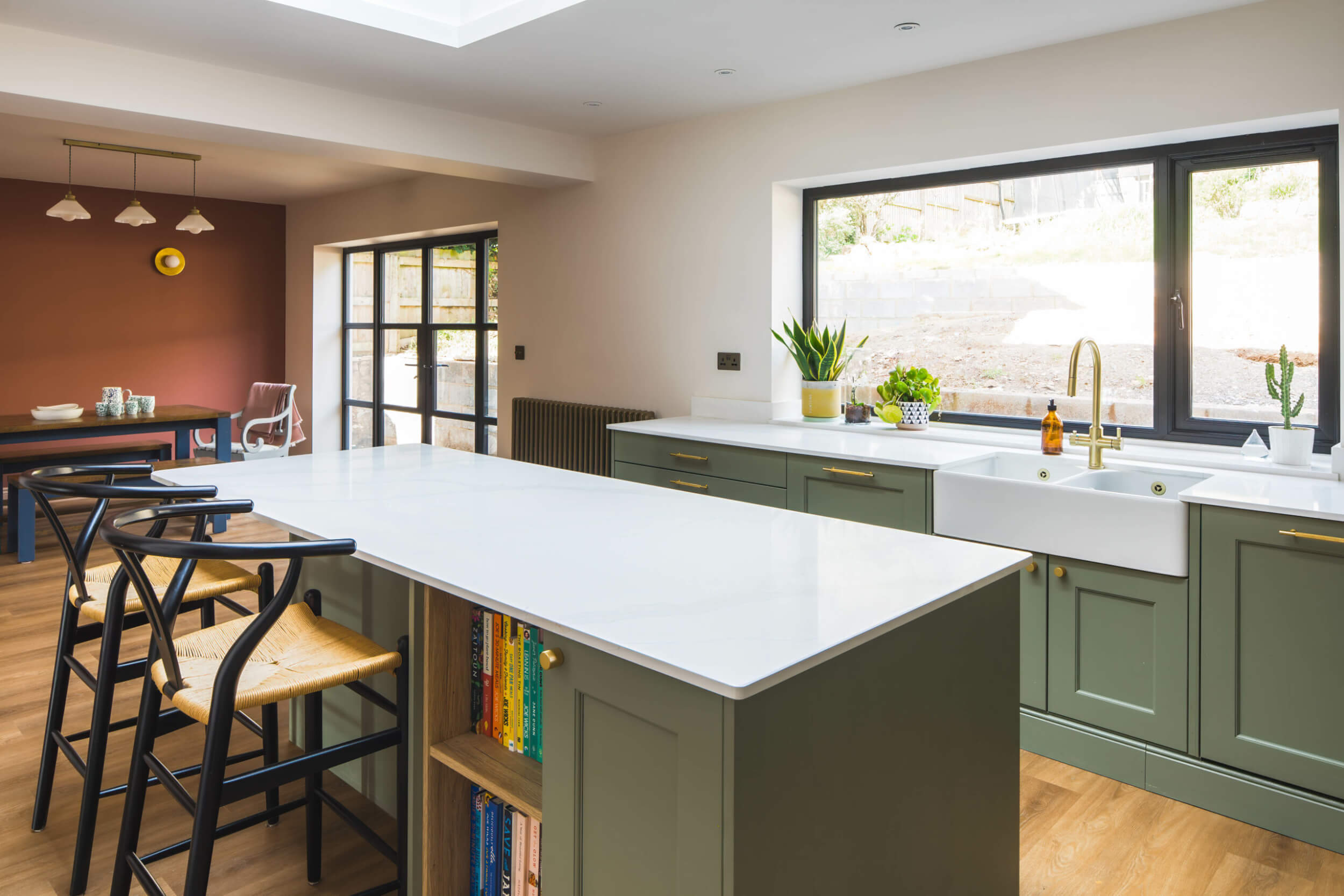
Kitchen layouts with an island are often seen as the ultimate goal, but they work best when the space allows them to function properly.

When an island works well

Islands are best suited to larger or open-plan kitchens, where there is enough clearance on all sides.

They add prep space, storage, and seating, and naturally become a social focal point.

When to consider an alternative

In smaller kitchens, a peninsula can offer similar benefits without blocking movement.

When planning an island layout, always check that appliance doors open comfortably and that walkways remain clear. If the dishwasher can’t open without negotiation, the island may be too ambitious.

10. Kitchen Layout Design Mistakes to Avoid

Even a well-chosen layout can fall short if small details are overlooked.

Here are some common issues to watch out for.

Poor appliance placement

Hobs placed near doorways or main walkways can feel unsafe and uncomfortable.

Ovens and dishwashers should open without blocking key routes through the kitchen.

Blocking light and flow

Tall units and fridges placed in front of windows can reduce natural light and make the kitchen feel darker than it needs to be.

Good layouts protect both movement and light.

Designing for looks only

A kitchen should support everyday routines, not just look good in photos.

Layouts that ignore real-life use often feel frustrating over time.  Plan your kitchen for comfort and efficiency. 

12. How to Choose the Best Kitchen Layout

Choosing the right kitchen layout becomes much easier when you take a practical, step-by-step approach.

Start with a simple plan

Sketch your kitchen and mark doors, windows, and fixed elements.

Try at least two layout options and walk through the routes between sink, hob, fridge, and storage.

Think about daily use

Picture everyday moments like making breakfast, unloading the dishwasher, or cooking with others nearby.

The layout that feels easiest during these moments is often the best choice.

If you’re unsure, a professional kitchen designer can help translate your space and lifestyle into a layout that works beautifully for your home.

You can book a short advice call with Smile Kitchens to receive expert guidance and clear direction on your next steps.

Book Advice Call Explore Smile Kitchens