
Contents
1. Why Kitchen Layout Matters
2. Your Kitchen Space
3. Choose a Kitchen Layout That Fits Your Lifestyle
4. Kitchen Layout Basics: Working Triangle and Zones
5. Match Layouts to Common Room Types
6. Kitchen Layouts for Small Kitchens
7. Galley Kitchen Layout Ideas
8. Shaped Kitchen Layouts Explained
9. Kitchen Layouts With an Island
10. How to Choose the Best Kitchen Layout
11. Conclusion: Your Ideal Kitchen Layout
2. Your Kitchen Space
Before choosing a kitchen layout, it’s worth taking a step back and looking at the room itself.
The size, shape, and fixed features of your kitchen will influence what layouts will feel comfortable and which ones might feel forced.
Here’s how different room sizes typically guide layout choices.
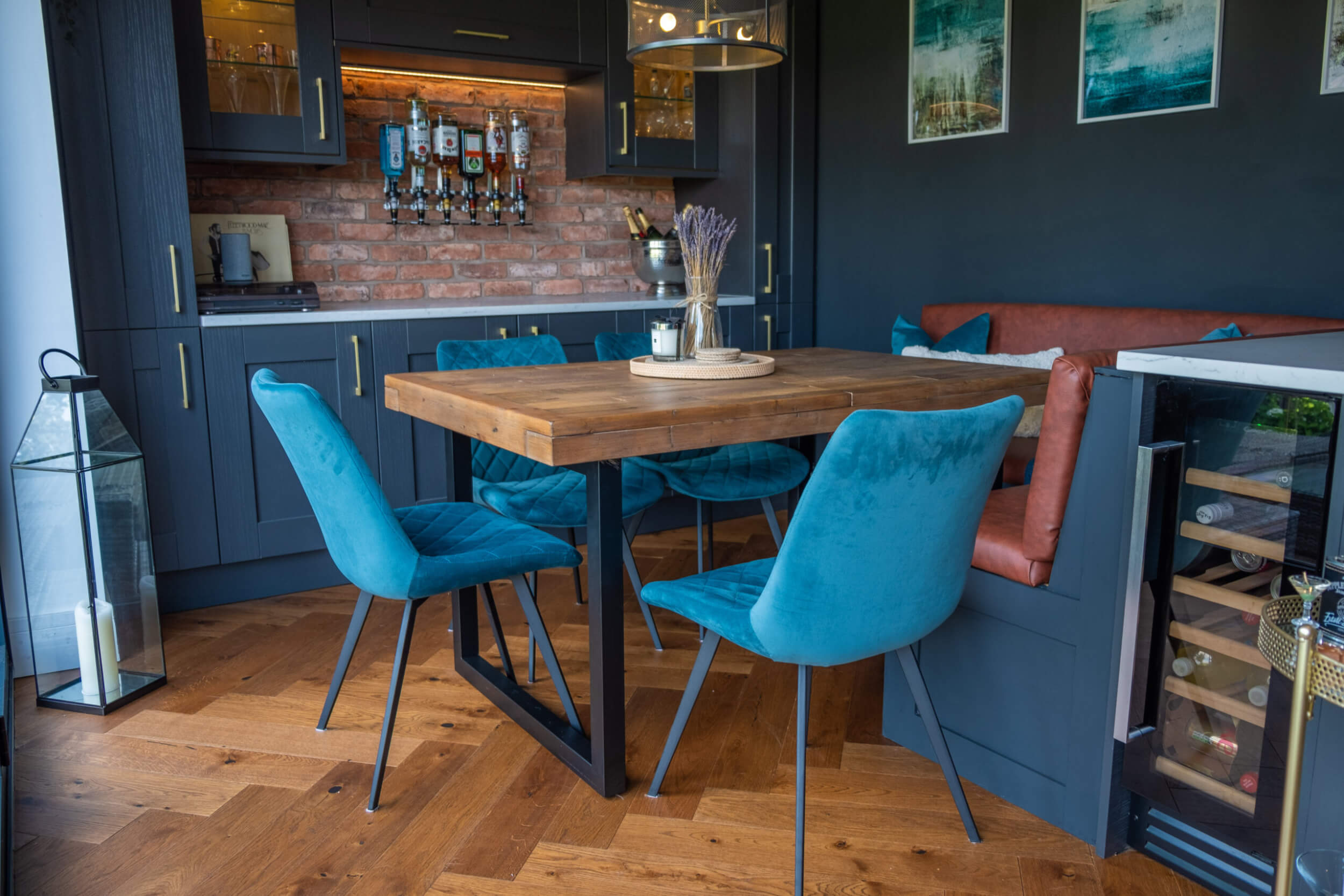
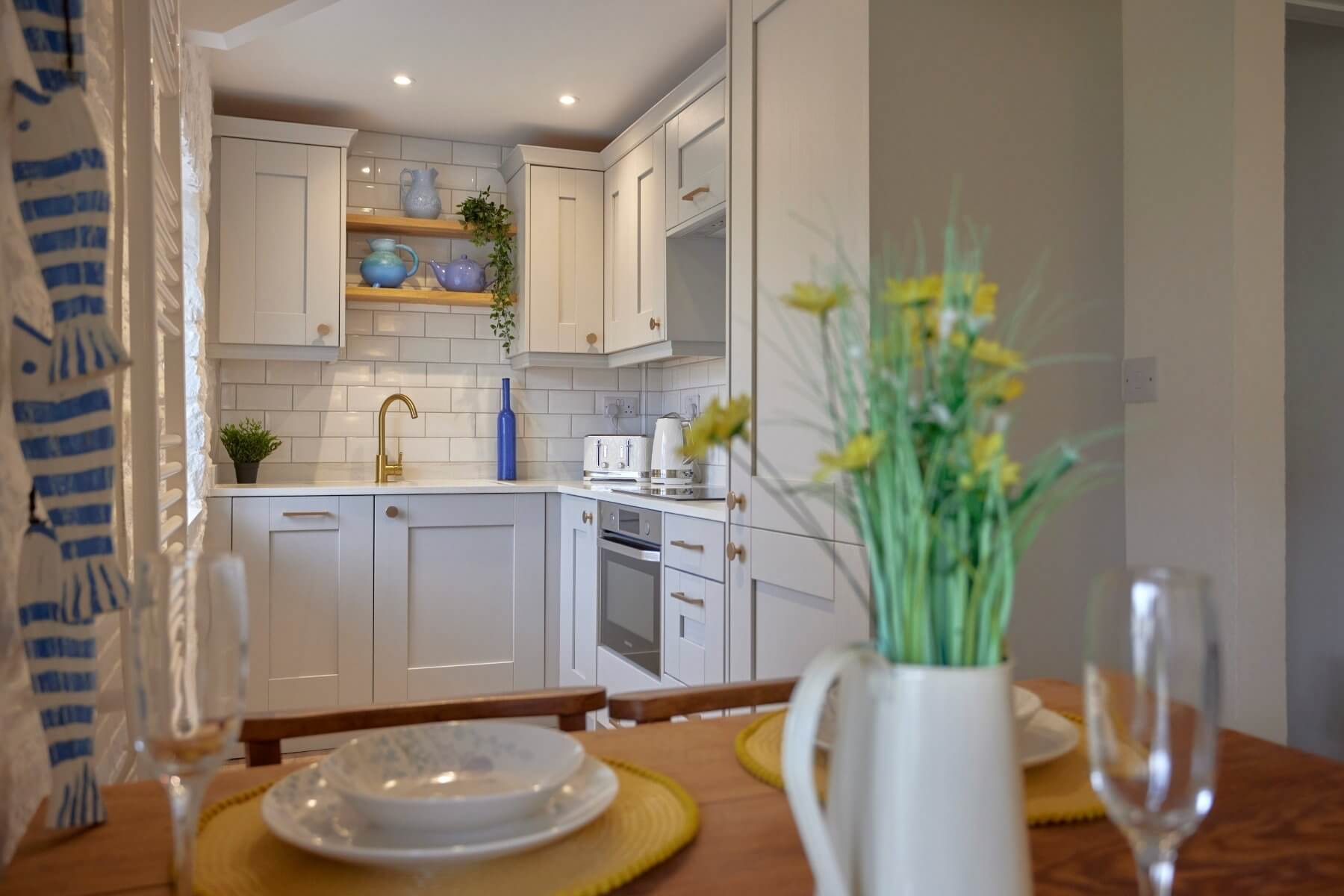
Small or narrow kitchens
Single-wall and galley kitchen layouts are often very practical, as they have to make efficient use of limited space and keep everyday tasks within easy reach.
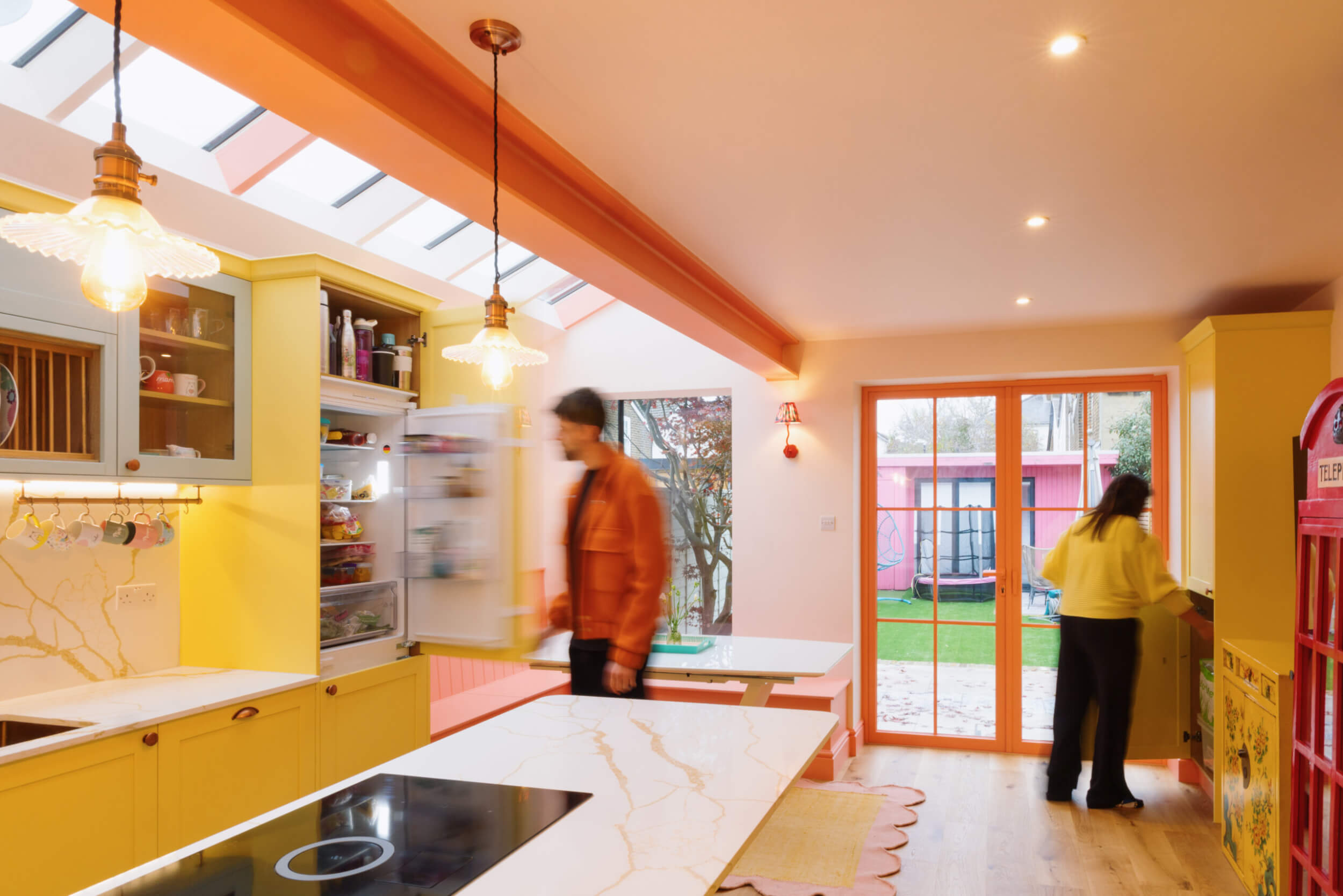
Medium-sized kitchens
Medium-sized kitchens offer a little more flexibility.
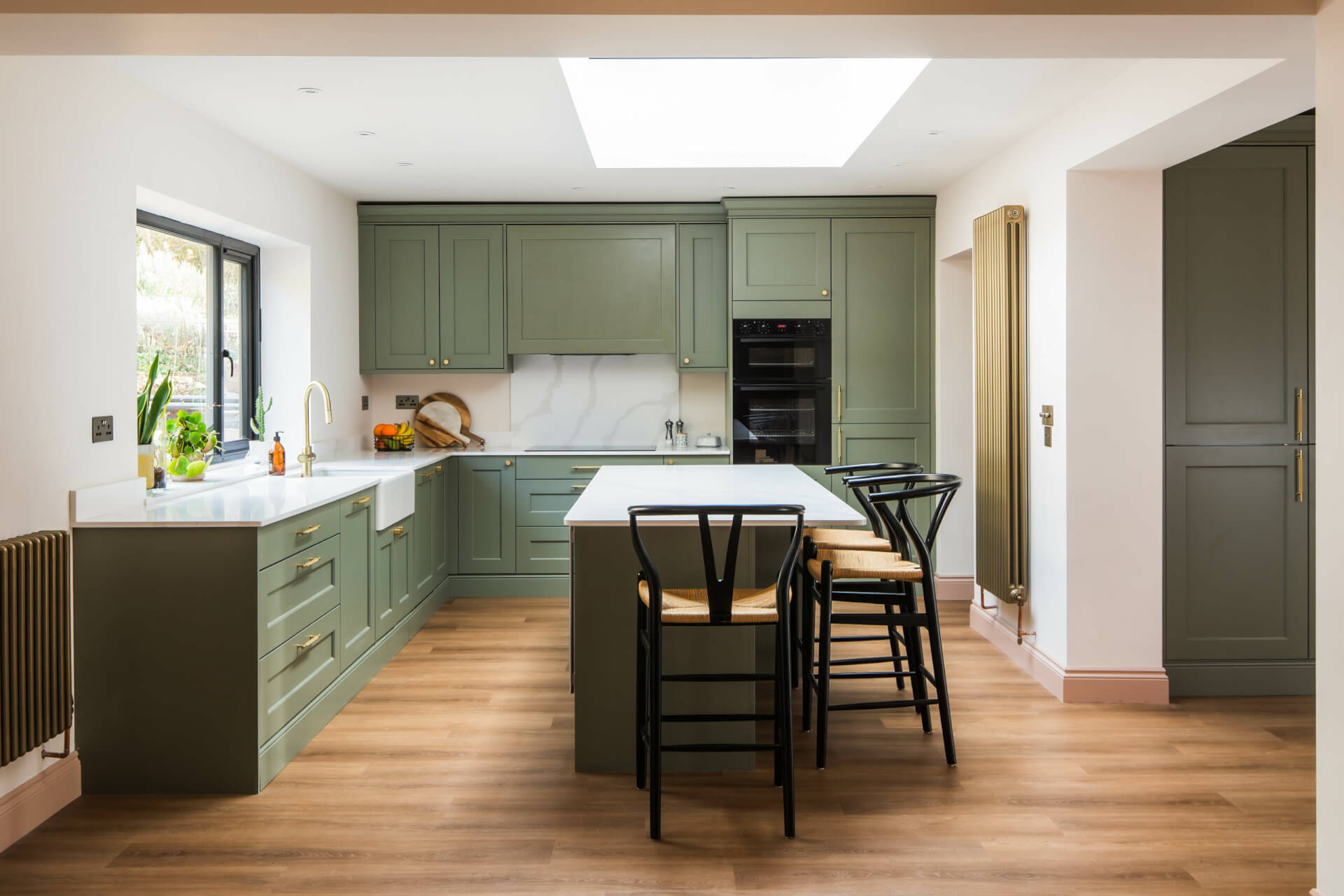
L-shaped and compact U-shaped kitchen layouts usually provide a good balance of storage, prep space, and room to move without the kitchen feeling crowded.
Large or open-plan kitchens
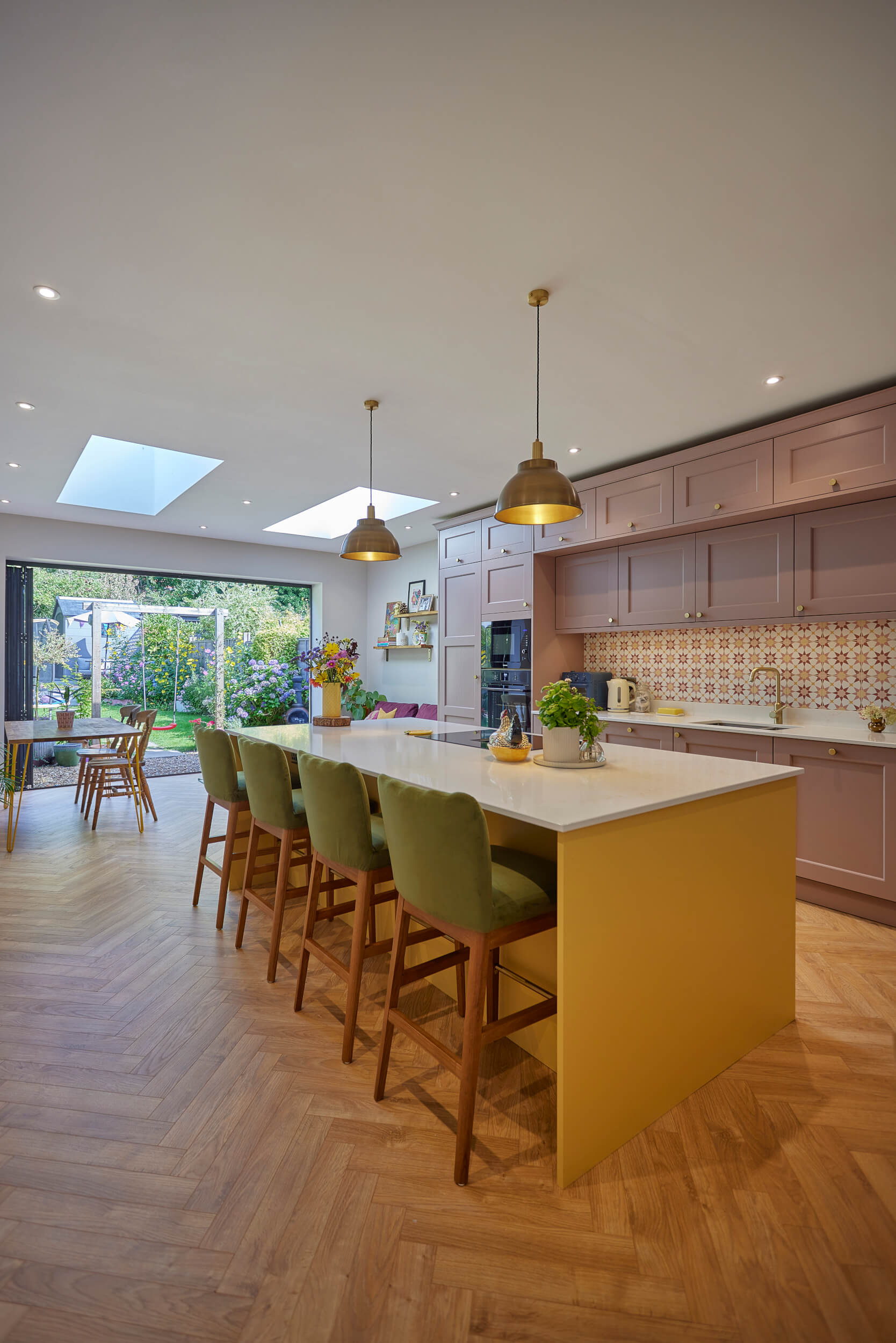
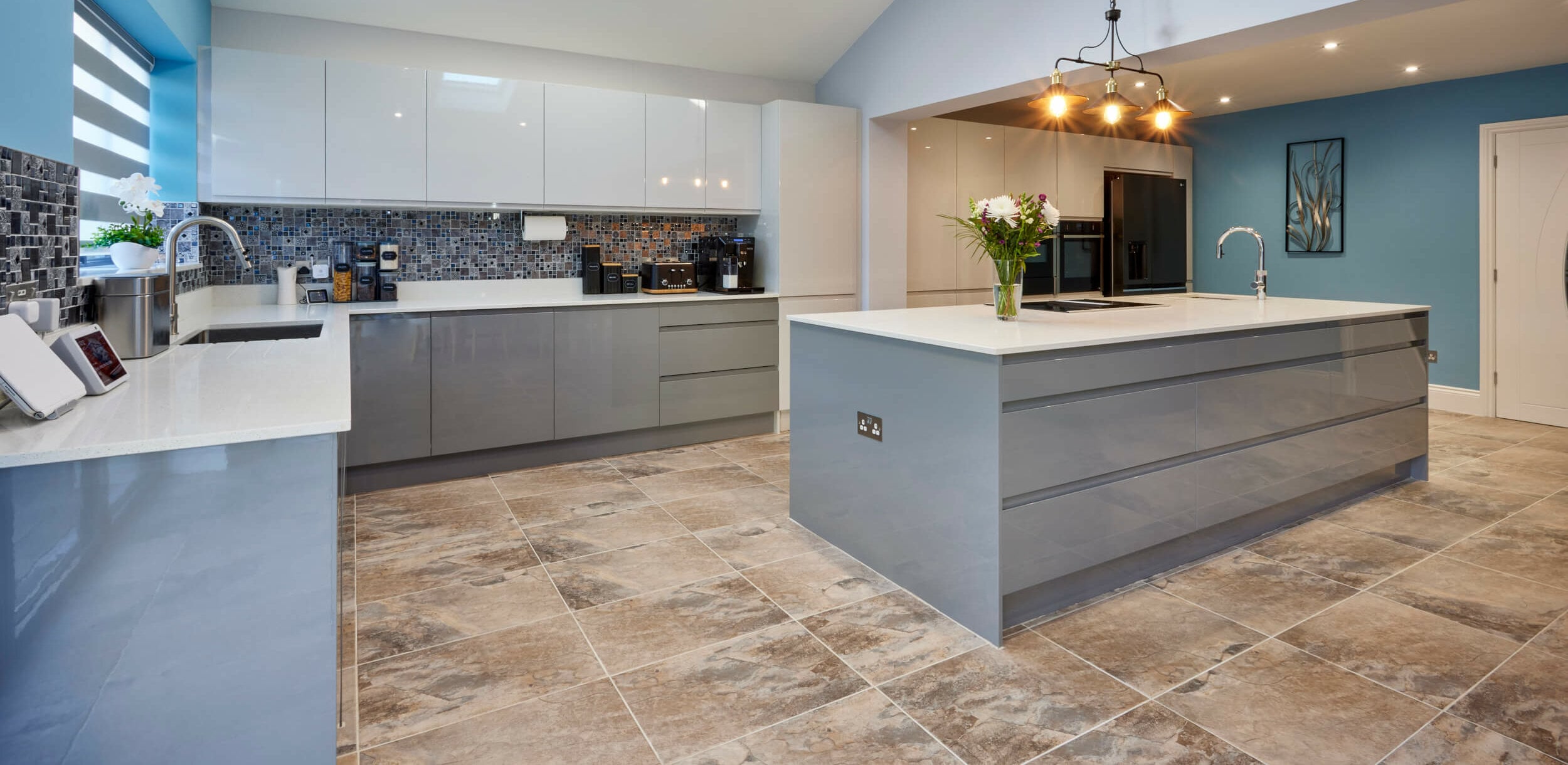
Larger or open-plan spaces allow for more dynamic layouts.
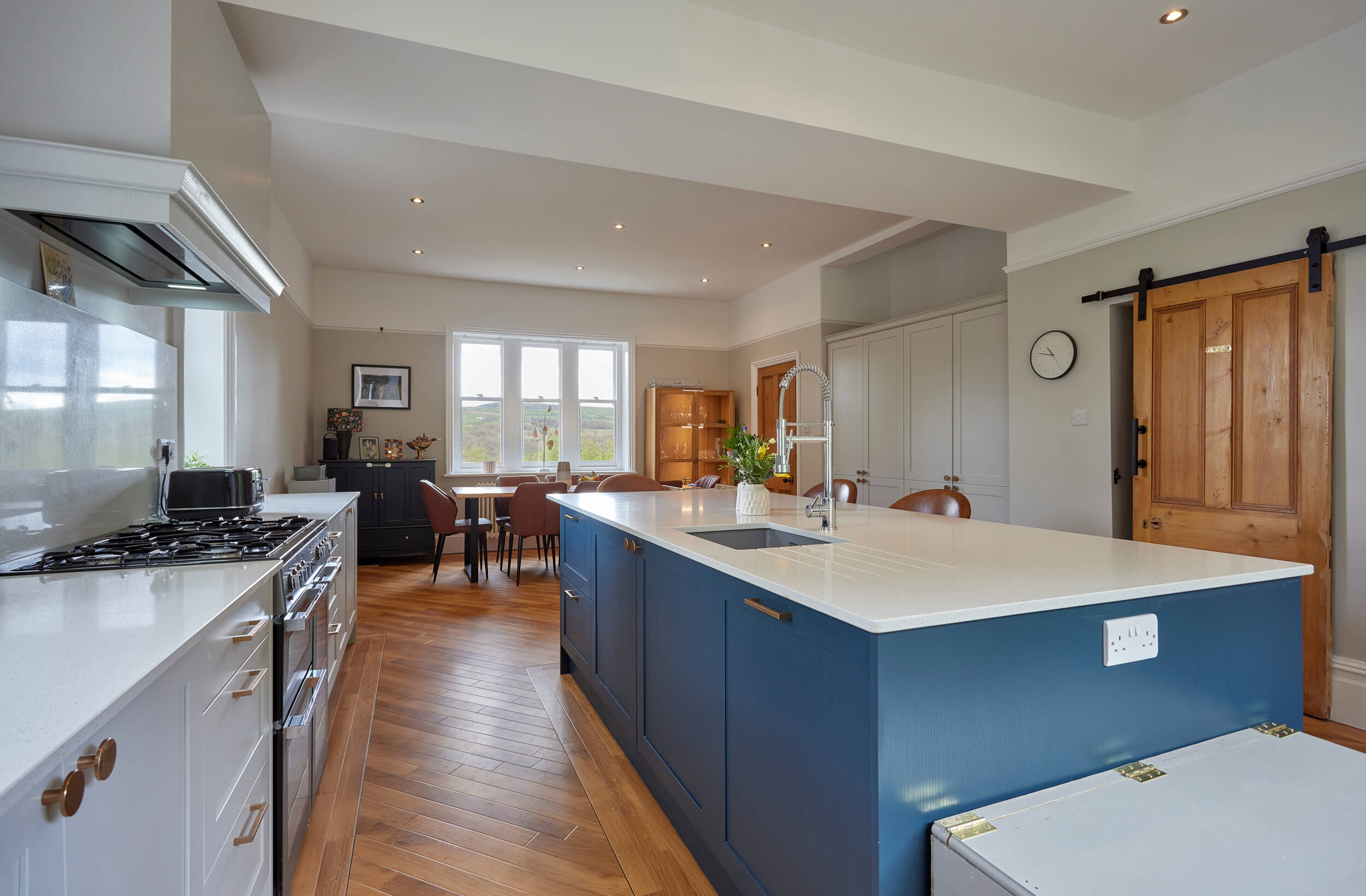
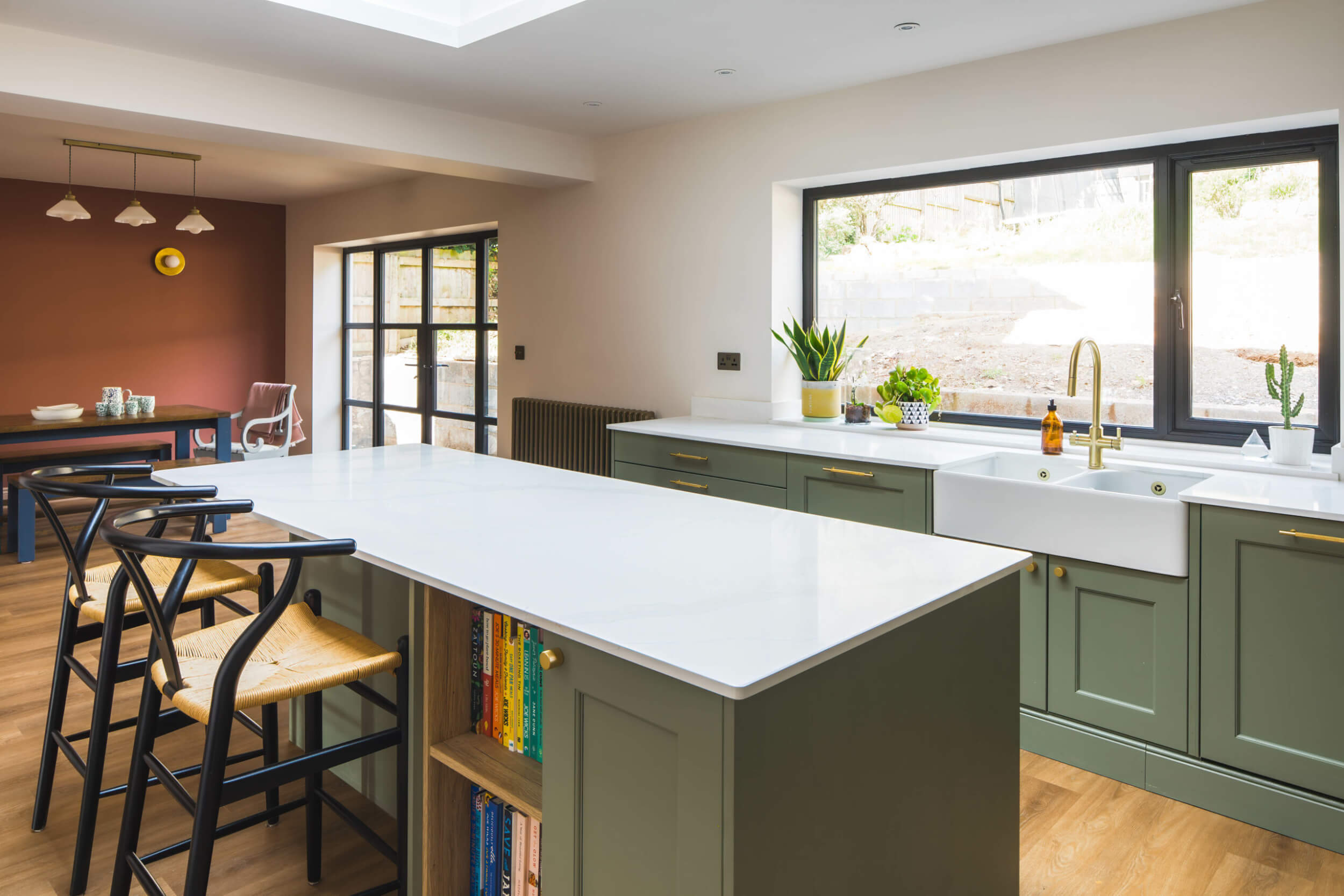
L-shaped kitchen layouts with an island, or bank-and-island configurations, help define the cooking area while keeping the space social and connected.
In very large properties, island–bank–bank layouts can also work beautifully, offering balance, symmetry, and generous working space.
Fixed features to consider
Doors, windows, radiators, and structural walls often determine what can and can’t move.
Working with these elements rather than against them usually leads to a more comfortable and practical kitchen layout.
4. Kitchen Layout Basics: Working Triangle and Zones
Most well-planned kitchen layouts are built around a few simple principles that make everyday tasks easier.
Two of the most important are the work triangle and zoning.
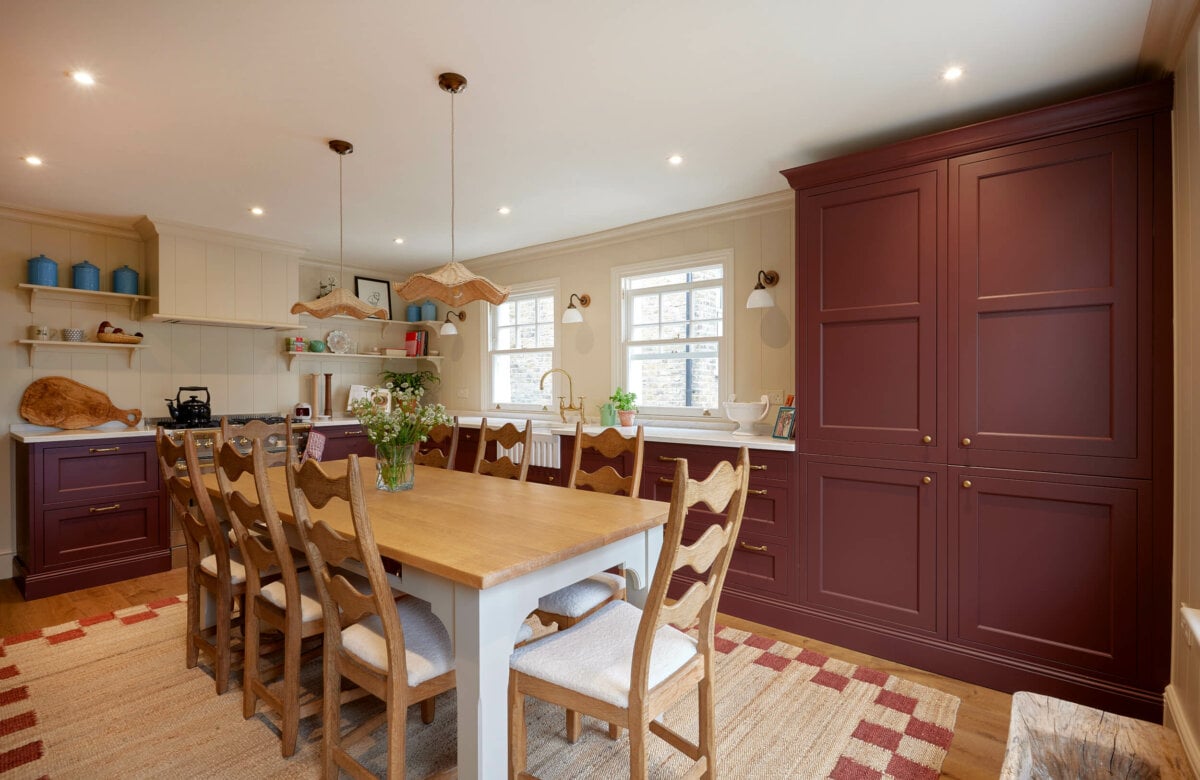
The working triangle
The working triangle focuses on the relationship between the hob, sink, and fridge.
These should be close enough that moving between them feels easy, but not so close that the kitchen feels cramped. The goal is a balanced, comfortable flow that supports everyday cooking without unnecessary steps.
Kitchen zoning
Beyond the triangle, zoning helps the kitchen feel organised and intuitive.
Most successful kitchen layouts include:
– A prep zone between the sink and hob
– A cooking zone around the hob and ovens
– A cleaning zone with the sink and dishwasher
– A storage zone with the fridge and pantry
– A social or coffee zone if space allows
When zones are planned logically, the kitchen feels calmer to use.
You spend less time walking back and forth, and more time actually enjoying the space.
6. Kitchen Layouts for Small Kitchens
Small kitchens benefit most from layouts that prioritise efficiency and ease of movement.
The aim is to make the space feel calm and practical, rather than trying to squeeze in every possible feature.
Here’s how different layouts work in smaller kitchens.
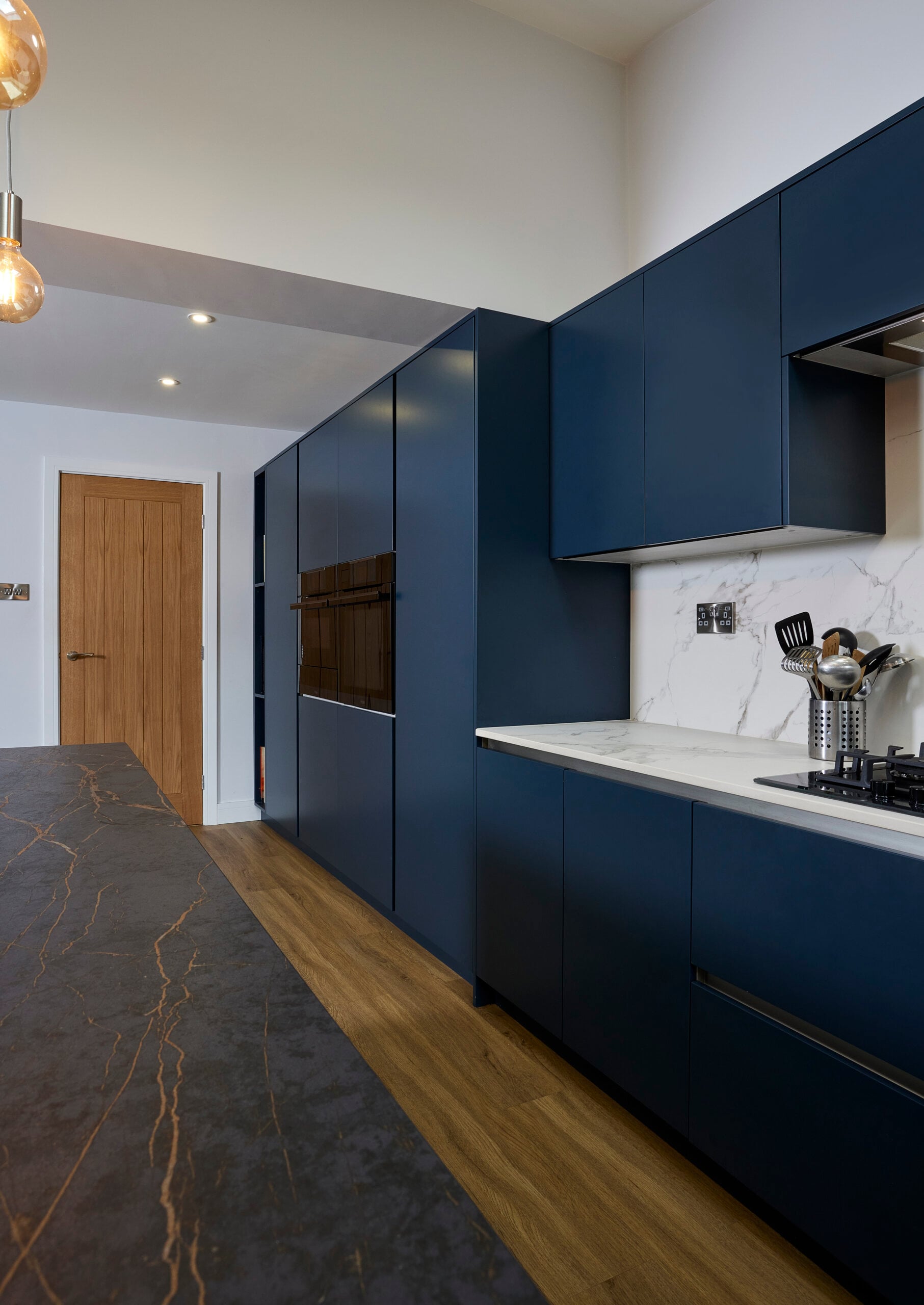
Single-wall kitchen layout
Best suited to very small kitchens and studio spaces, single-wall layouts keep everything along one wall.
They are simple and space-saving, helping the room feel more open. Storage and worktop space are limited, but clever cabinetry and integrated appliances can make a big difference.
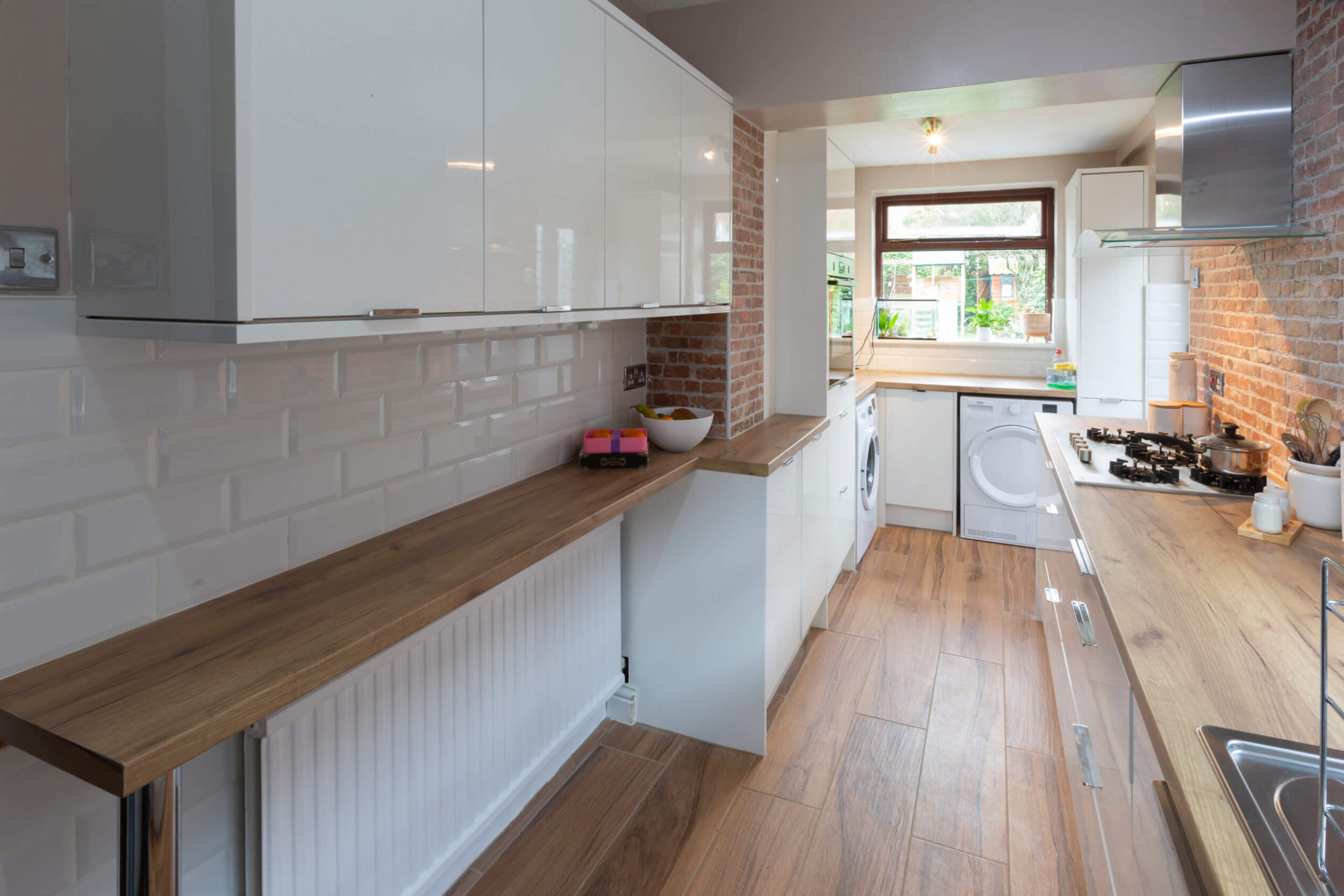
Galley kitchen layout
A strong option for small kitchens with enough width for two runs, galley layouts keep everything within easy reach.
They are highly efficient for cooking, but it’s important to allow enough clearance between runs so movement doesn’t feel cramped.
L-shaped kitchen layout
L-shaped layouts can work well in small kitchens when planned carefully.
They offer more worktop and storage than a single wall while keeping part of the room open for light or dining. Long runs should be avoided to prevent the layout feeling stretched.
8. Shaped Kitchen Layouts Explained
Shaped kitchen layouts are popular because they adapt well to a wide range of room sizes.
Each shape offers different benefits depending on how open or enclosed you want the kitchen to feel.
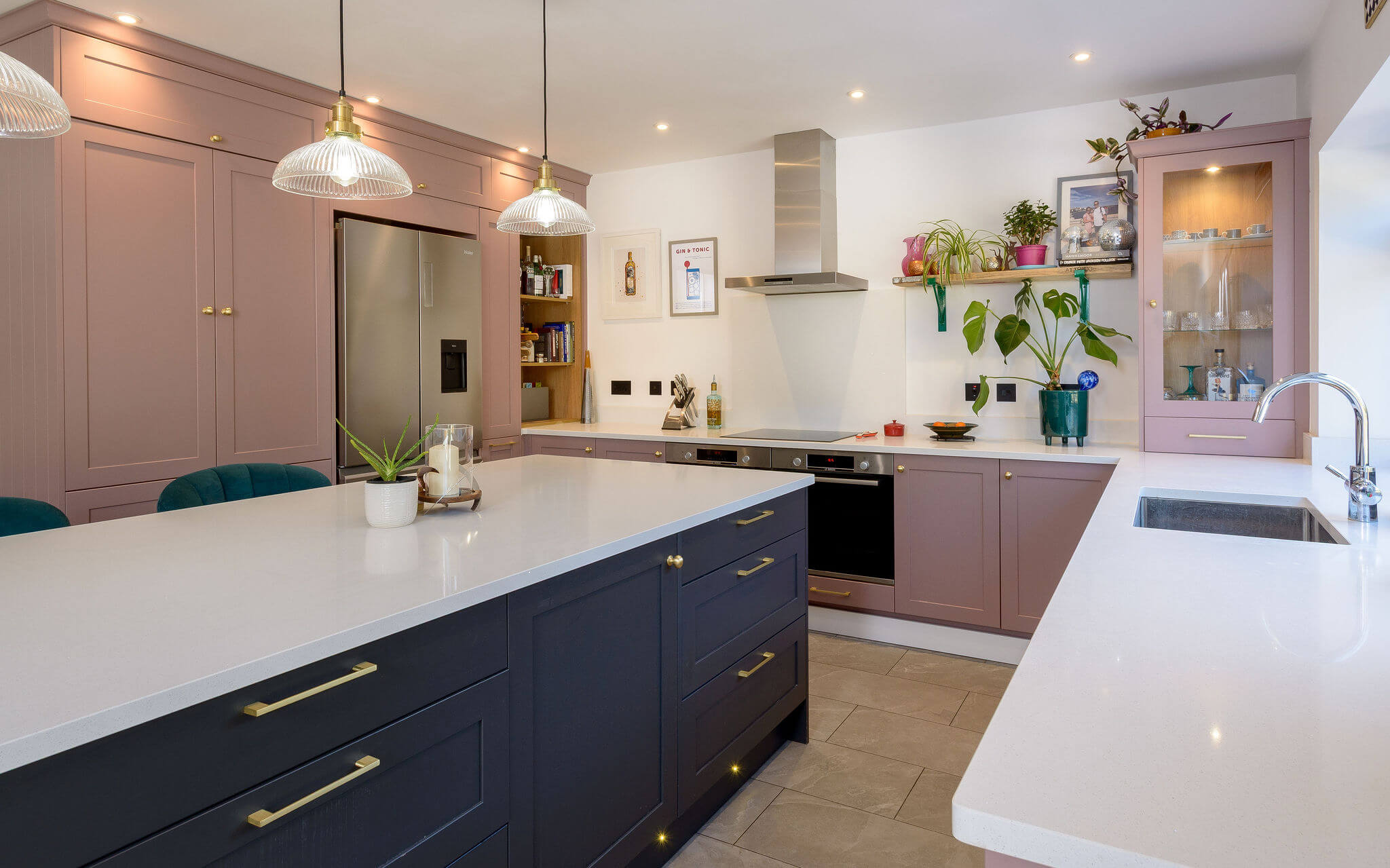
L-shaped kitchen layout
Suitable for small through to large rooms, L-shaped kitchens are flexible and versatile.
They work well in open-plan spaces and allow room for dining or an island if space permits. Overly long runs can increase walking distance, so balance is key.
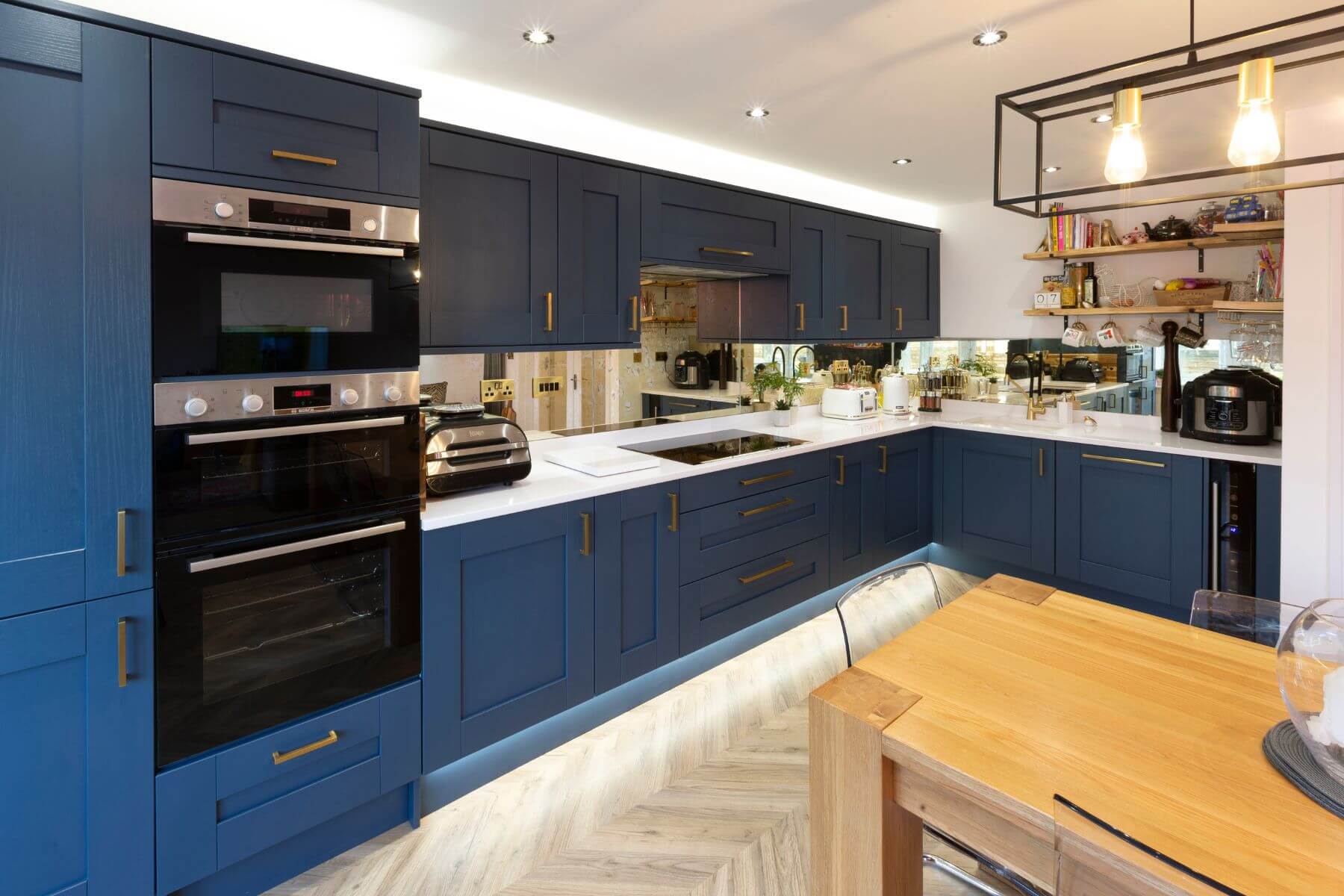
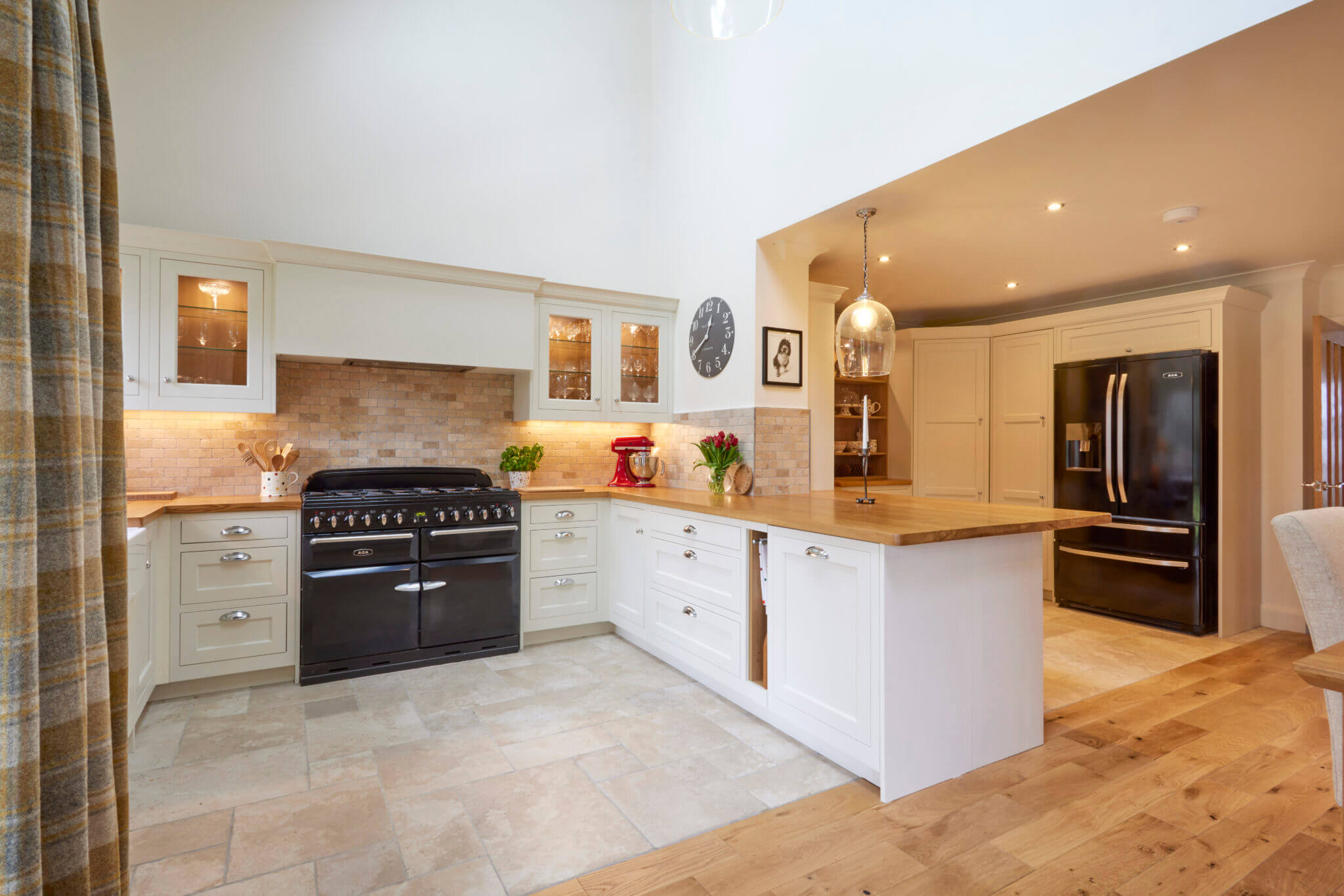
U-shaped kitchen layout
Best suited to medium to large kitchens, U-shaped layouts offer excellent storage and a compact work triangle.
They are ideal for busy households, but can feel enclosed if overcrowded. Adding an island should only be considered if the room is generous in size.
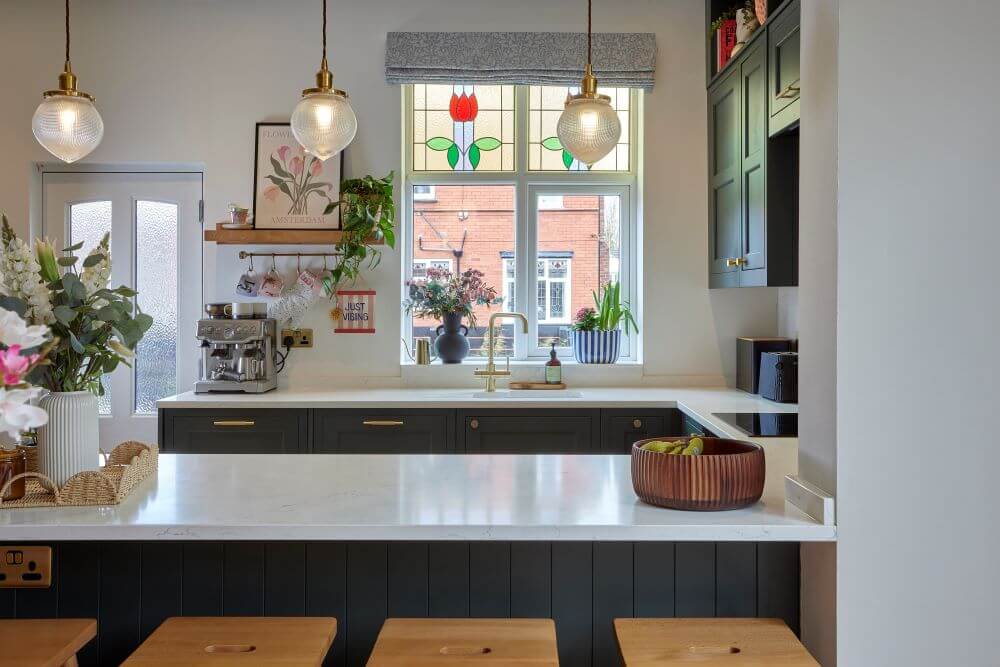
G-shaped or peninsula kitchen layout
Peninsula layouts suit semi-open spaces where a full island may not fit.
They provide additional worktop space and help define zones, but openings should be wide enough to maintain good flow through the kitchen.