
Common Kitchen Design Mistakes (And How to Avoid Them)

By

6 Min Read

Planning a new kitchen? Avoid common design mistakes with expert tips on layout, storage, lighting, balance and workflow.

common kitchen mistakes

1. Unbalanced Kitchen Design

2. No Symmetry

3. Missing Focal Point

4. Prioritising Looks Over Workflow

5. Not Enough Counter Space

6. Ignoring Storage Ergonomics

7. Poor Appliance Clearances

8. Over or Under Lighting

9. Poor Island Optimisation

10 The Golden Rule Designers Follow

Request Our Kitchen Brochure

Designing a kitchen is exciting.

It is where style meets practicality. 

Where Pinterest dreams encounter Monday morning reality.

But here is something designers see all the time:

A kitchen can look absolutely stunning and still be frustrating to use.

Often, the issues are subtle rather than dramatic.

Small spacing miscalculations or visual imbalances that slowly become irritating once you actually live in the space.

At first you ignore them.

Then you adapt to them. 

Eventually you mutter about them while unloading the dishwasher.

Let us walk through some of the most common kitchen design mistakes and how to avoid them.

1. Unbalanced Kitchen Design

Sometimes a space just feels off, even when you cannot quite explain why.

In many cases, it is a balance issue within kitchen design.

An unbalanced kitchen might have:

– Too many appliances lined up on one wall

– An island sitting awkwardly off-centre

– One wall packed with cabinetry while another feels strangely empty

There are countless ways imbalance can creep into a design, and the result is a kitchen that feels visually heavy or slightly uncomfortable.

Think of it as kitchen vertigo.

How to Avoid Kitchen Vertigo

Try not to cluster appliances in one area. 

If your layout allows, spread elements out so the visual weight feels evenly distributed.

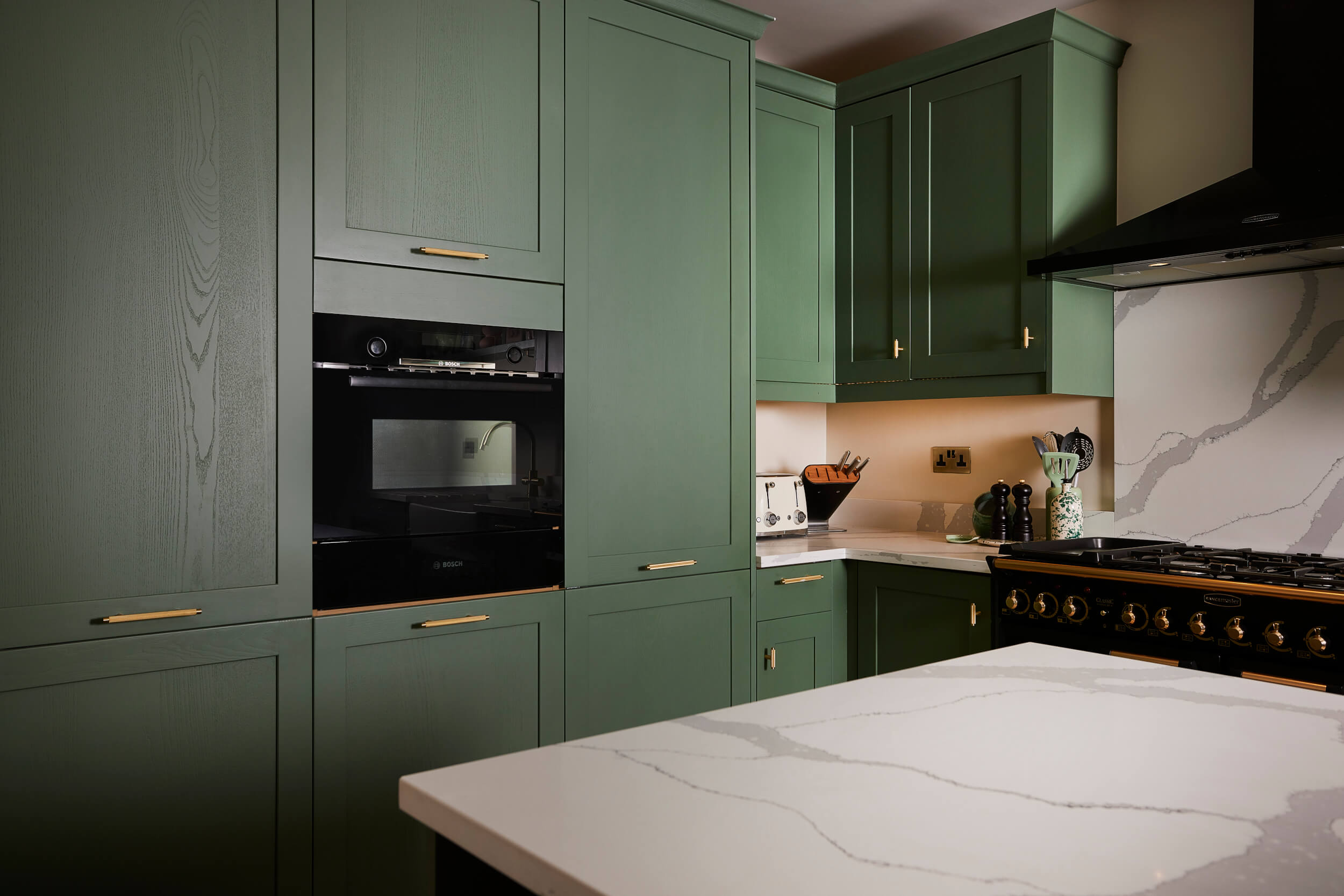
Cabinetry plays a big role here. 

Installing storage consistently from left to right, and even from floor to ceiling, creates structure and rhythm in your kitchen design. 

Small additions like wine racks or built-in features can help too, as long as there is something of similar visual weight elsewhere in the room.

Balance is not about perfection, it’s about harmony.

2. No Kitchen Symmetry

Symmetry is one of those kitchen design principles people instinctively understand.

It simply means there is a sense of equality across the space.

Picture your kitchen like a photo folded in half. 

If both sides feel visually aligned, you have symmetry.

Easy ways to introduce symmetry:

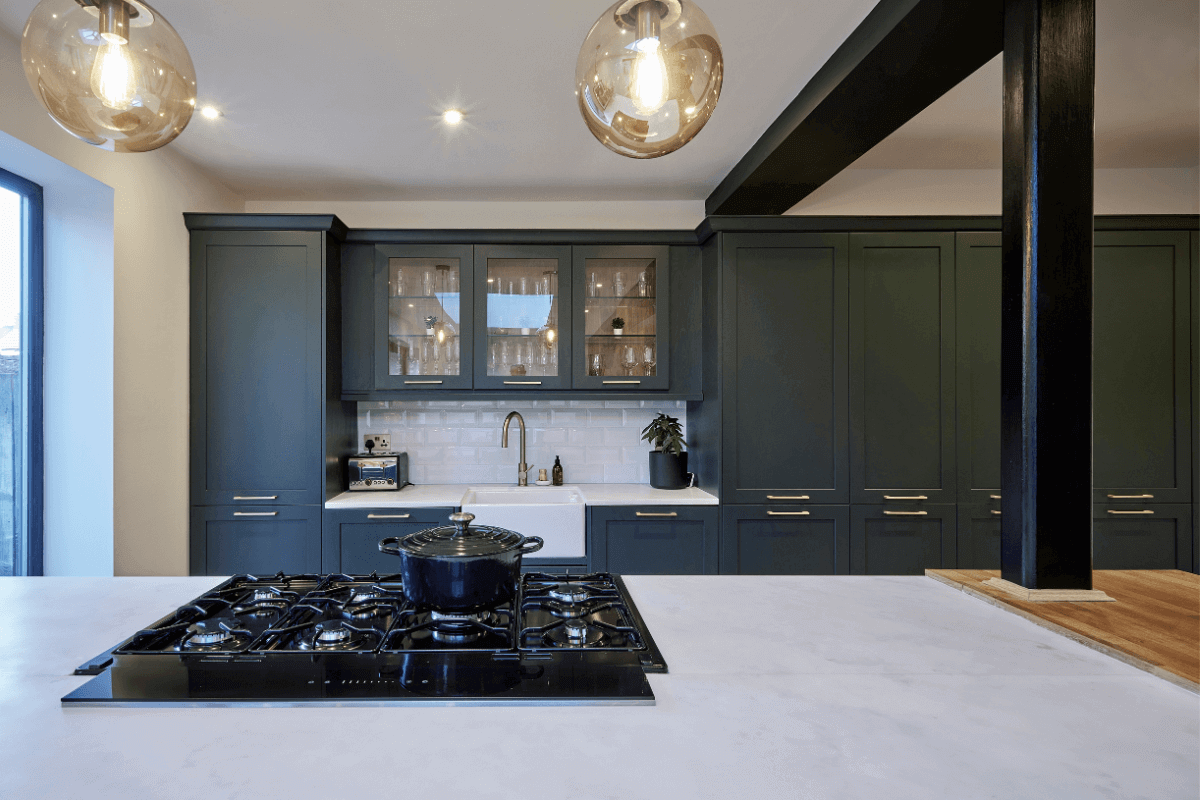
  • Hang two identical pendants above an island
  • Balance cabinets on either side of a hood
  • Start your layout from the centre and work outward

Perfect symmetry is not mandatory. 

Even subtle alignment can make a kitchen design feel more polished and intentional.

And your brain will quietly thank you for it.

3. Missing a Focal Point in the kitchen

Every successful kitchen design benefits from something that immediately draws the eye.

A focal point.

This is the feature that sets the tone of the space. It might be:

– A striking island worktop

– A beautiful range cooker

– A bold splashback or feature hood

Without a focal point, kitchens can feel visually scattered.

With one, the design feels grounded and memorable.

It gives the room a sense of purpose. 
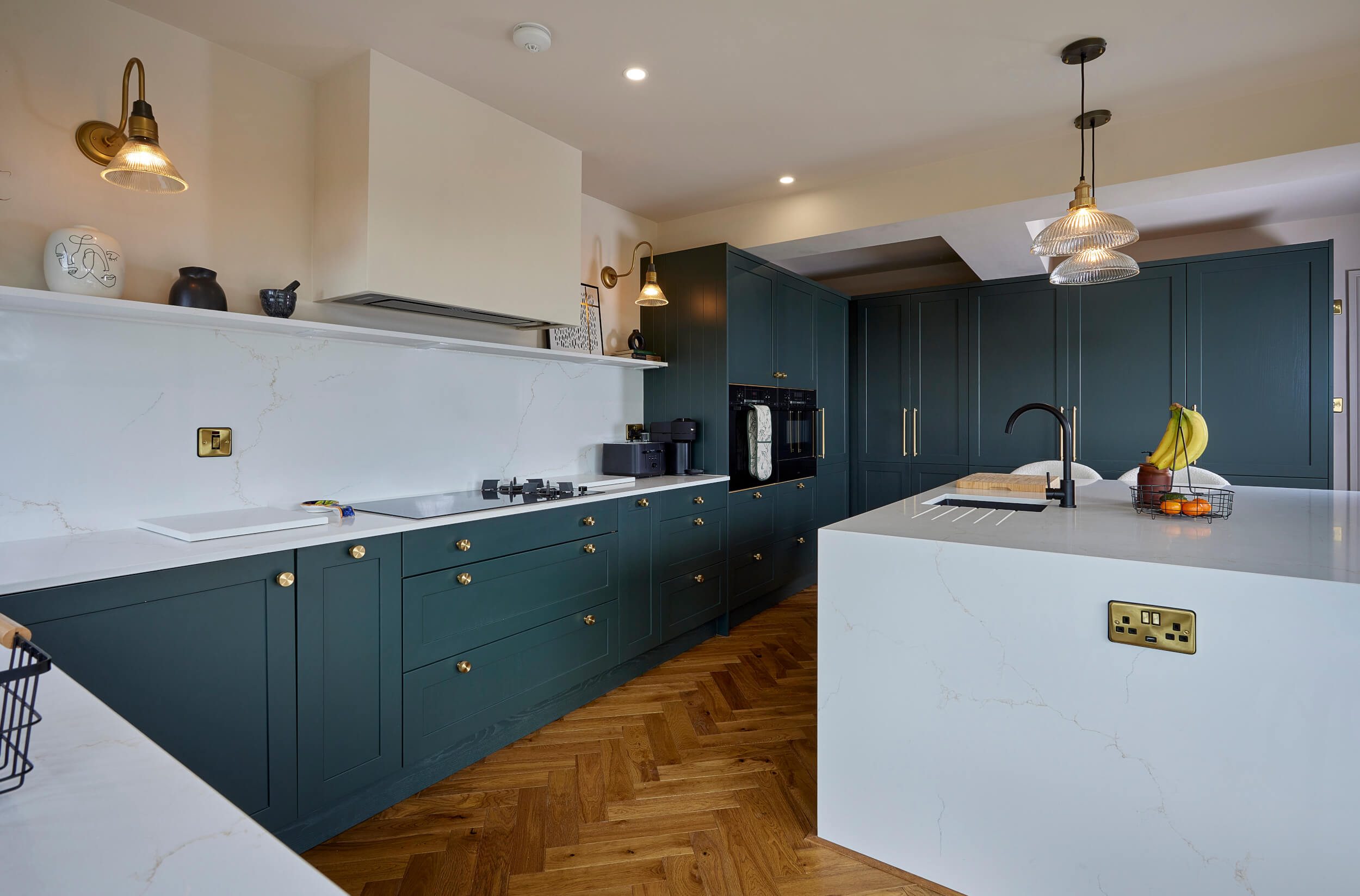
4. Prioritising The Way Your Kitchen Looks Over Workflow

This is a big one in modern kitchen design.

Many homeowners focus heavily on finishes, colours, and inspiration images while overlooking how the kitchen actually functions.

Others do the opposite, creating a highly practical layout that lacks personality.

Designers commonly see problems like:

  • Fridge or sink too far from prep areas
  • Hobs and ovens jammed into corners
  • Limited worktop space near key zones
  • Islands blocking natural movement

How to Avoid Workflow Issues?

Design zonally.

Instead of obsessing over where individual items go, think in terms of zones.

Forget the old work triangle idea.

Modern kitchen design works better when organised by activity:

  • Prep Zone – Counter space, sink and bins
  • Cooking Zone – Hob, oven and landing space
  • Storage Zone – Fridge and pantry
  • Cleaning Zone – Sink and dishwasher

Movement between these areas should feel easy and natural.

If something feels awkward on paper, it will feel worse in real life.

Kitchen design is not just about how it looks in a photograph. 

It is about how it behaves at 7.30 on a Tuesday evening. 

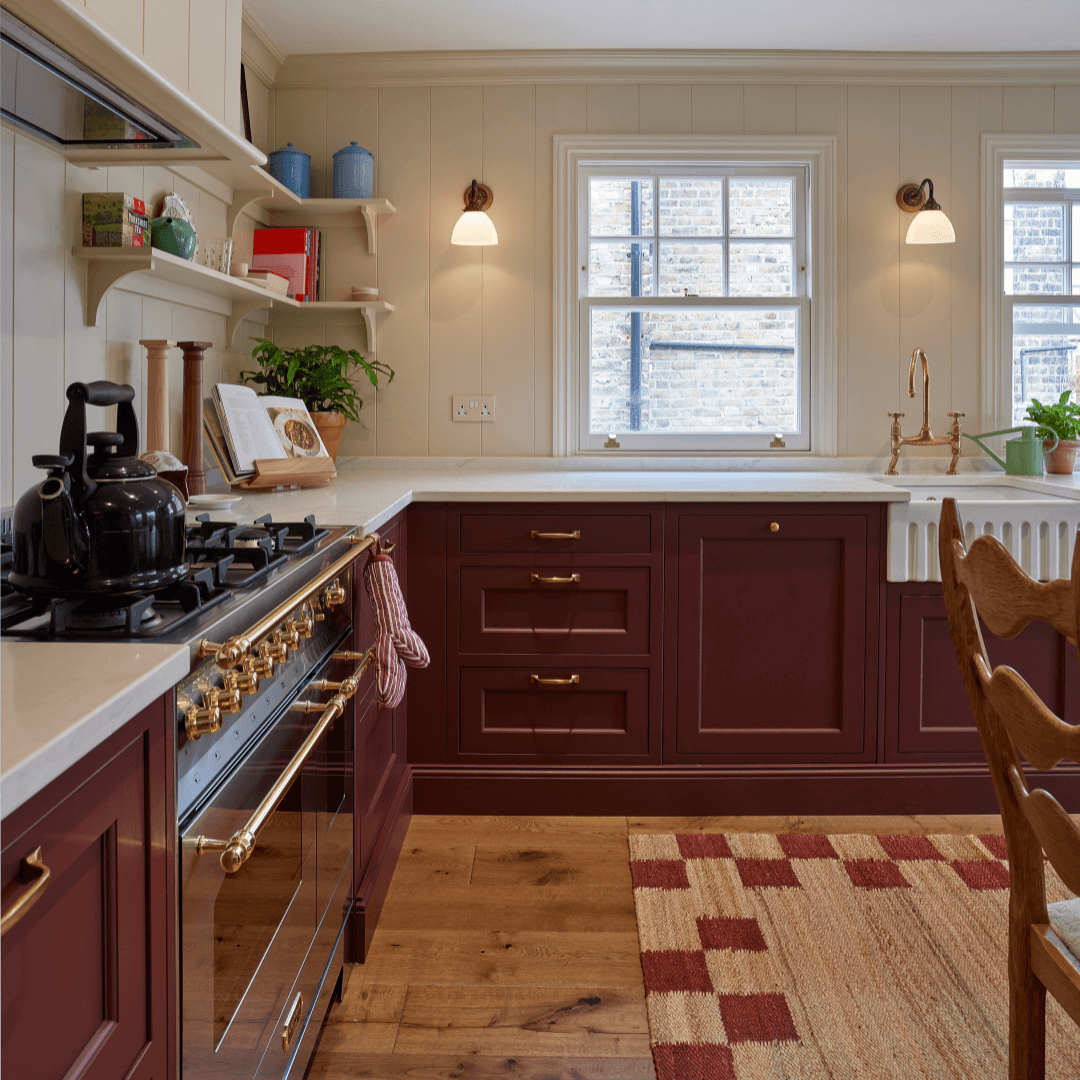
Red Kitchens

5. Not Enough Kitchen Counter Space

A classic kitchen design mistake is underestimating workspace.

It is not only about the quantity of worktop space, but continuity, especially beside the sink, the hob, or the fridge.

Small, broken-up surfaces rarely function as well as long uninterrupted runs.

A simple rule of thumb in kitchen design is to aim for at least 300mm of landing space near sinks and hobs at a minimum.

Prioritise usable surfaces over total square footage.

Because nobody has ever complained about having too much practical worktop.
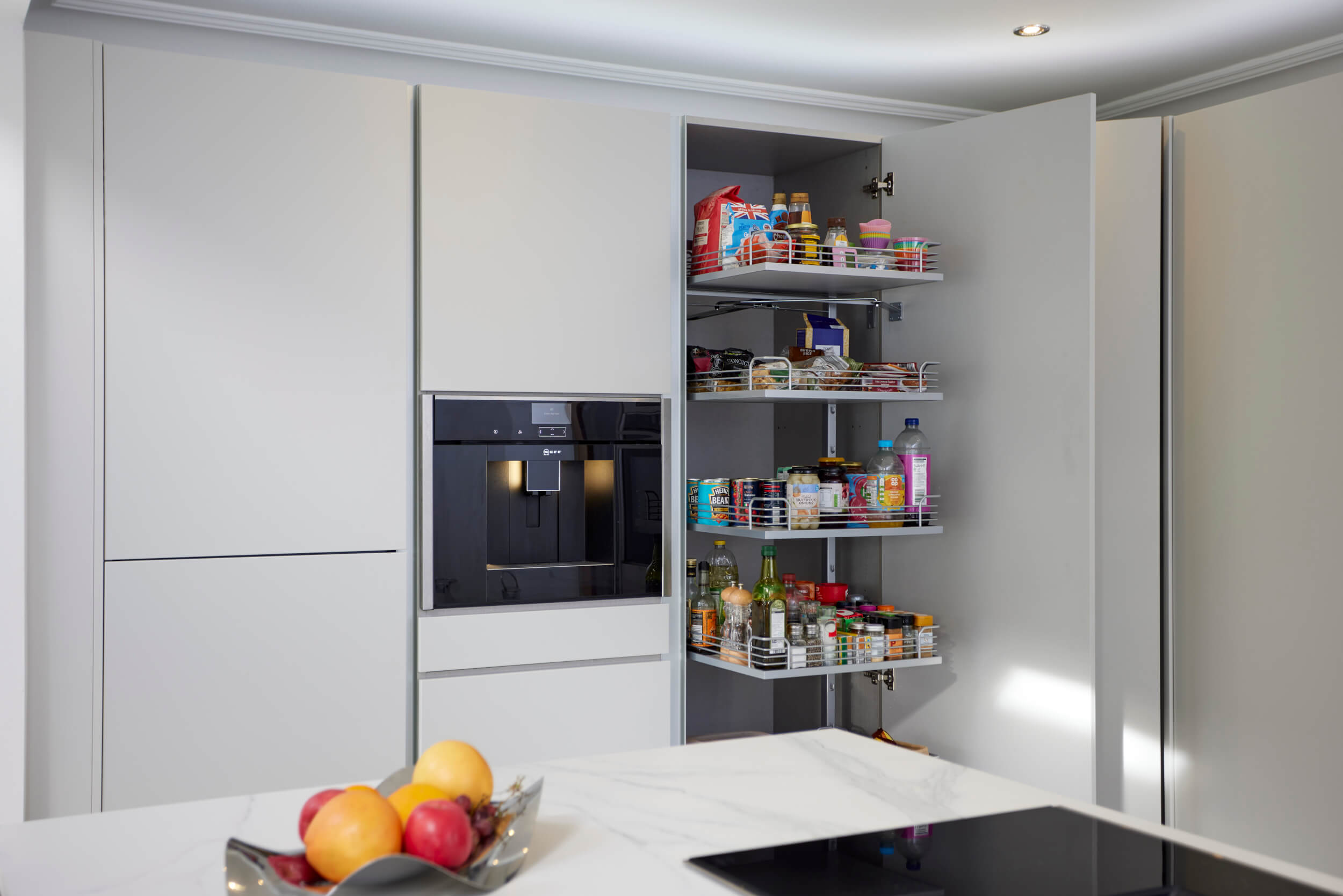
6. Ignoring Kitchen Storage Ergonomics

Too many upper cabinets.

Deep shelves where items vanish into the abyss. 

Not enough drawers for heavy cookware.

These are all red flags in kitchen design.

A kitchen can technically have lots of storage and still be frustrating to use.

To improve ergonomics:

– Favour drawers over standard shelving

– Use pull-out mechanisms wherever possible

– Avoid inaccessible blind corners

– Store heavier items at waist level

You do not want to be on your knees emptying an entire cupboard just to find one elusive plastic container lid.

Storage should make life easier, not require a search and rescue mission.
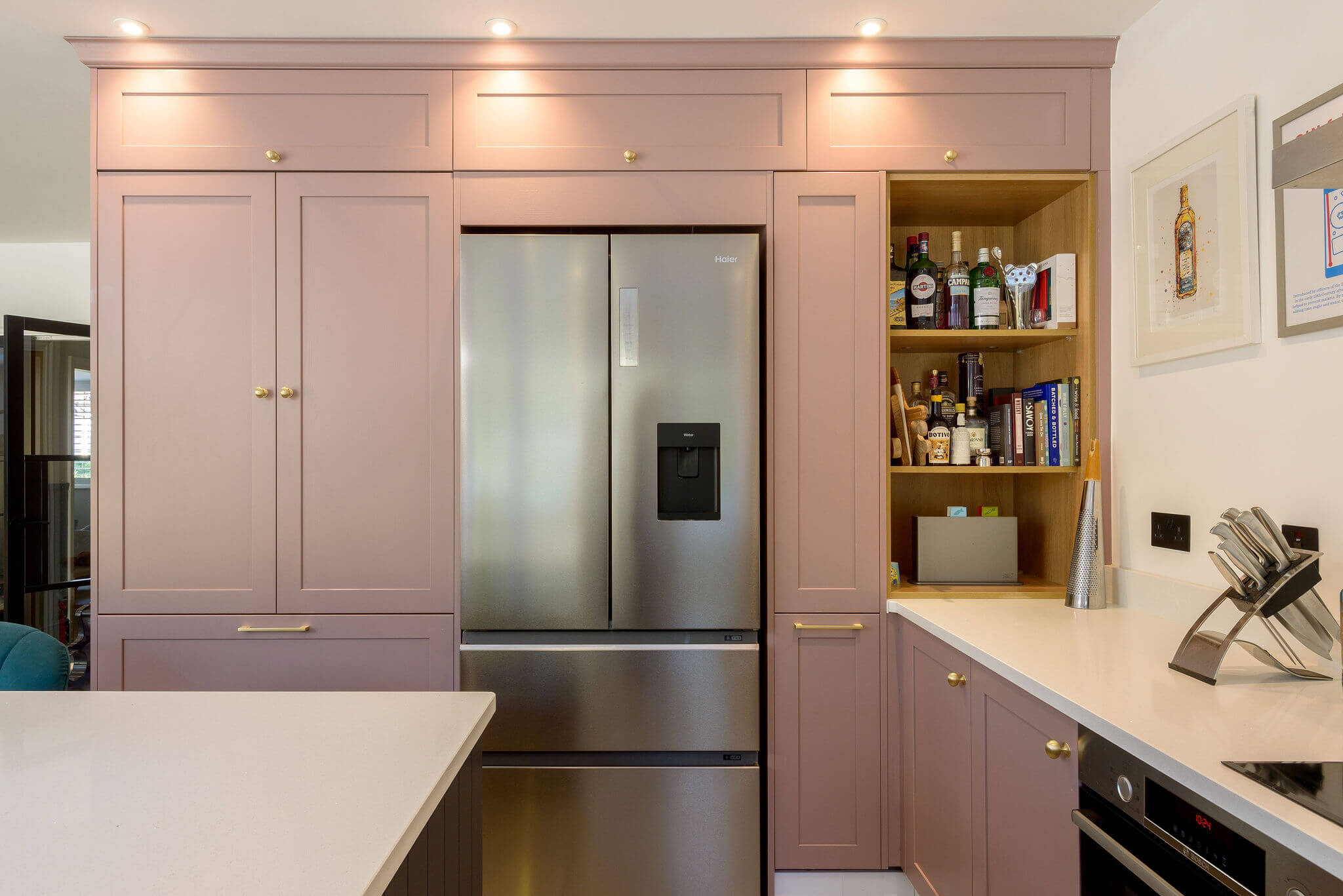
7. Poor Kitchen Appliance Clearances

Everything may fit neatly on a design drawing until doors start hitting things.

Common kitchen design issues include:

  • Fridge doors unable to open fully
  • Dishwashers blocking walkways
  • Oven doors clashing with islands or handles
  • Walkways feeling tight and uncomfortable

Always plan for door swings and human movement, not just appliance dimensions.

In most kitchen design layouts, a minimum of 900mm walkway clearance is recommended, especially around islands.

Freestanding appliances often require additional breathing room as well.

If it feels cramped in theory, it will feel worse in practice.

8. Over or Under Kitchen Lighting

Lighting mistakes are incredibly common in kitchen design.

Over-reliance on spotlights. Shadows cast across prep areas. Harsh glare bouncing off glossy surfaces.

Lighting should never be an afterthought.

Instead, weave it into the kitchen design process from the beginning and consider three layers:

– Ambient Lighting – Overall mood and warmth
– Task Lighting – Under-cabinet LED strips are particularly effective
– Accent Lighting – Pendants, wall lights, feature lighting

Well-designed kitchens use multiple light sources to create depth and functionality.

Lighting is not just practical. It shapes how the entire kitchen feels.
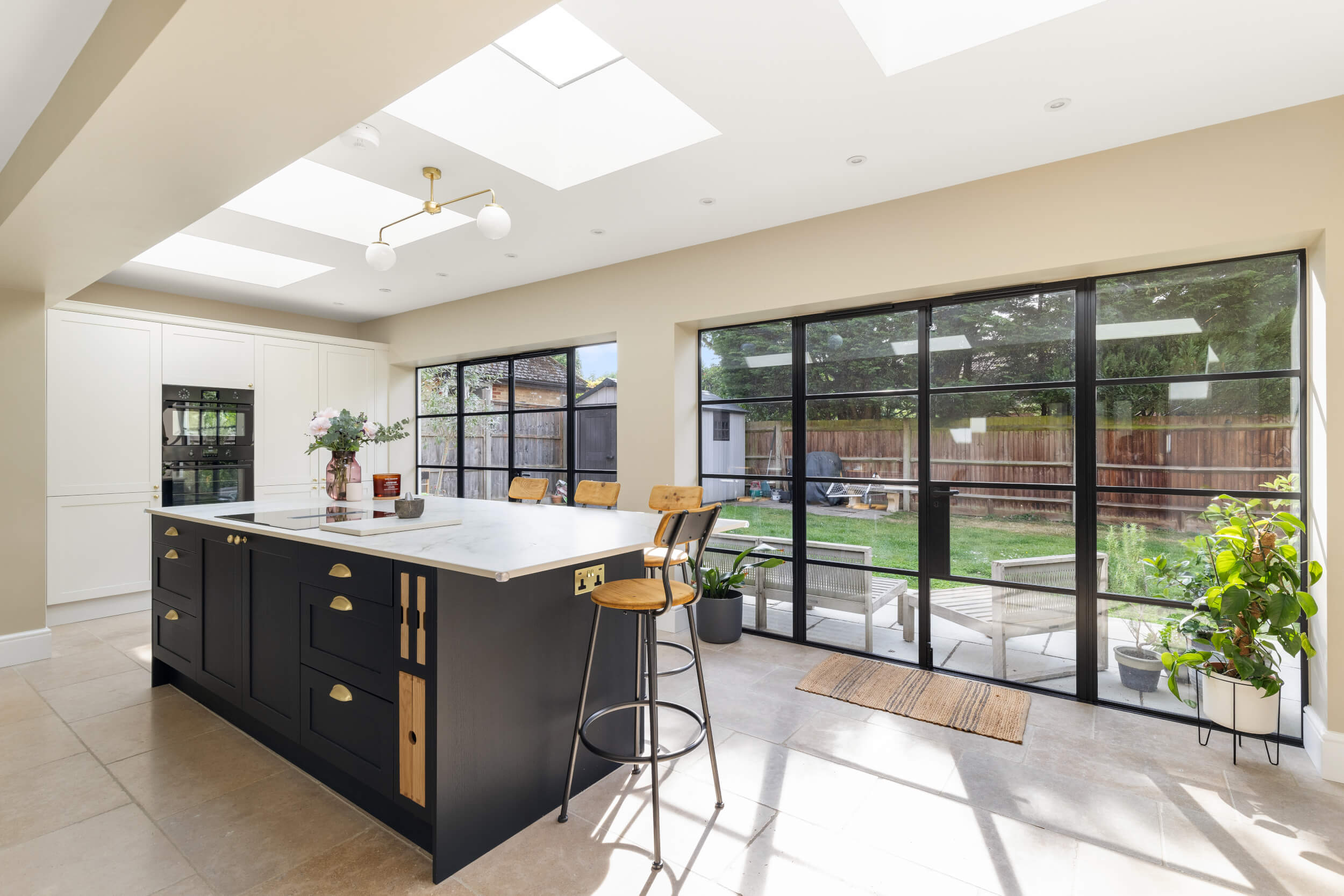
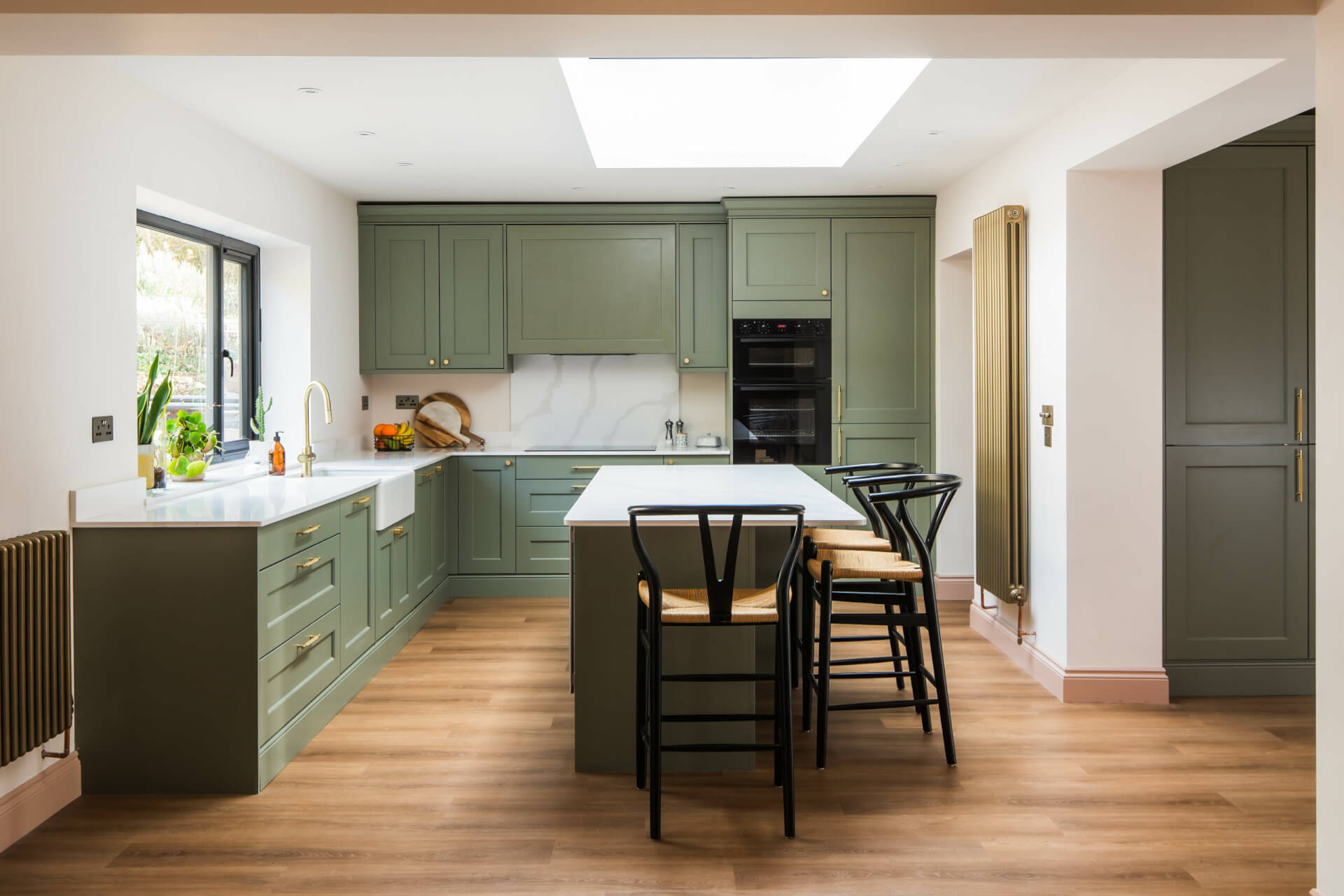
9. Poor Kitchen Island Optimisation

Kitchen islands are aspirational. And frequently wrong for the space.

While an island can be brilliant for prep and socialising, making it too large can turn it into a roadblock rather than an asset within your kitchen design.

And controversially, placing a sink on the island is not always ideal. 

If the island is intended as a social hub, having dishes and mess on display may not be the ambience you were hoping for.

Watch out for islands that:

– Restrict movement
– Crowd walkways
– Maintain comfortable clearances
– Dominate the room visually

Do not force an island into a kitchen design that cannot comfortably support it.

Sometimes restraint is the smarter move.
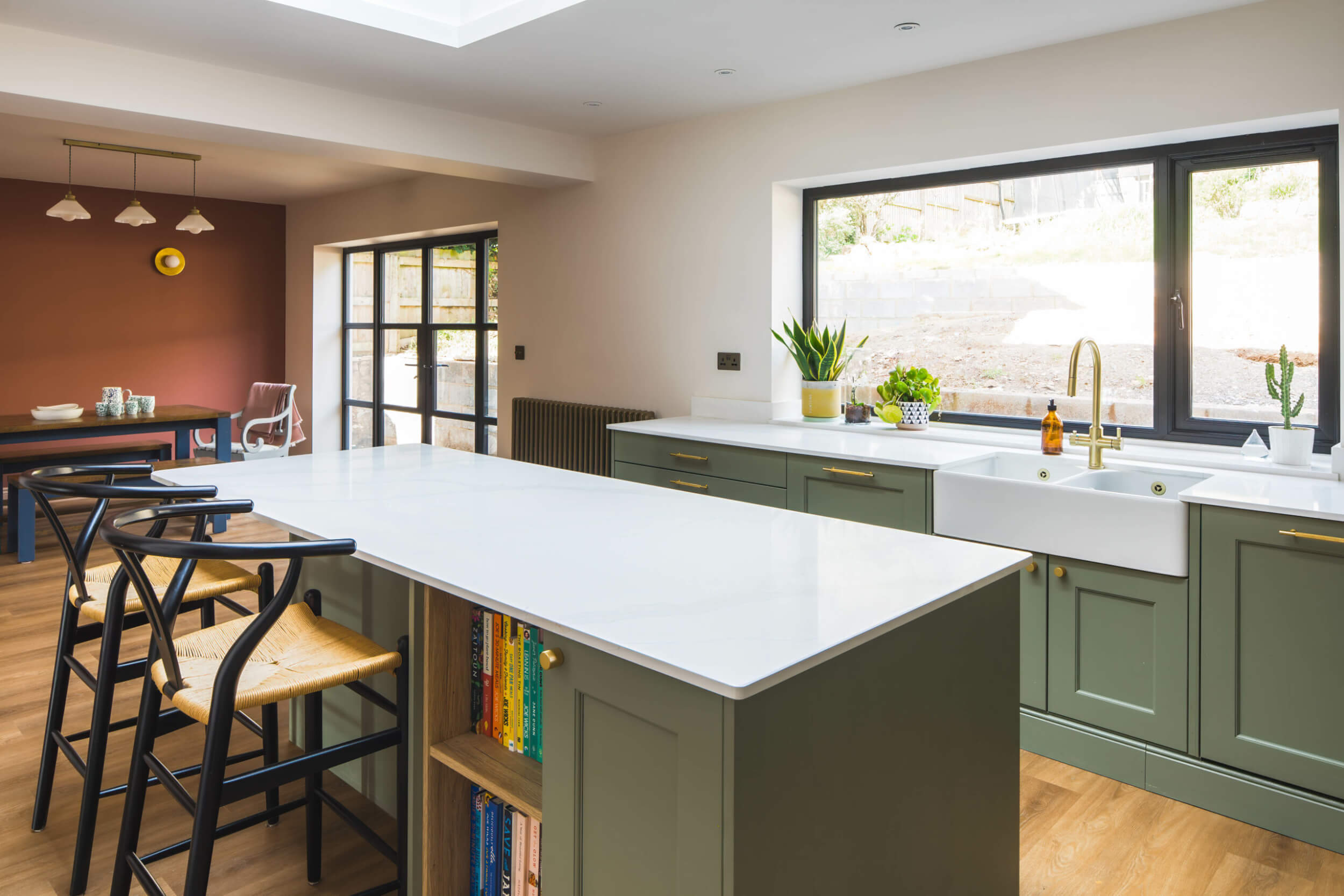
The Golden Rule Designers Follow

A great kitchen is rarely defined by materials alone.

It is defined by movement, reach, visibility, and friction-free use.

When a kitchen design works beautifully, you barely notice it. 

And that is exactly how good design should behave.

Because the best kitchens are not simply designed to be admired. 

They are designed to be lived in.

That is the real goal of kitchen design.

If you would like to explore kitchen ideas further, you can download our brochure below for kitchen inspiration. 

If you’re looking at designing your new kitchen but not sure what to do next, why not book a short, 15 minute call with one of Smile Kitchens expert kitchen designers

They’ll help you talk through your plans and give you guidance on what to do next.

Request Our Kitchen Brochure Book A Free Kitchen Consultation