
Contents
1. Introduction: U-Shaped Kitchen Design Ideas – Designing a U-Shaped Kitchen
2. Key Takeaways: Designing a U-Shaped Kitchen
3. What Are the Main Principles When Designing a U-Shaped Kitchen?
4. How Does a U-Shaped Kitchen Differ From an L-Shaped Layout?
5. Design Ideas for Homeowners Planning a U-Shaped Kitchen
6. What Are the Advantages of a U-Shaped Kitchen Design?
7. Frequently Asked Questions
8. Conclusion and Next Steps
Design Ideas for Homeowners Planning a U-Shaped Kitchen
The best advice when you start thinking about kitchen designs is to focus on your practical requirements, then consider the finishes and colours that will achieve the aesthetic you’d like.
1. Create a Kitchen Work Triangle
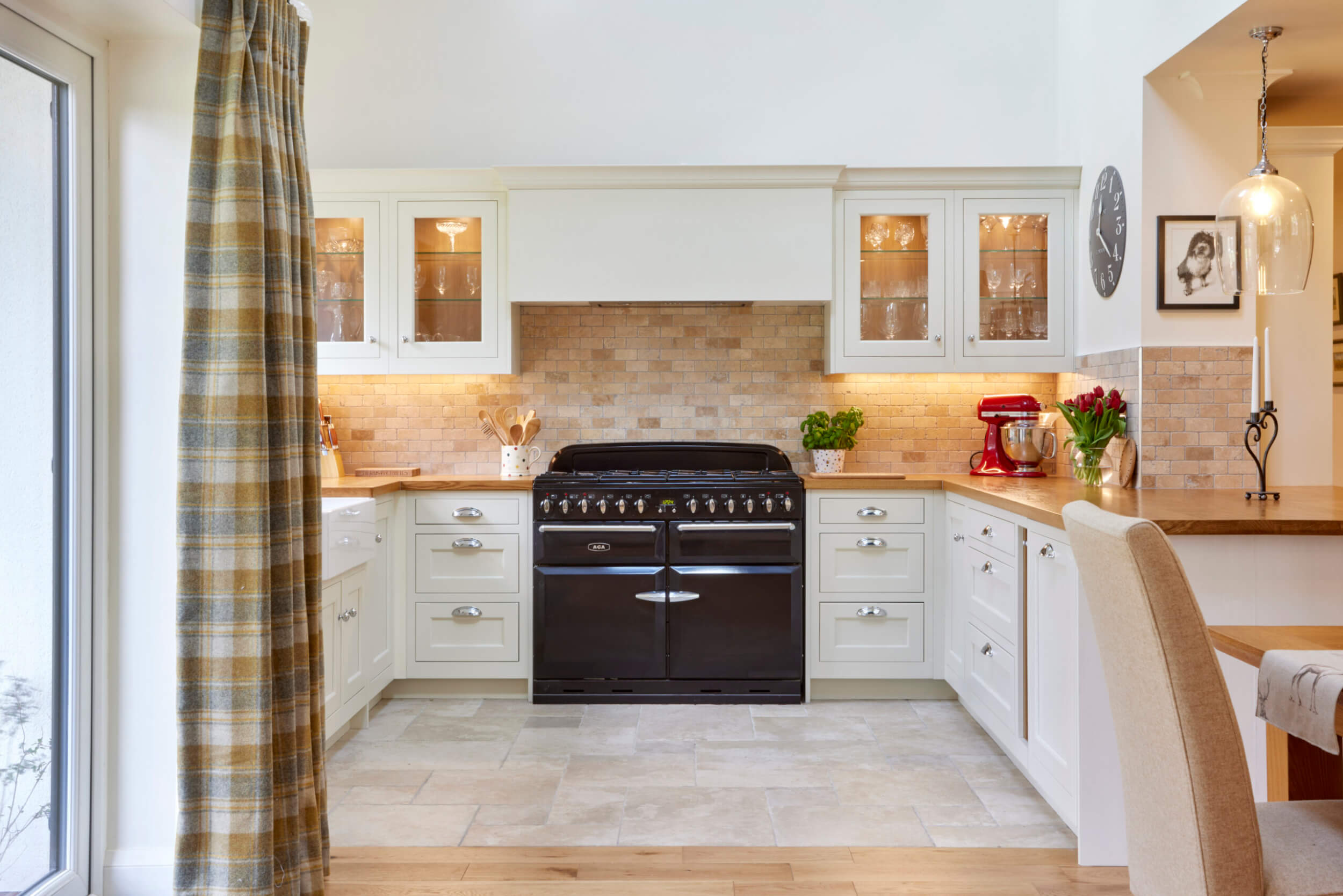
The work triangle comprises your sink, hob and fridge – the three major spaces you need to use when cooking. Positioning each space within easy reach of the others makes it faster and easier to prepare food, cook and wash up.
2. Think About Windows and Natural Light
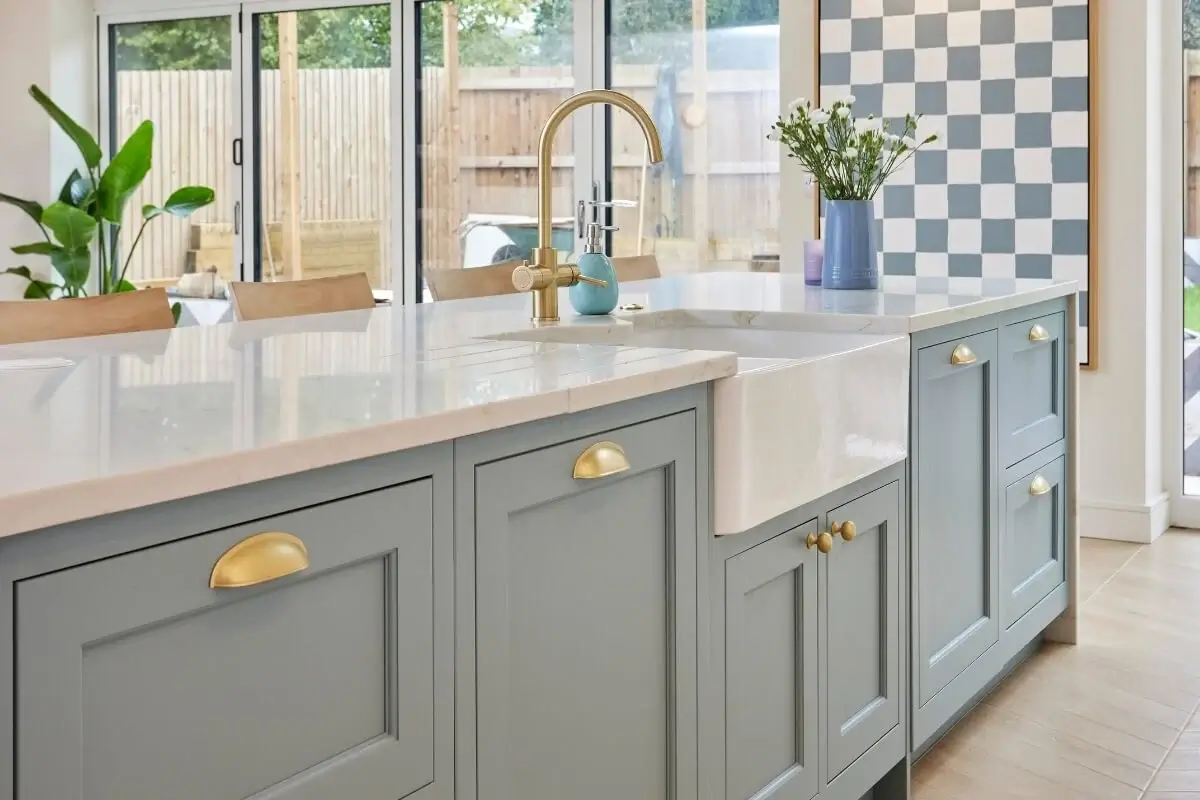
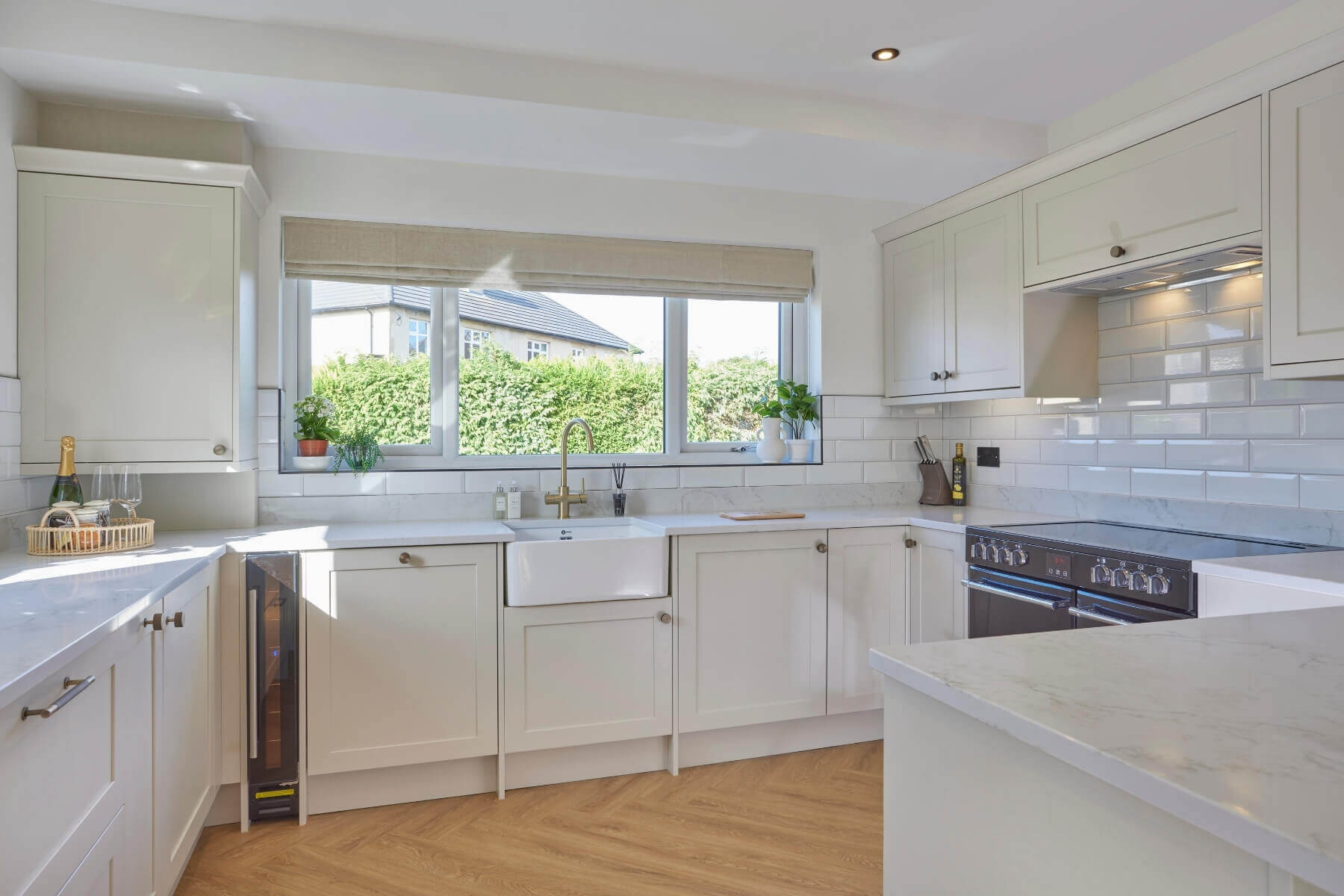
It’s common to place a sink under a window for the light, and having a central focus in your kitchen design ensures it feels balanced and natural.
3. Decide on Seating Options
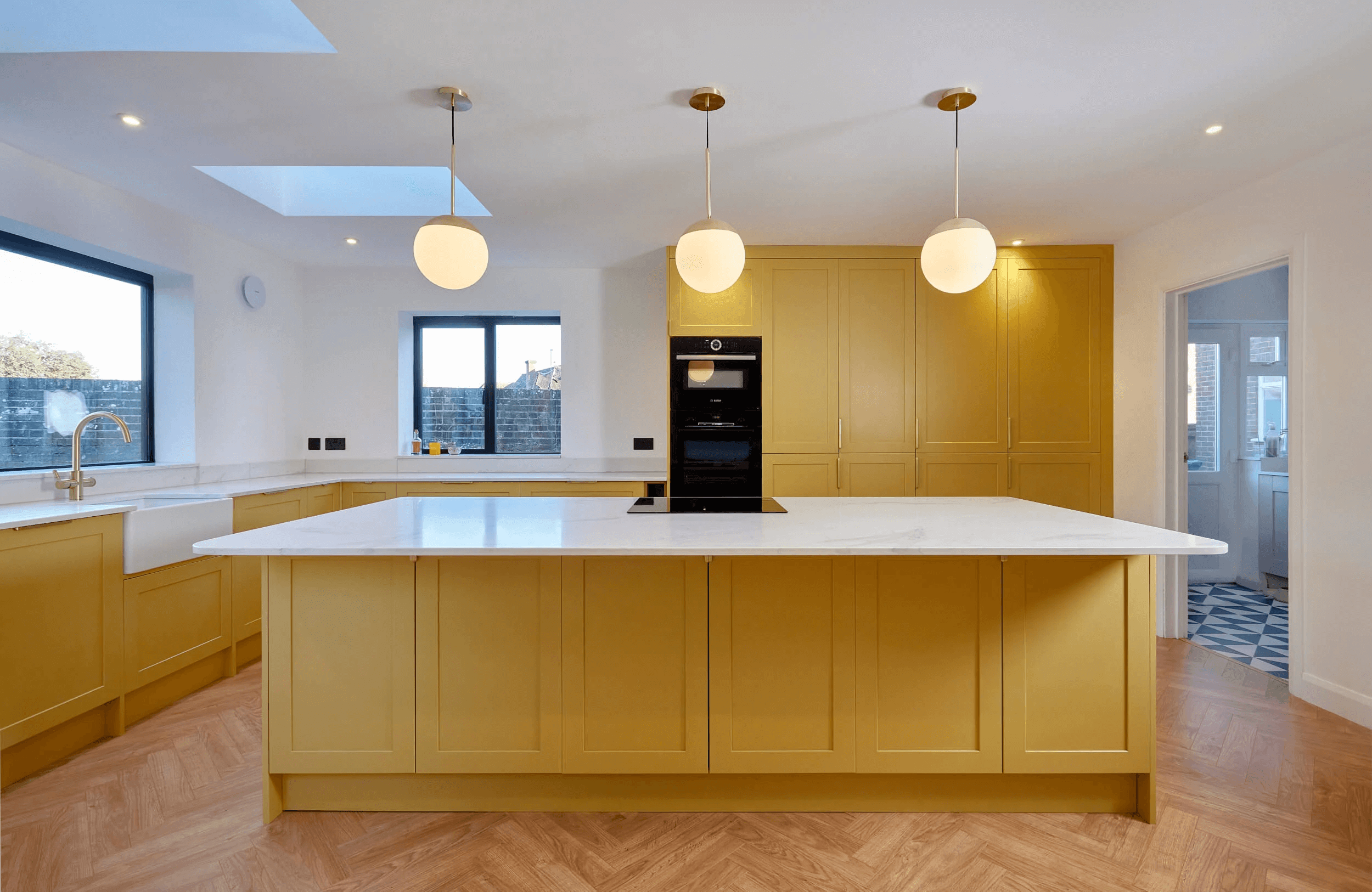
Smaller kitchens can incorporate a freestanding bar or table at the end of one of the points of the U, or, if you have the space, you could install a breakfast bar or island in the centre.
4. Consider Open Shelving for Compact Kitchens
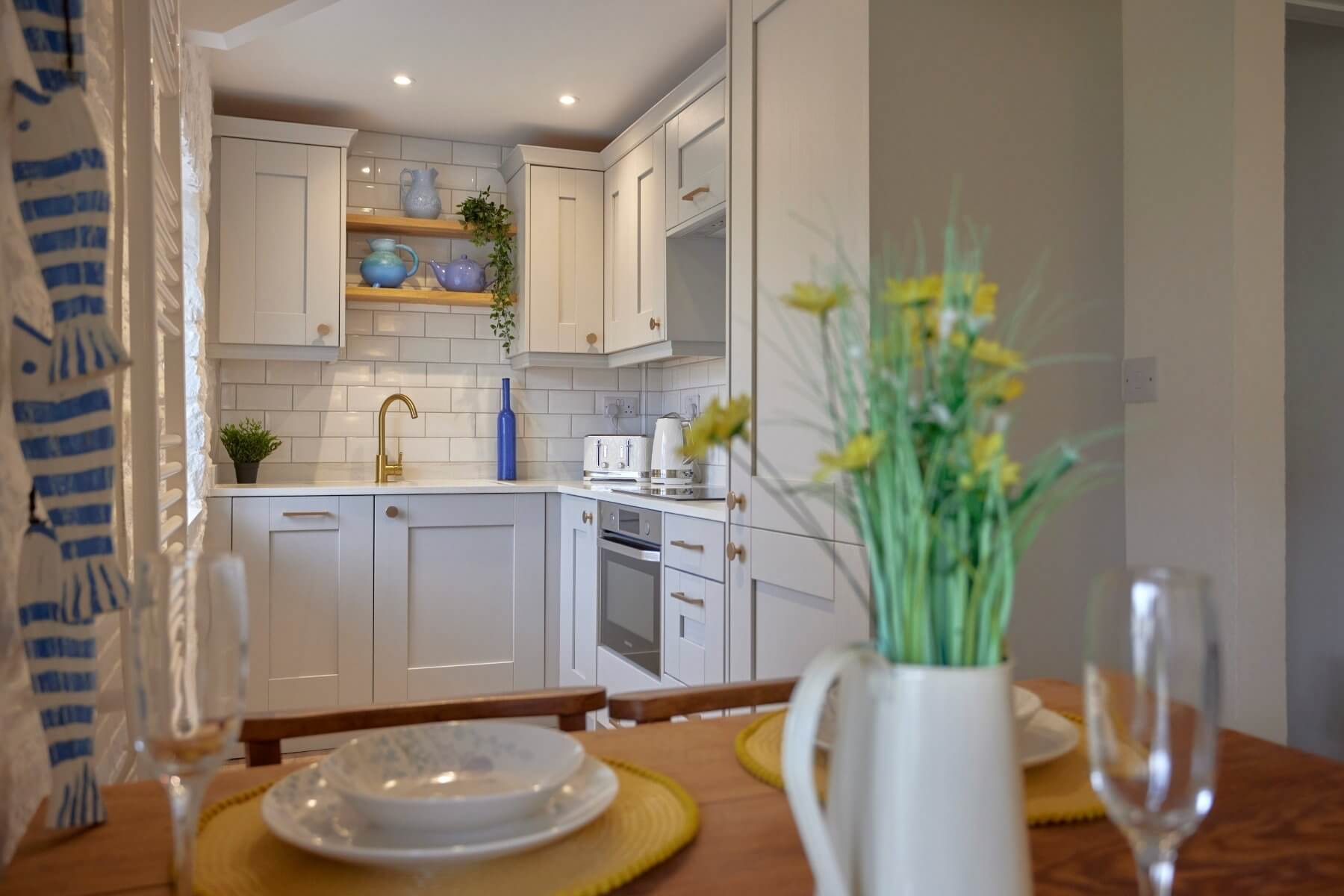
Having three walls of built-in cabinetry can make smaller kitchens seem cramped and dark – the best way to combat this is to use open shelves instead, which ensures you’re not limiting storage while also improving the flow of light.
5. Make Use of Your Corners
The U-shape means there will be two corners at tight angles, though these are easy to use with a bespoke kitchen designer’s help. Options might include special corner drawers and carousels, which provide defined kitchen storage space for items like herbs and cutlery.