
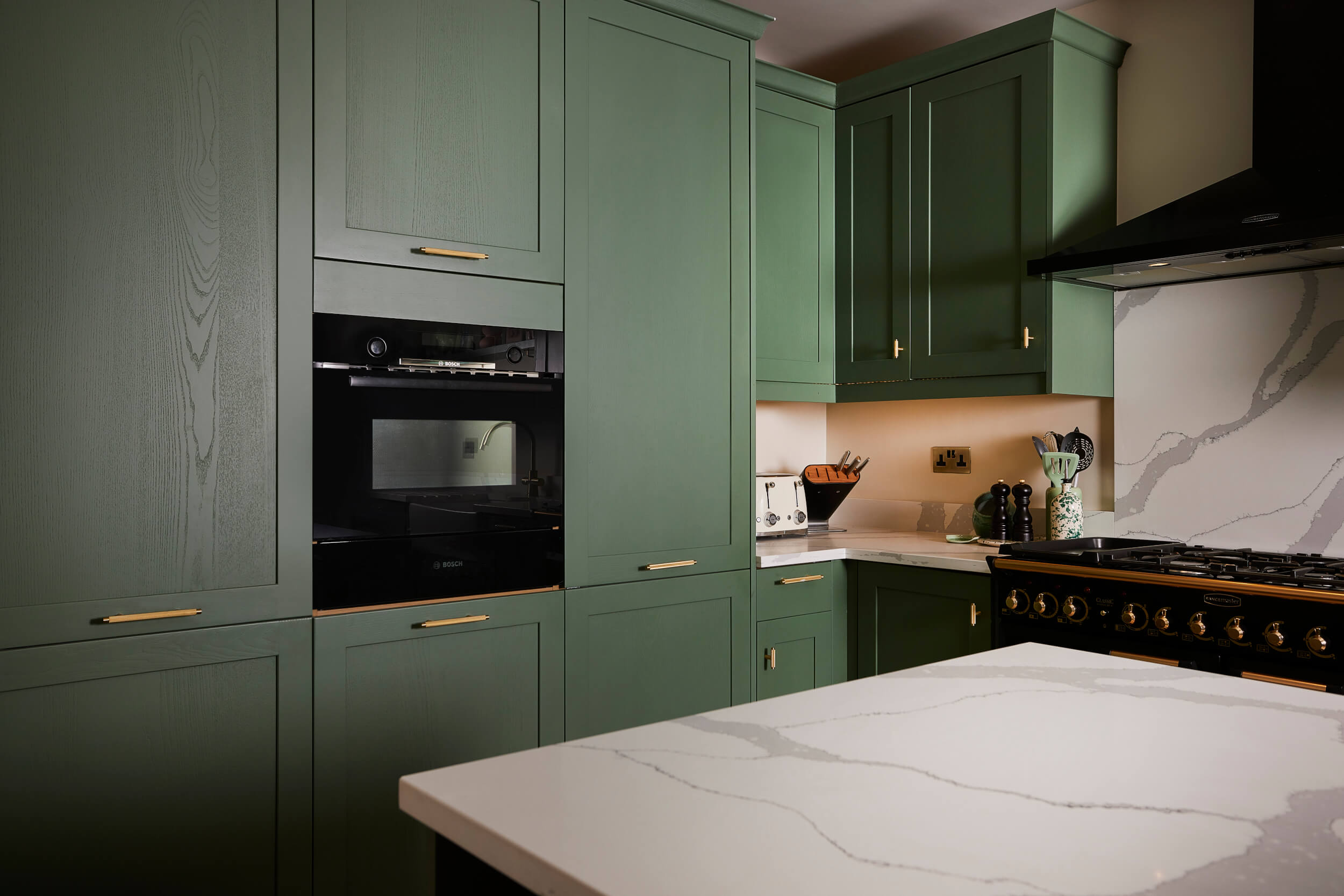
1. Unbalanced Kitchen Design

1. Unbalanced Kitchen Design
Sometimes a space just feels off, even when you cannot quite explain why.
In many cases, it is a balance issue within kitchen design.
An unbalanced kitchen might have:
– Too many appliances lined up on one wall
– An island sitting awkwardly off-centre
– One wall packed with cabinetry while another feels strangely empty
There are countless ways imbalance can creep into a design, and the result is a kitchen that feels visually heavy or slightly uncomfortable.
Think of it as kitchen vertigo.

How to Avoid Kitchen Vertigo
Try not to cluster appliances in one area.
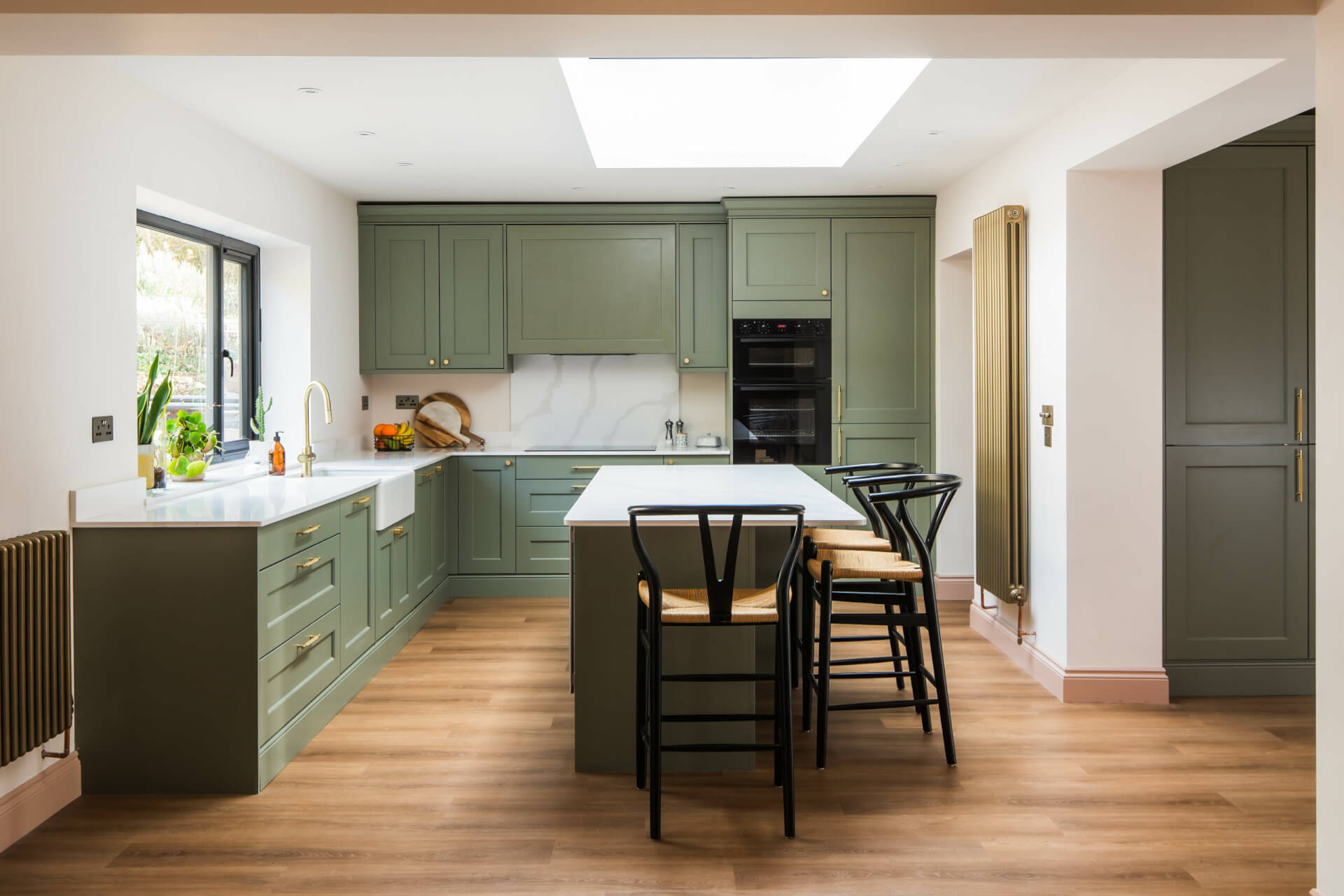
If your layout allows, spread elements out so the visual weight feels evenly distributed.
Cabinetry plays a big role here.
Installing storage consistently from left to right, and even from floor to ceiling, creates structure and rhythm in your kitchen design.
Small additions like wine racks or built-in features can help too, as long as there is something of similar visual weight elsewhere in the room.
Balance is not about perfection, it’s about harmony.

3. Missing a Focal Point in the kitchen
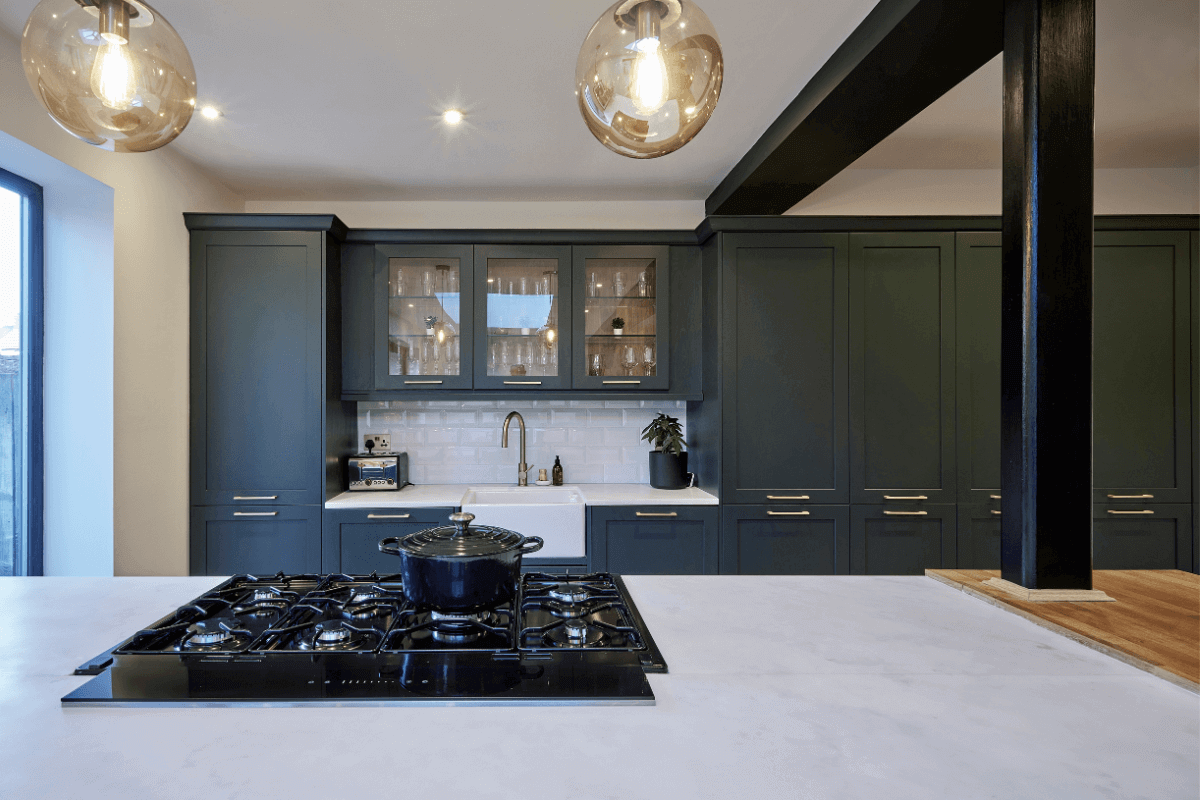
Every successful kitchen design benefits from something that immediately draws the eye.
A focal point.
This is the feature that sets the tone of the space. It might be:
– A striking island worktop
– A beautiful range cooker
– A bold splashback or feature hood
Without a focal point, kitchens can feel visually scattered.
With one, the design feels grounded and memorable.
It gives the room a sense of purpose.
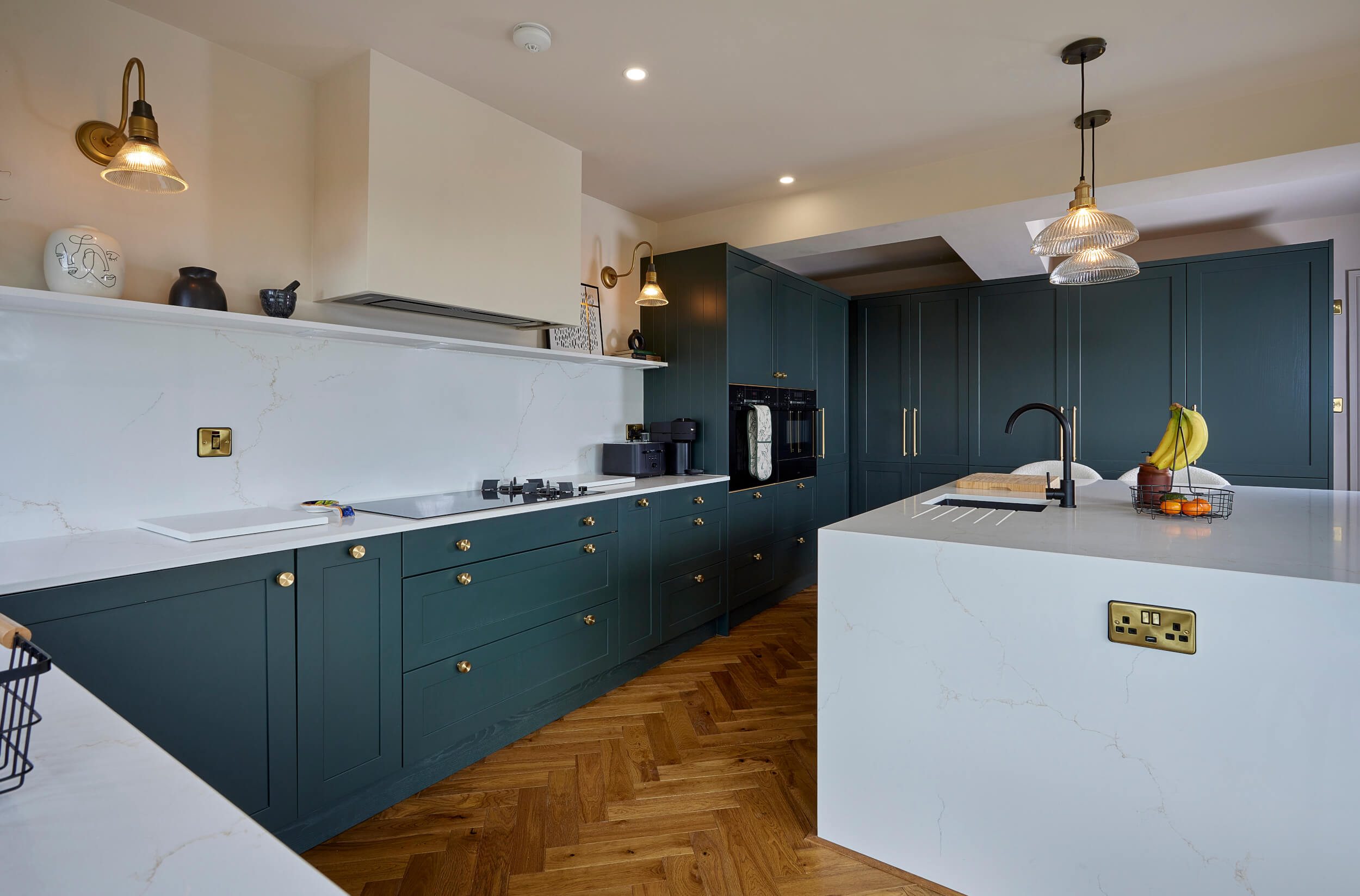
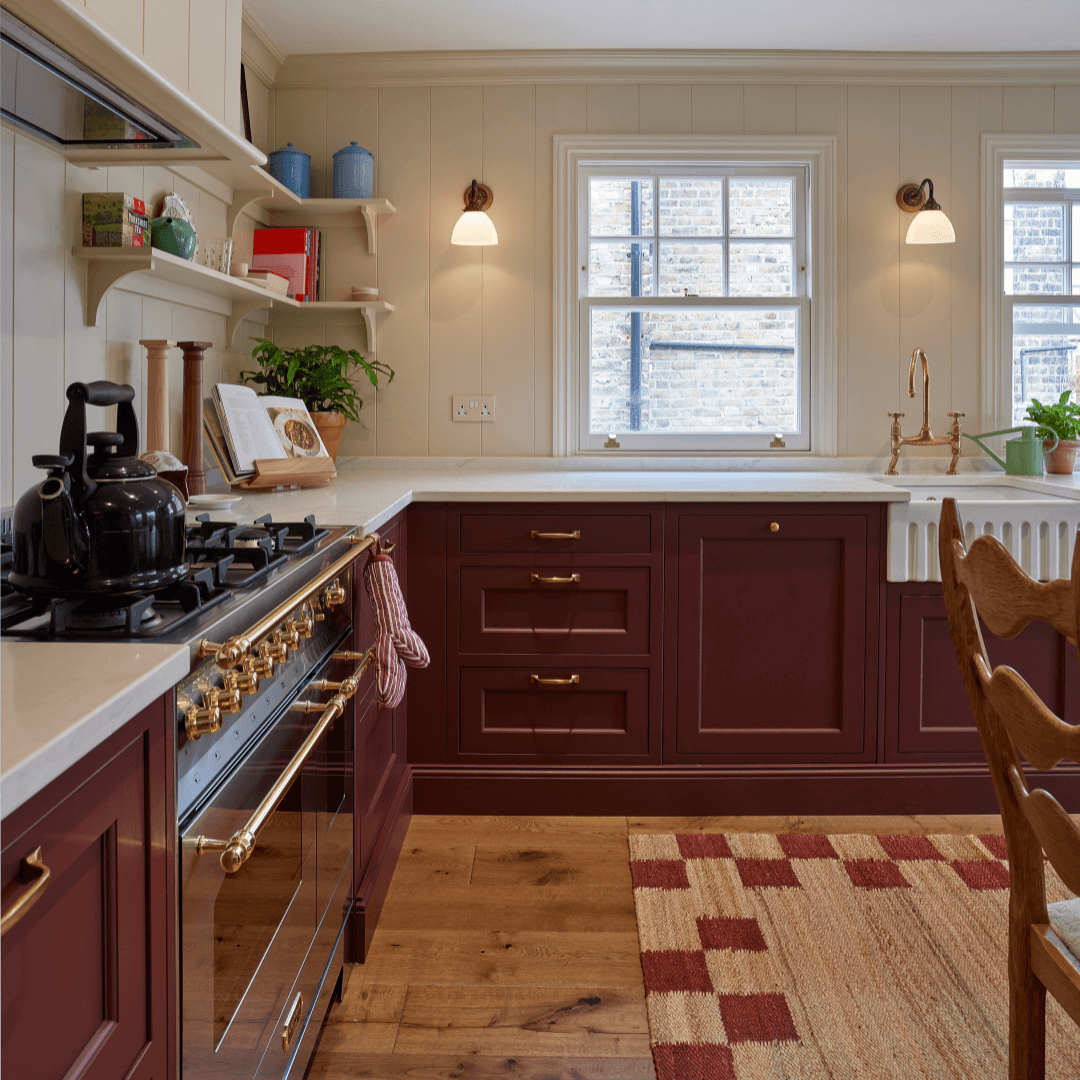
5. Not Enough Kitchen Counter Space
A classic kitchen design mistake is underestimating workspace.
It is not only about the quantity of worktop space, but continuity, especially beside the sink, the hob, or the fridge.
Small, broken-up surfaces rarely function as well as long uninterrupted runs.
A simple rule of thumb in kitchen design is to aim for at least 300mm of landing space near sinks and hobs at a minimum.
Prioritise usable surfaces over total square footage.
Because nobody has ever complained about having too much practical worktop.
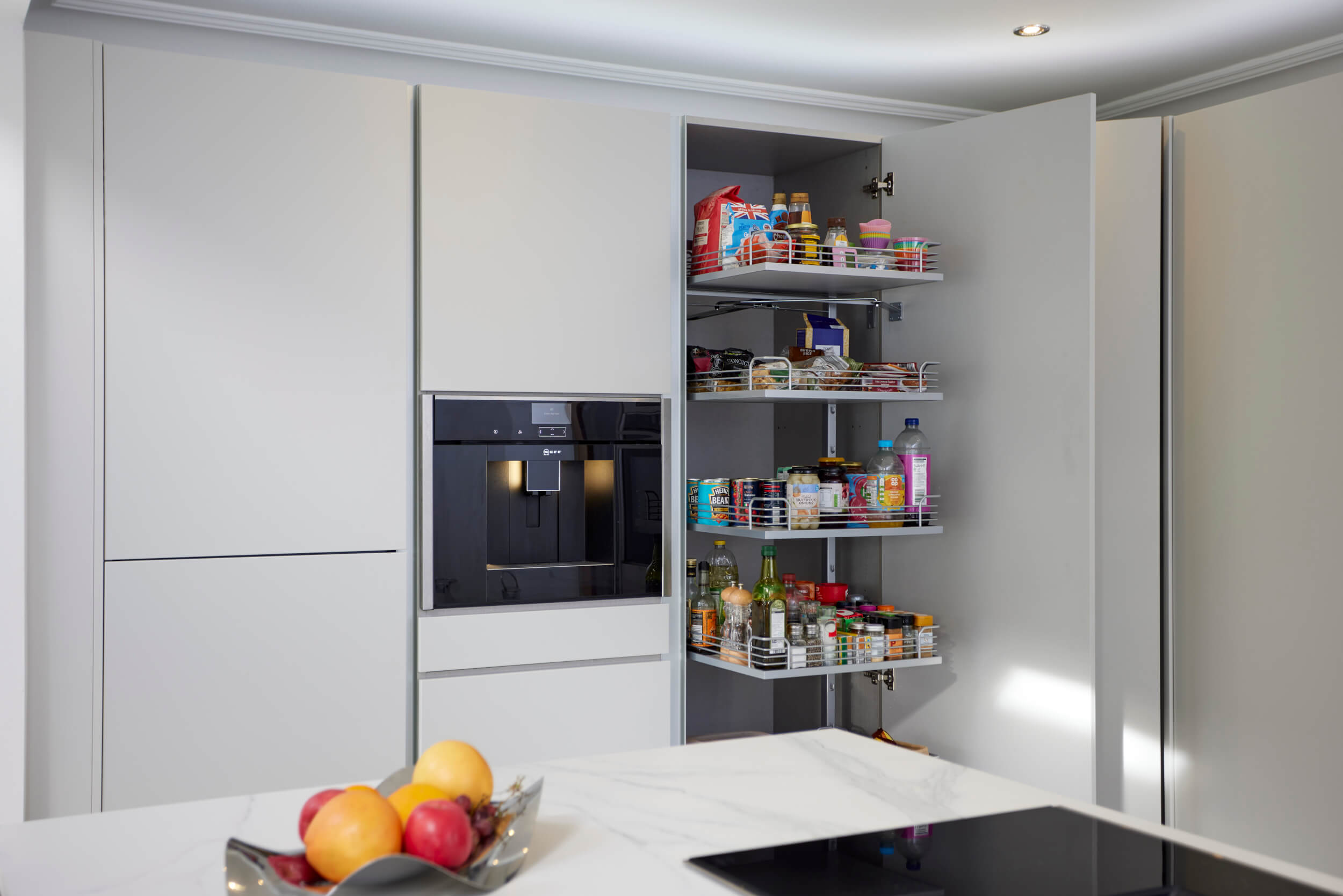
6. Ignoring Kitchen Storage Ergonomics
Too many upper cabinets.
Deep shelves where items vanish into the abyss.
Not enough drawers for heavy cookware.
These are all red flags in kitchen design.
A kitchen can technically have lots of storage and still be frustrating to use.
To improve ergonomics:
– Favour drawers over standard shelving
– Use pull-out mechanisms wherever possible
– Avoid inaccessible blind corners
– Store heavier items at waist level
You do not want to be on your knees emptying an entire cupboard just to find one elusive plastic container lid.
Storage should make life easier, not require a search and rescue mission.
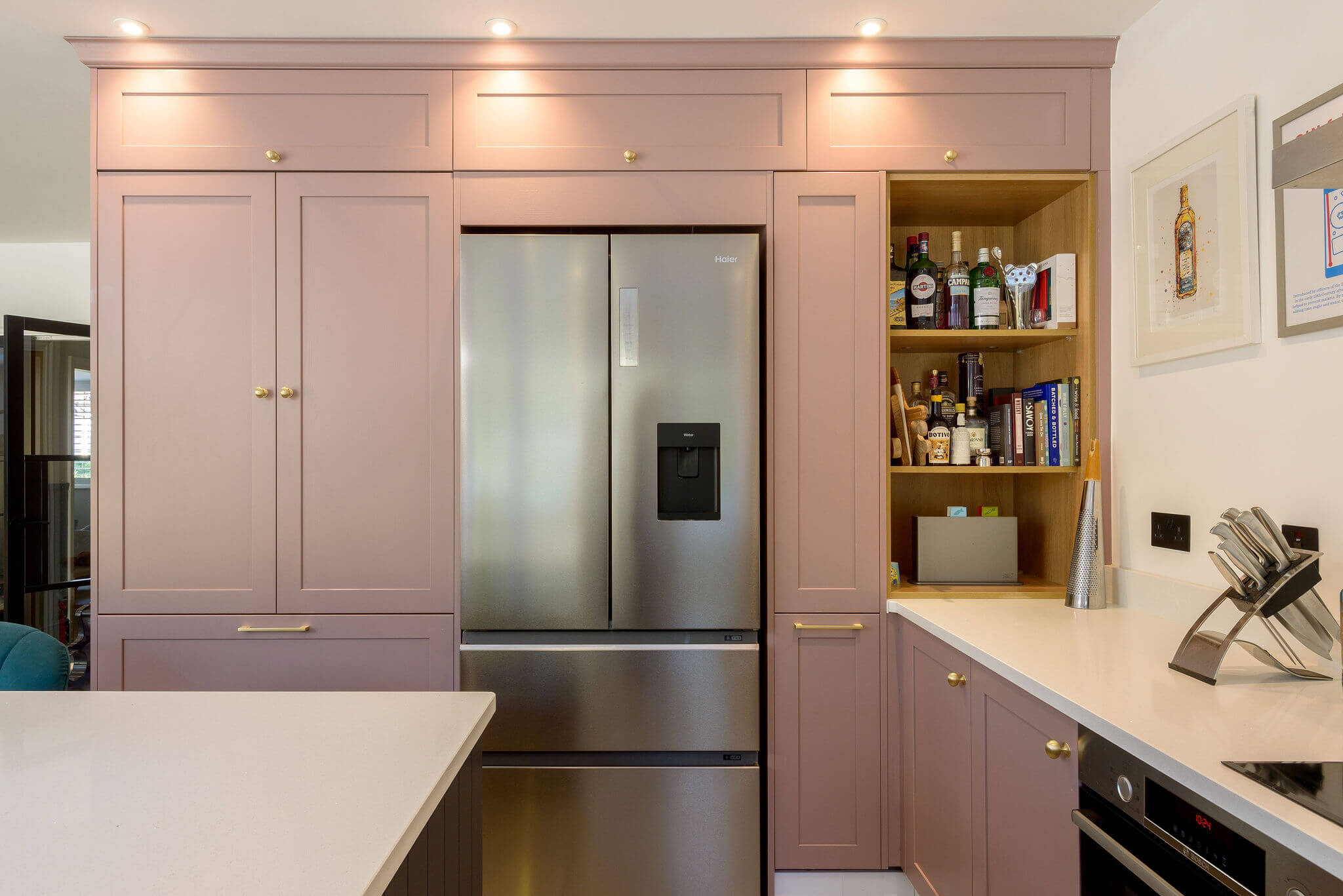
8. Over or Under Kitchen Lighting
Lighting mistakes are incredibly common in kitchen design.
Over-reliance on spotlights. Shadows cast across prep areas. Harsh glare bouncing off glossy surfaces.
Lighting should never be an afterthought.
Instead, weave it into the kitchen design process from the beginning and consider three layers:
– Ambient Lighting – Overall mood and warmth
– Task Lighting – Under-cabinet LED strips are particularly effective
– Accent Lighting – Pendants, wall lights, feature lighting
Well-designed kitchens use multiple light sources to create depth and functionality.
Lighting is not just practical. It shapes how the entire kitchen feels.
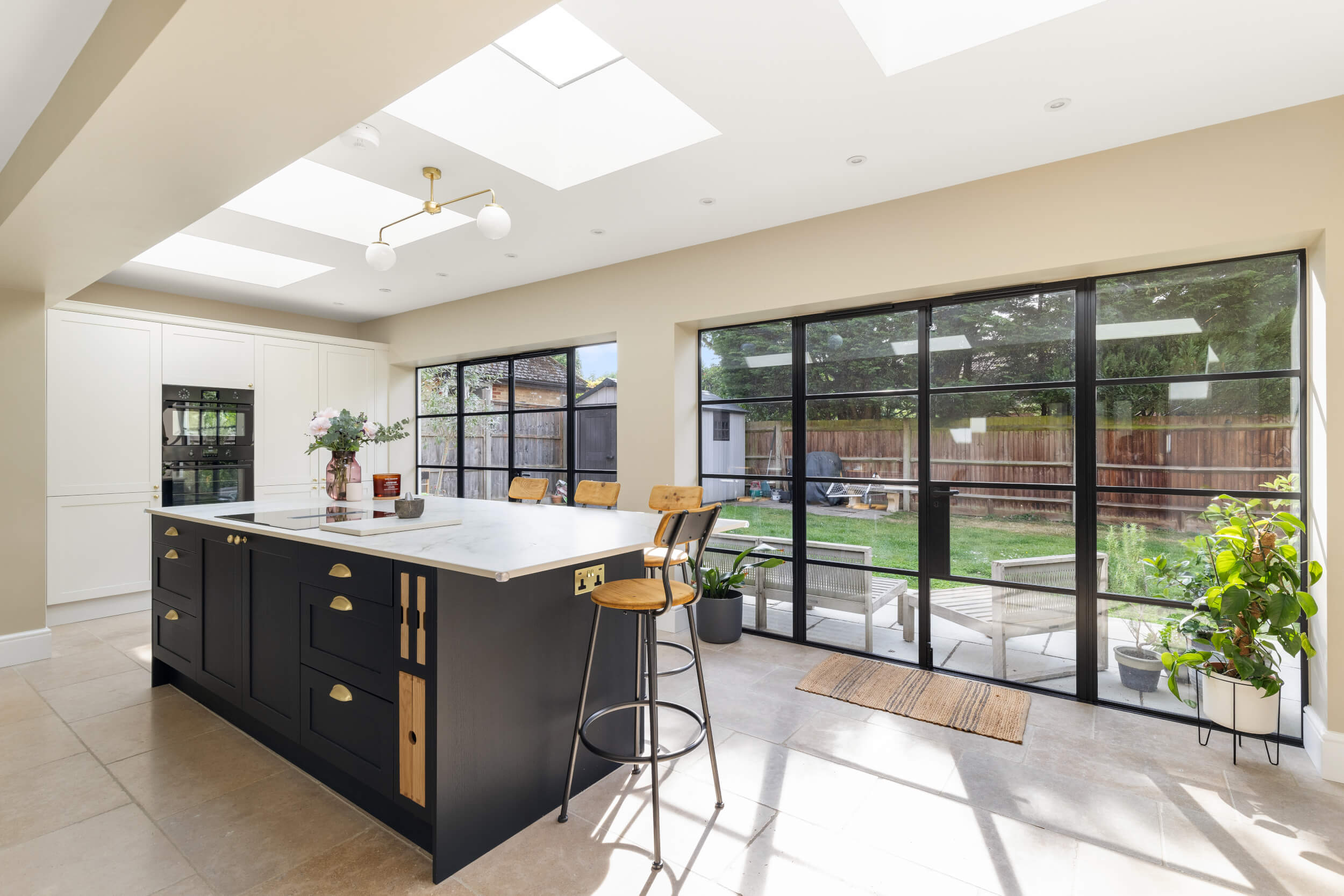
9. Poor Kitchen Island Optimisation
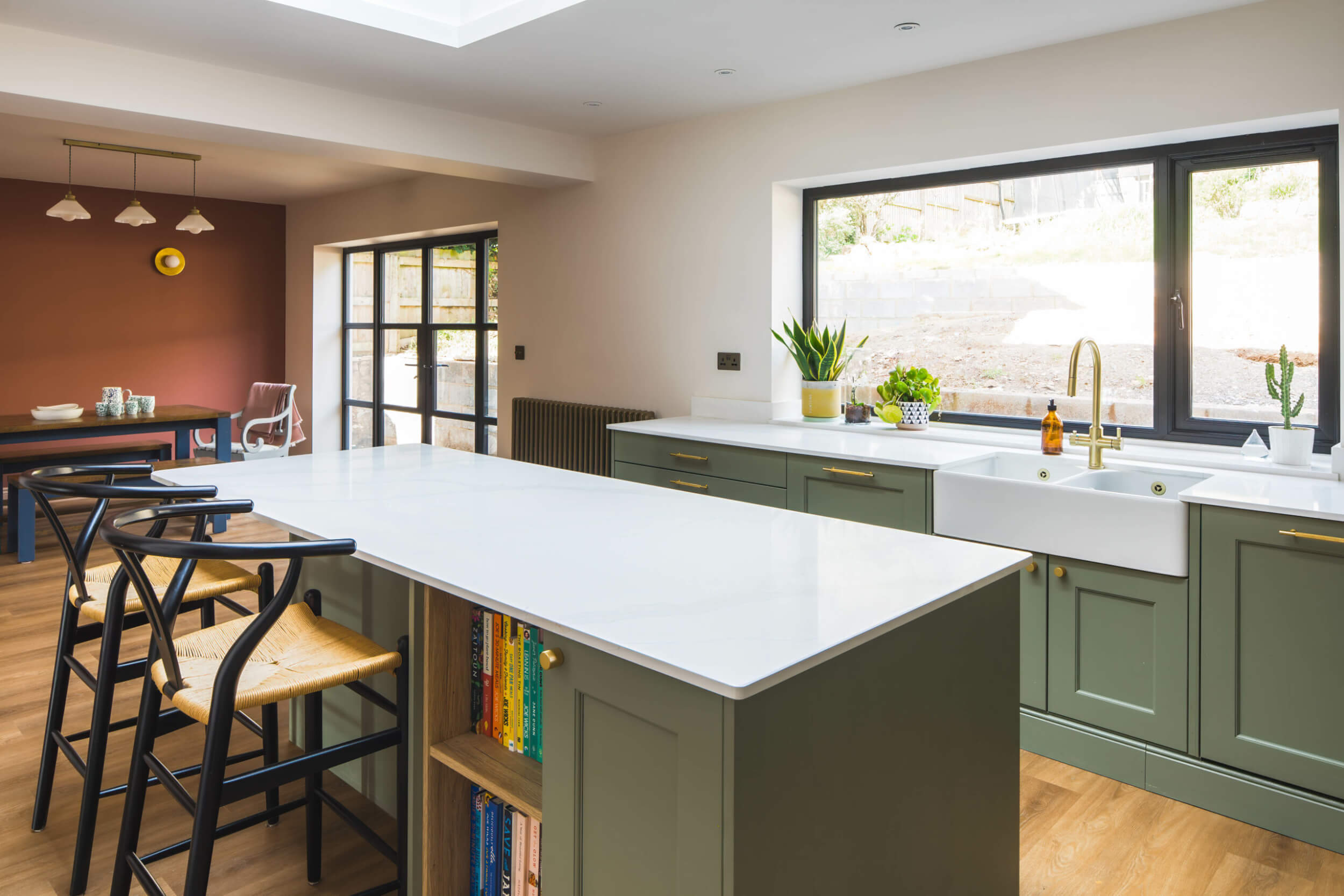
Kitchen islands are aspirational. And frequently wrong for the space.
While an island can be brilliant for prep and socialising, making it too large can turn it into a roadblock rather than an asset within your kitchen design.
And controversially, placing a sink on the island is not always ideal.
If the island is intended as a social hub, having dishes and mess on display may not be the ambience you were hoping for.
Watch out for islands that:
– Restrict movement
– Crowd walkways
– Maintain comfortable clearances
– Dominate the room visually
Do not force an island into a kitchen design that cannot comfortably support it.
Sometimes restraint is the smarter move.