
5 Clever Design Ideas to Make the Most of a Small Kitchen

By Nicholas McDonald

6 min read

Learn 5 smart design ideas to make the most of a small kitchen, from space-saving layouts to clever storage solutions that keep your kitchen open and practical.

Contents

1. Choose an L-Shape or Galley Layout

2. Maximise Vertical Space

3. Upgrade Storage Inside Your Cabinets

4. Keep Surfaces Light, Reflective and Uncluttered

5. Add Flexible Pieces Instead of Fixed Bulk

6. Bringing It All Together
Request Our Brochure

A common challenge when designing a small kitchen is trying to fit everything in without the space feeling cramped.

You need storage. You need appliances. And of course, you need enough worktop space to actually cook.

On top of that, you still want room to move around comfortably.

So you might be wondering… how on earth do you make that work?

A lot of people try to solve the problem by adding more cabinets.

Before long, the worktops start filling up with small appliances, jars and everyday items.

Technically the kitchen works, but it ends up feeling tight and overcrowded.

The goal isn’t to squeeze everything in. It’s to fit in what you need in a smarter way.

Even if your kitchen is small, there is still plenty you can do with it. With the right design choices, the space can feel far more open and practical than you might expect.

Here are five simple ideas that can help you make better use of the space when designing your kitchen.

1. Choose an L-Shape or Galley Layout

When space is limited, your layout makes a big difference.

Two layouts tend to work particularly well in small kitchens: the L-shape and the galley.

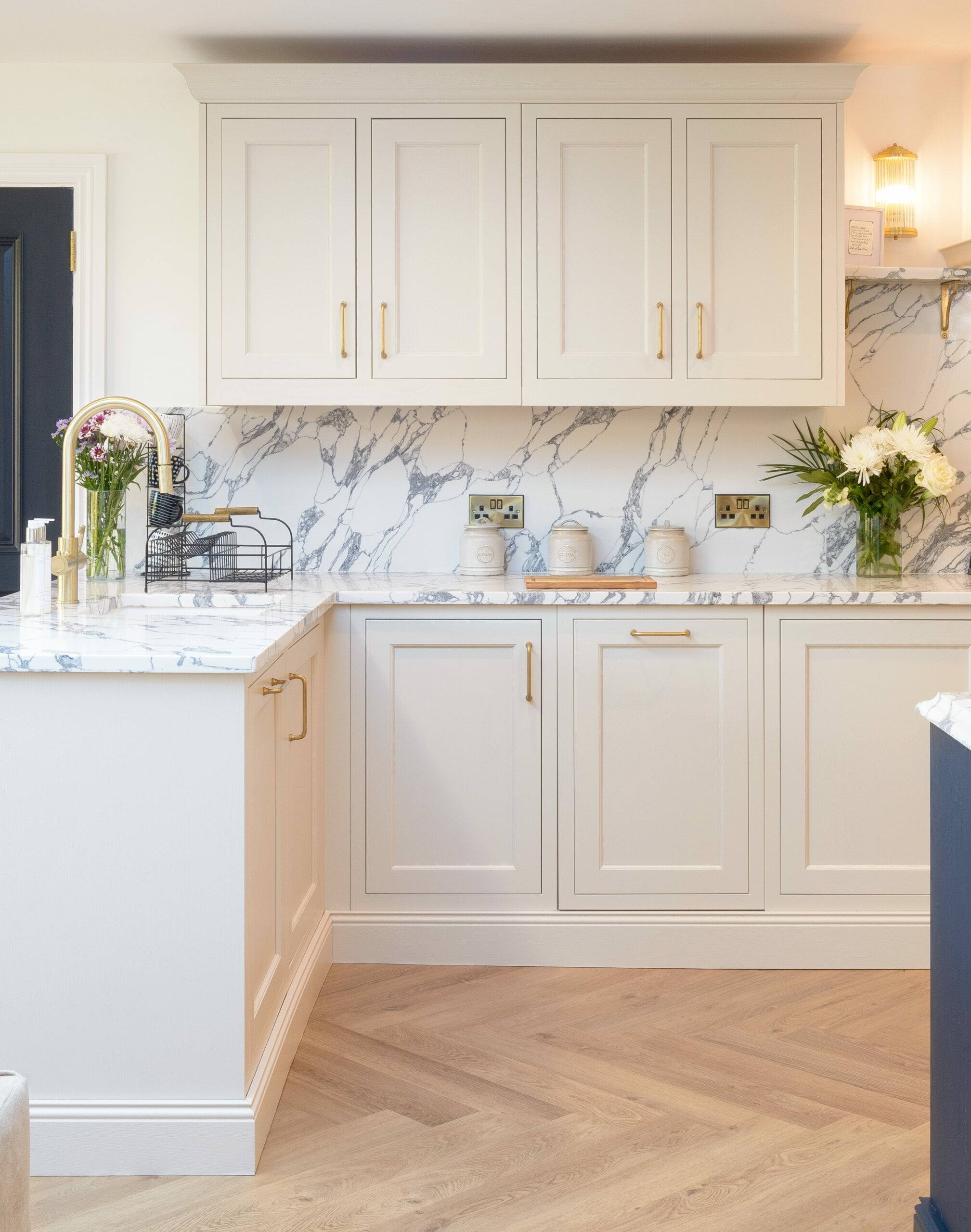
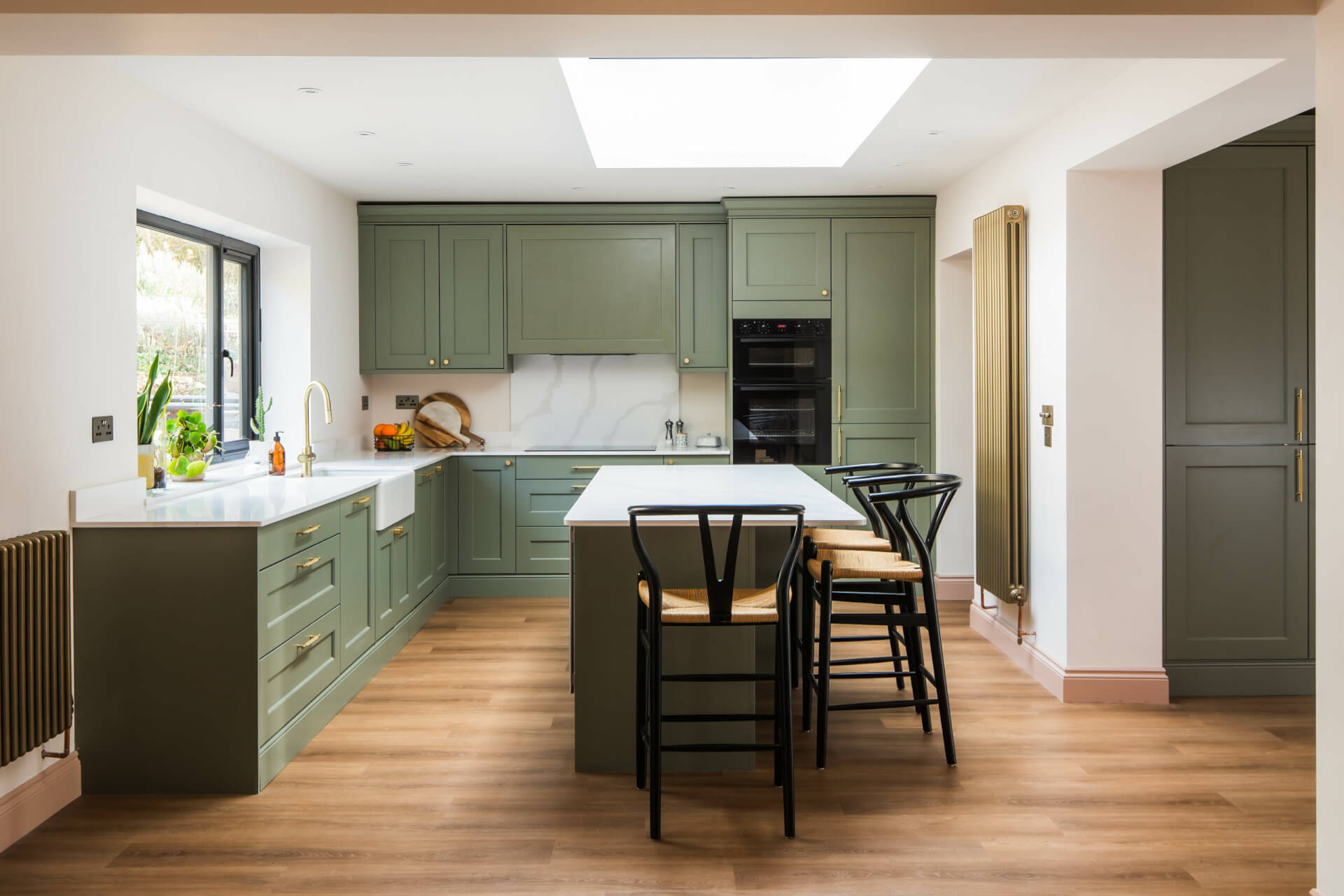
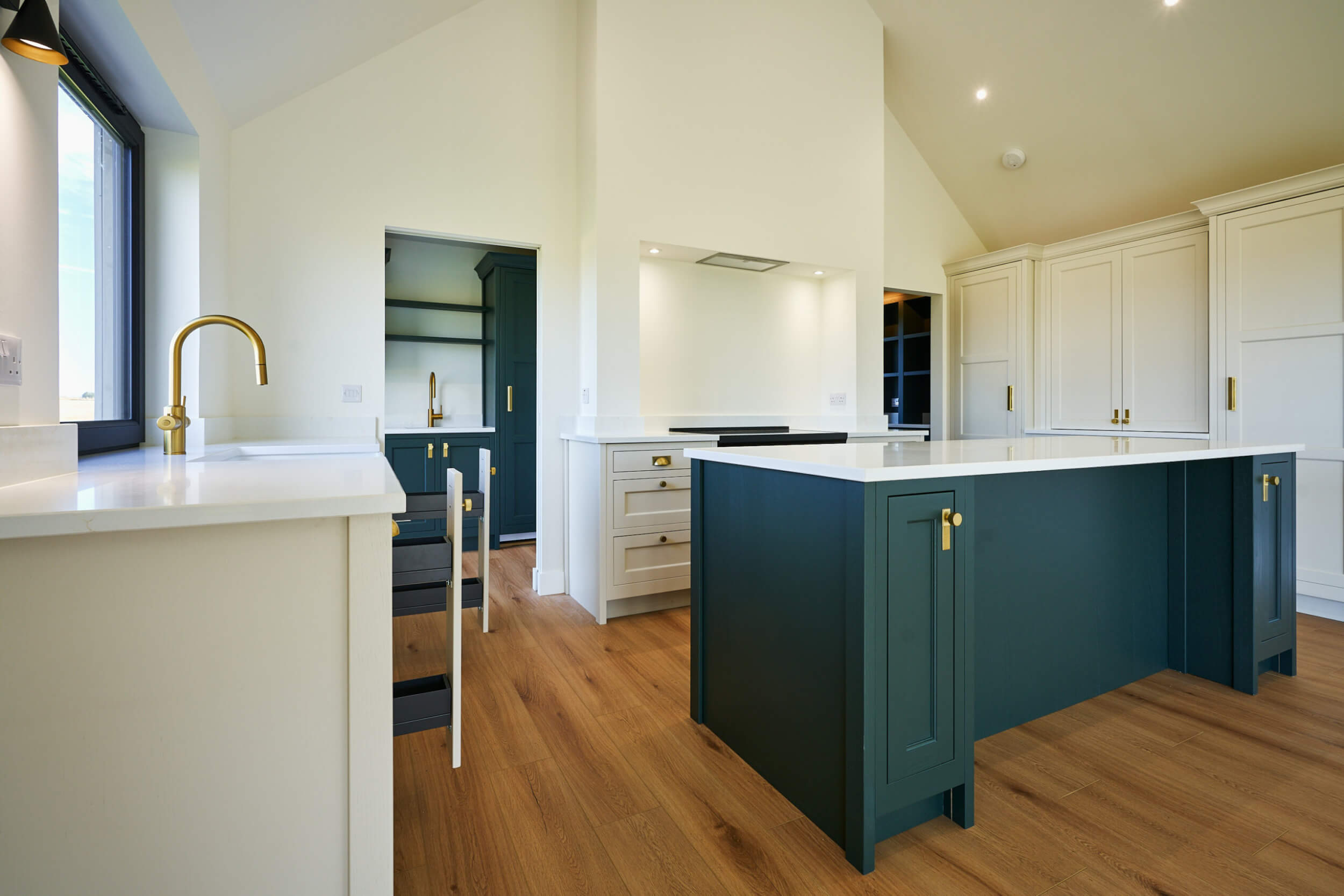
An L-shaped kitchen uses two walls that meet in a corner.

This naturally leaves the centre of the room more open, which makes the space easier to move around in.
 

white kitchen cabinet

In some homes, it can even leave enough room for a slim island or a small breakfast bar.

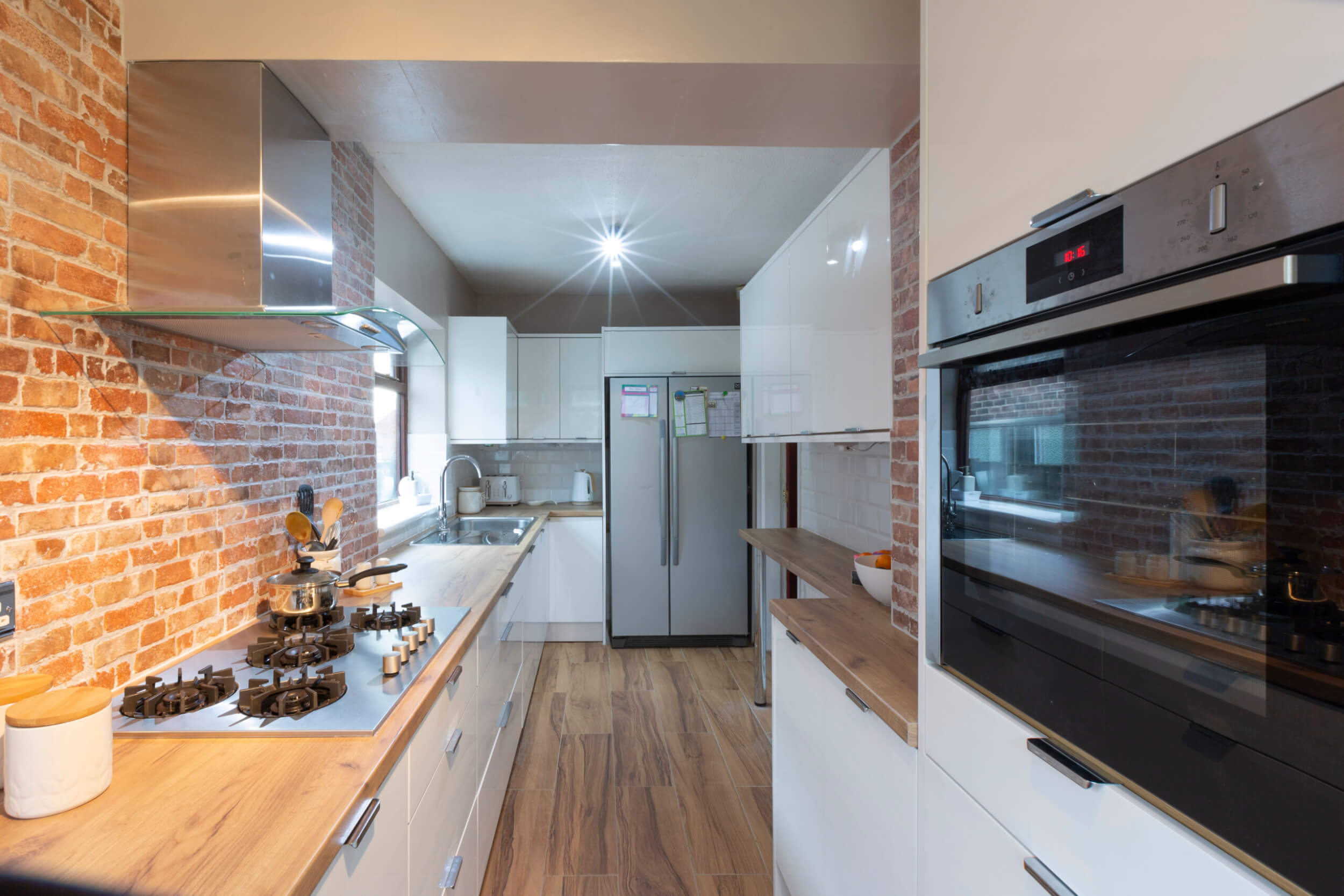
A galley kitchen works especially well in narrow spaces. Cabinets and appliances run along two opposite walls, keeping everything within easy reach.

That means less walking back and forth between the sink, hob and fridge.

In a small kitchen, extra steps quickly become frustrating. A good layout keeps everything simple and close by.
2. Maximise Vertical Space

If floor space is limited, it helps to think vertically.

Look at the space above your wall cabinets. In many kitchens, that area sits empty when it could actually be used for extra storage.

Extending your cabinets higher or adding additional shelving can create room for items you do not use every day. Things like large serving dishes, baking trays or jars of dry ingredients work well here.

Moving these items higher up frees your main cupboards for the things you reach for daily.

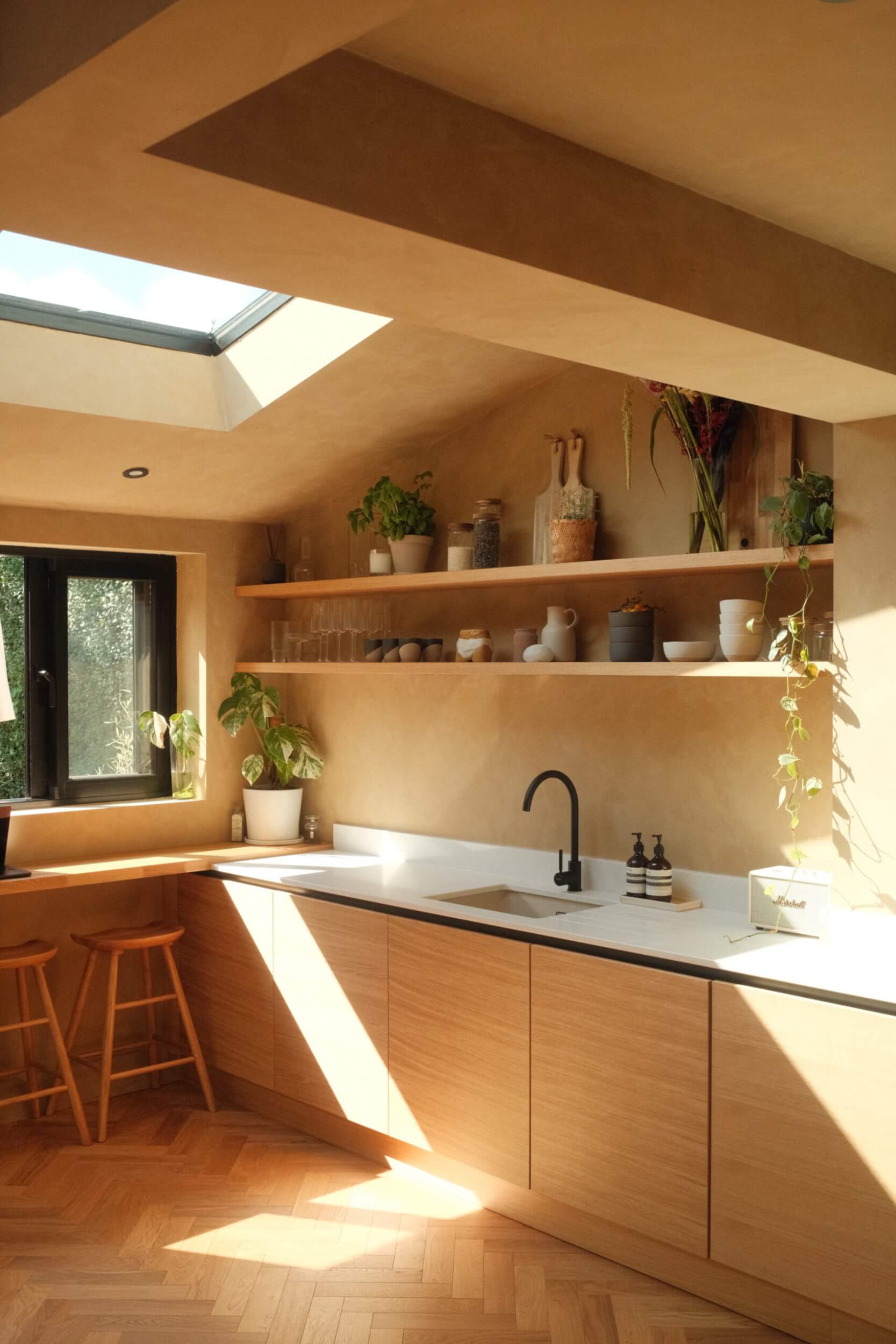
Open shelving can also work nicely, as long as it is not overcrowded. A few stacks of bowls or neatly arranged jars can look calm and organised rather than cluttered.

Wall rails and hooks are another easy win. They are great for hanging utensils, pans or tea towels while freeing up drawer space.

Once you start using the full height of your kitchen, the whole space usually feels less cramped.

3. Upgrade Storage Inside Your Cabinets

Adding more cupboards does not always solve storage problems.

Often the issue is not how much storage you have, but how well it works.

Standard cabinet shelves can waste space. Items get pushed to the back, corners become awkward, and before long you forget what is even in there.

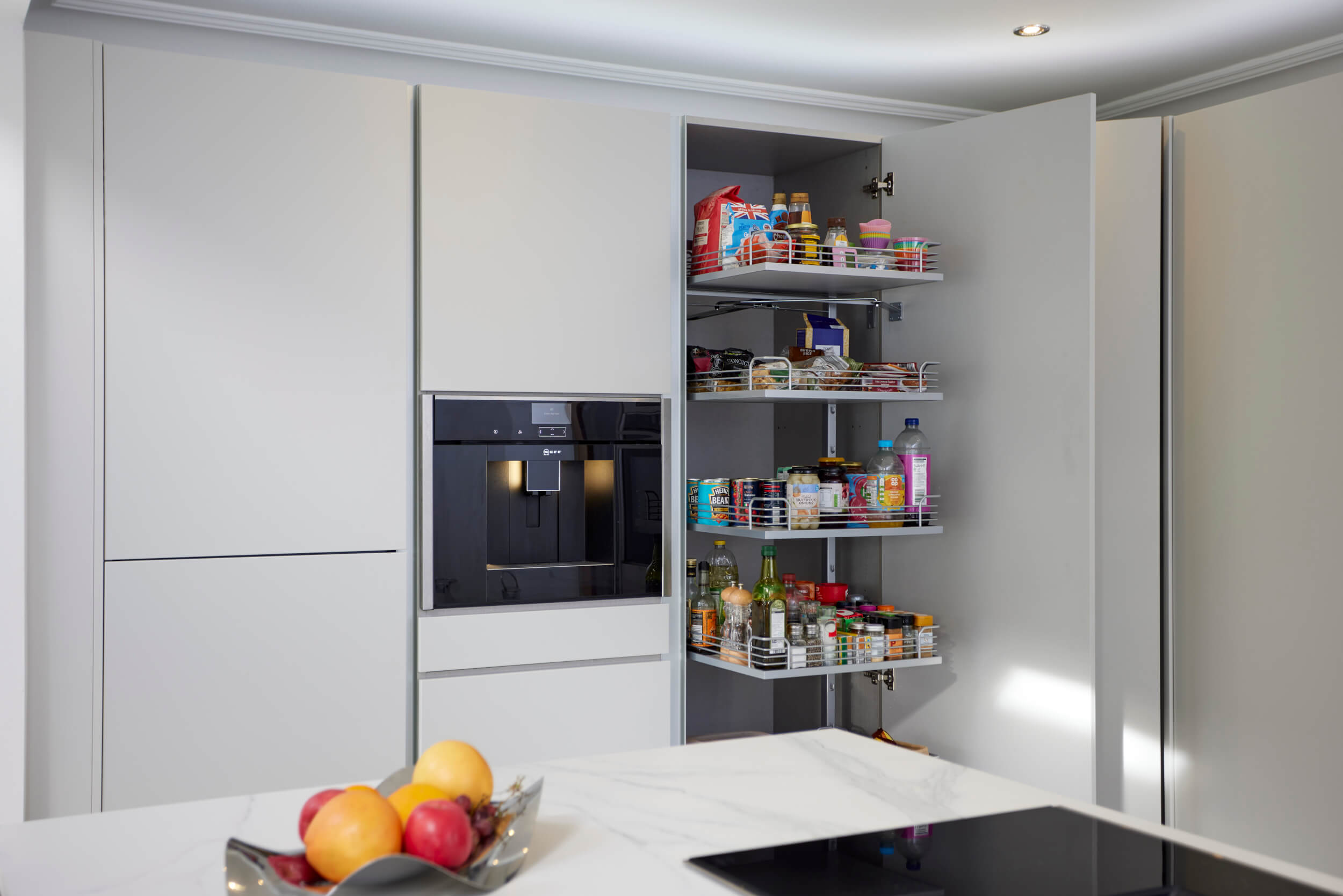
Pull-out shelves and deep drawers make a huge difference. Instead of digging around in a dark cupboard, you can see everything at once.
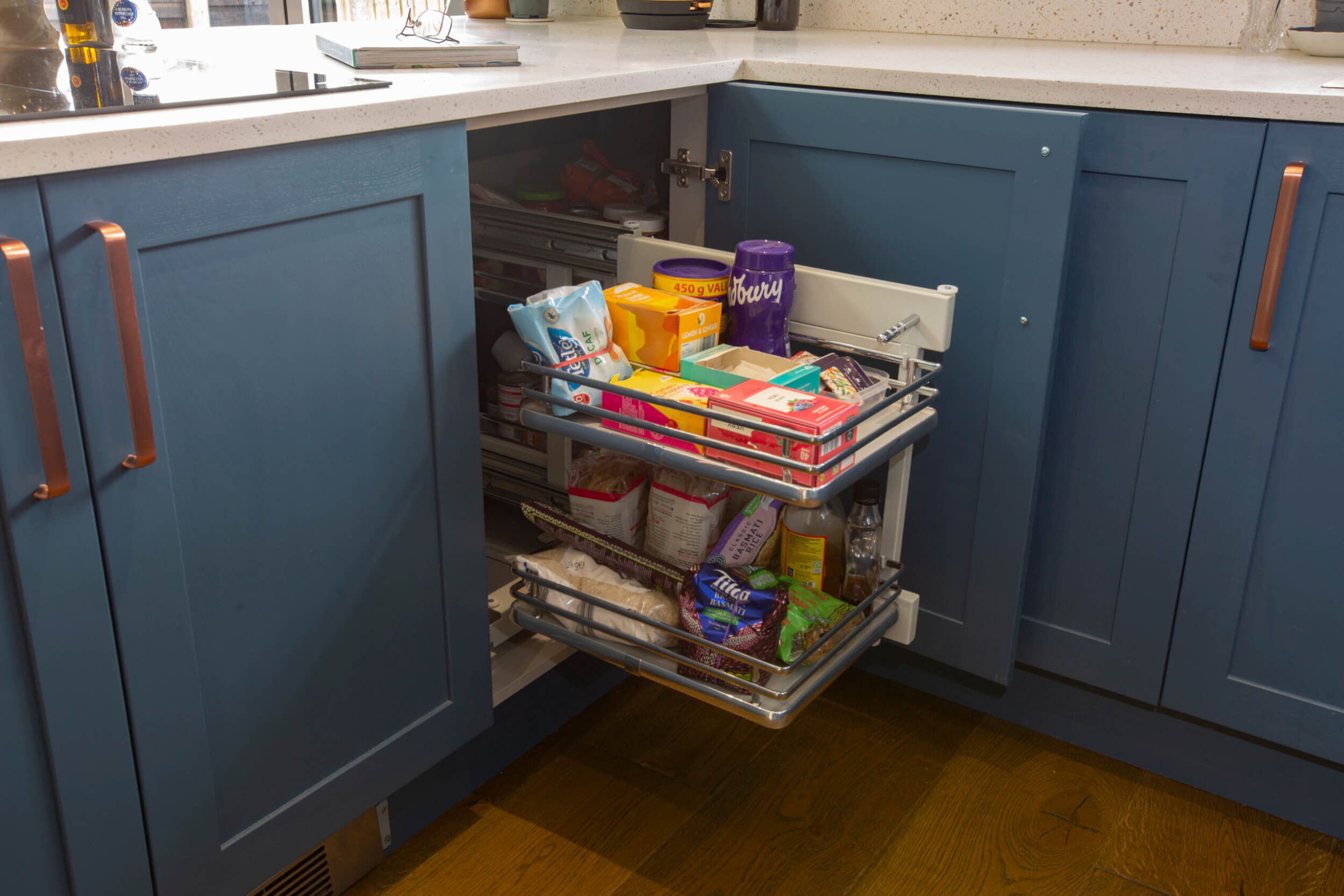
Corner units that spin or slide out are also worth considering. They help you use spaces that would otherwise sit unused.

Deep drawers work particularly well for pots and pans. Everything can be stacked neatly, and lids are much easier to organise.

Small upgrades help too. Built-in bins free up floor space. Drawer dividers keep utensils tidy. Even hidden plinth drawers can add storage without making the kitchen look busier.

Good storage does more than create space. It simply makes the kitchen easier to live with day to day.
4. Keep Surfaces Light, Reflective and Uncluttered

In a small kitchen, colours and finishes can have a big impact.

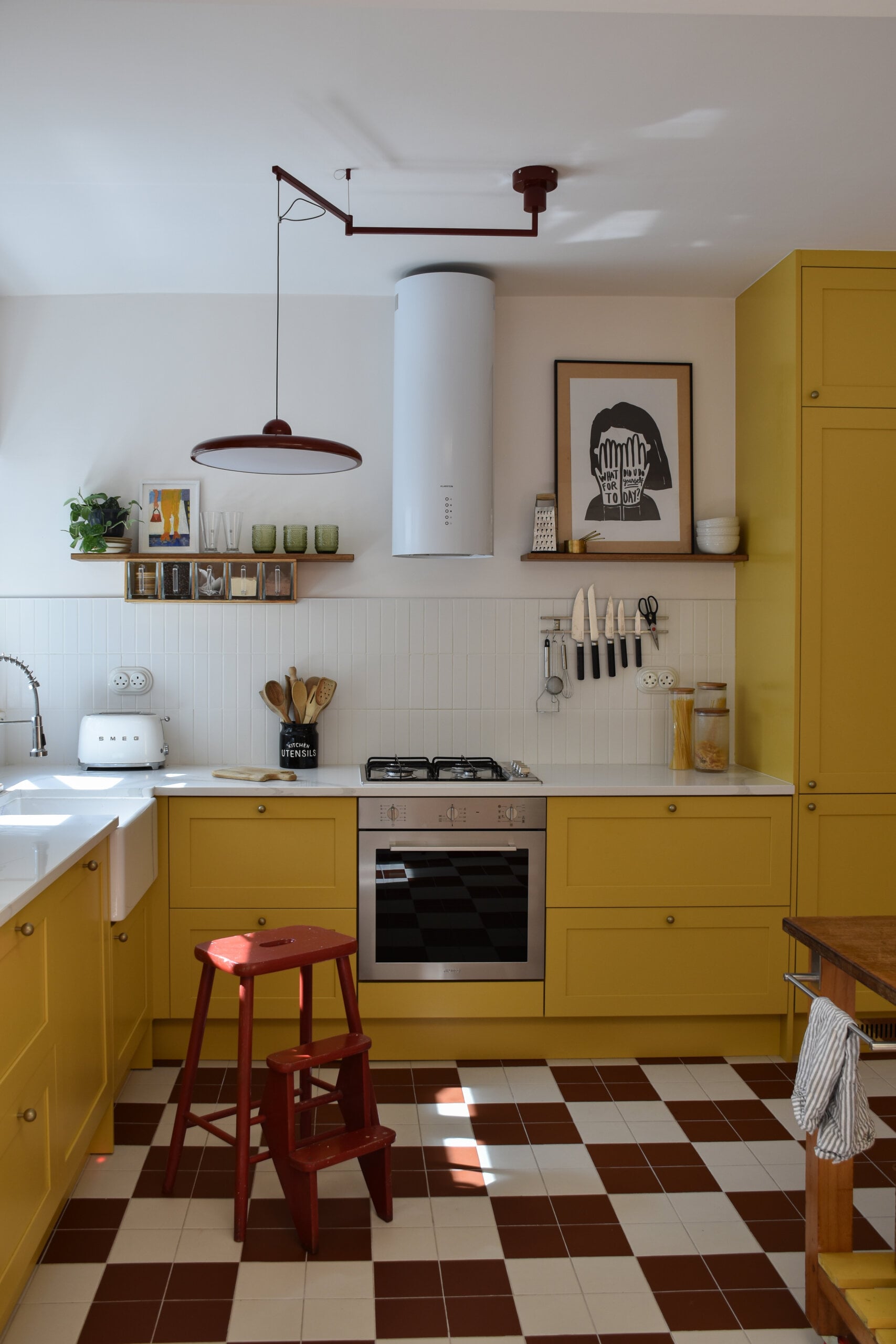
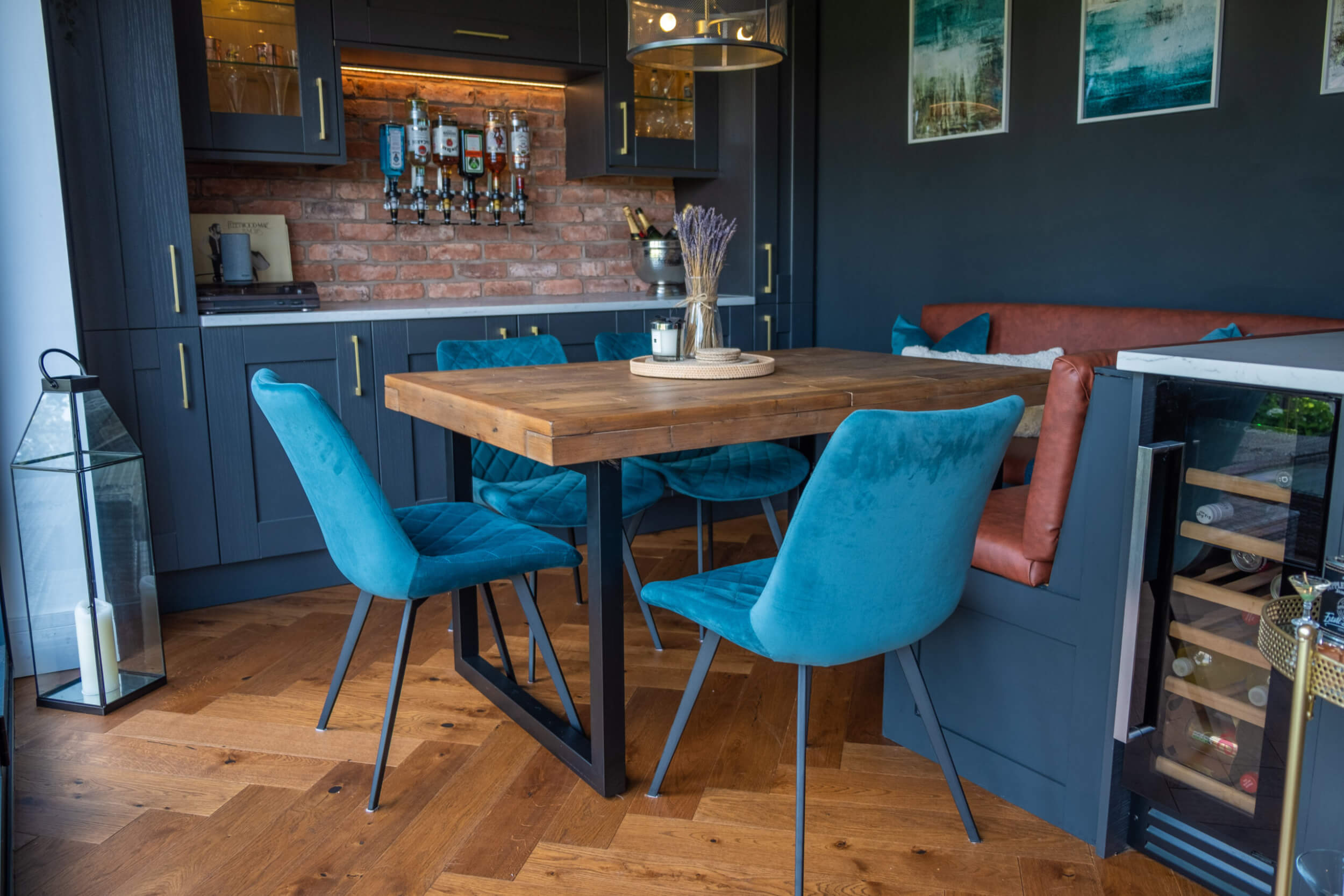
Lighter cabinets, glossy splashbacks and simple worktops help reflect light around the space. This is particularly helpful in kitchens that do not get much natural daylight.

When light moves around the room easily, the space tends to feel more open.

Keeping the design simple helps as well. Smooth cabinet fronts and clean lines prevent the kitchen from feeling visually heavy.

But finishes are only part of the story.

Take a look at your worktops. Are they filled with appliances, jars and everyday items?

Crowded surfaces can make a kitchen feel smaller than it really is. Storing more items inside cabinets creates breathing room and instantly makes the space feel calmer.

Even clearing just a few items can make a noticeable difference.

A small kitchen should feel organised, not overloaded.

5. Add Flexible Pieces Instead of Fixed Bulk

It is easy to look at large kitchens and want the same features.

A big island sounds great. So does a full dining table. Maybe even extra tall cabinets.

But in a smaller kitchen, fixed furniture can quickly dominate the space.

Flexible pieces often work much better.
Slim rolling carts are a good example. They provide extra prep space when needed and can be moved out of the way afterwards.

Narrow trolleys can also add useful storage without permanently taking up floor space.

A small mobile island can help during busy cooking times and then be pushed aside once you are finished.

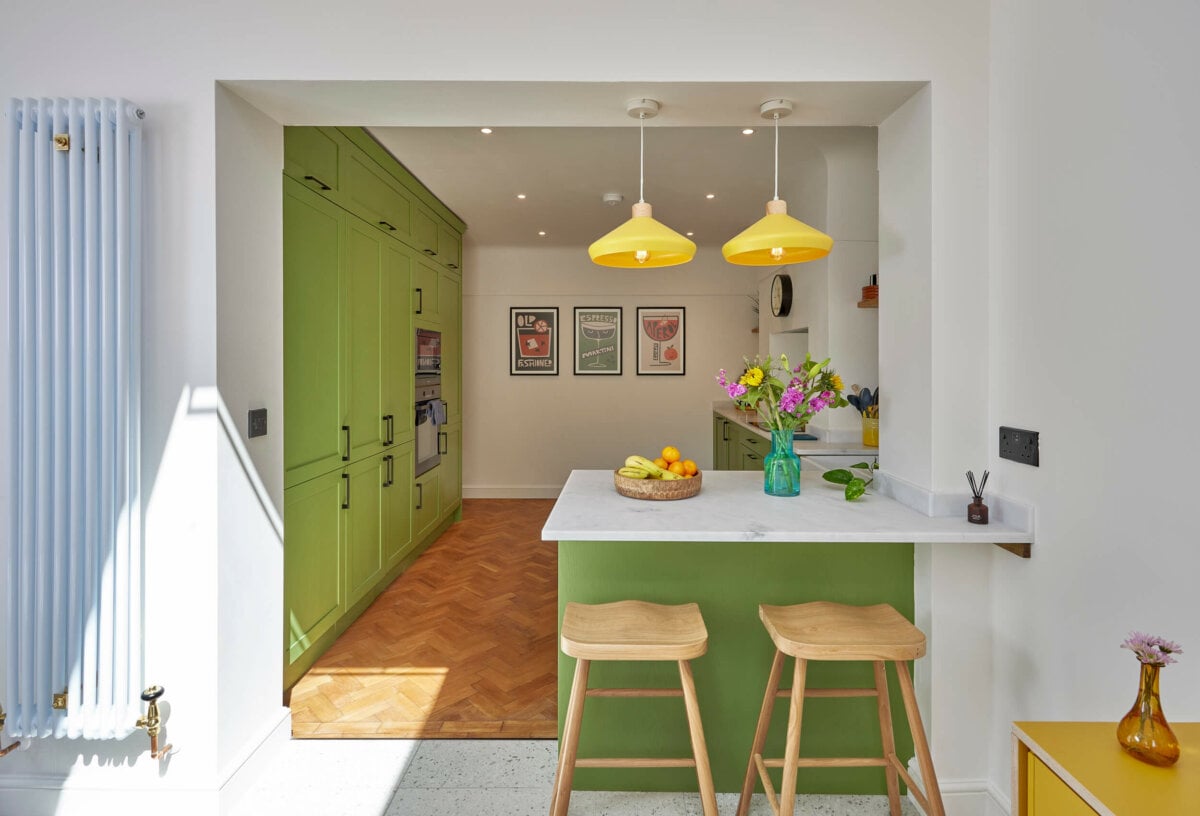
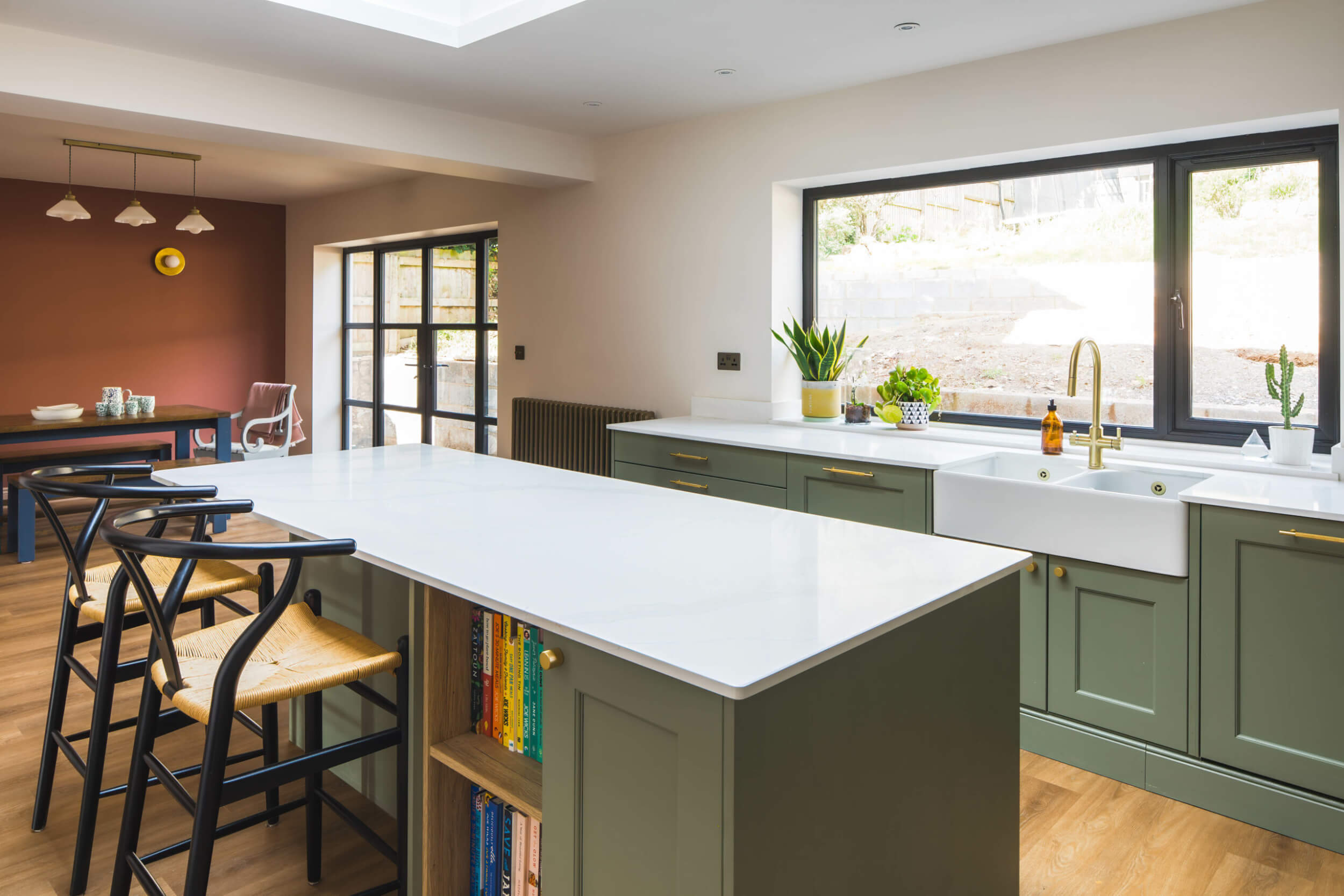
If seating is important, there are space-saving options to consider. A floating breakfast bar or a fold-down table can provide somewhere to sit without blocking the layout.

Stools that tuck neatly underneath help keep the area feeling open.

When your kitchen can adapt to different situations, it often feels larger than it really is.
Bringing It All Together

Designing a small kitchen does not mean giving things up.

It simply means making smarter decisions about how the space is used.

With the right layout, better storage and a few thoughtful design choices, even a compact kitchen can feel comfortable and practical.

Try experimenting with some of the ideas above and see what works best for your space.

A well-planned kitchen feels easier to use, easier to move around in and much more enjoyable to spend time in.

And when everything finally works the way it should, the size of the room matters a lot less than you might think.

If you would like to explore kitchen ideas further, you can download our brochure below for kitchen inspiration.

If you’re looking at designing your new kitchen but not sure what to do next, why not book a short, 15 minute call with one of Smile Kitchens expert designers. It’s a simple way to start planning your kitchen using our online kitchen design approach.

They’ll help you talk through your plans and give you guidance on what to do next.

Request Our Brochure Book An Advice Call