
TABLE OF CONTENTS
1. Kitchen Planning
2. Kitchen Space Considerations
3. Kitchen Style Considerations
4. Planning Kitchen Functionality
5. Kitchen Budgeting
6. The Practical Bit: Who Will You Use?
7. Smile Kitchens Insights
8. FAQs: Questions to Ask Before Buying a Kitchen
What Is the Kitchen Design Process?
The kitchen design process involves working through planning, design, specification, and installation in that order.
Understanding the kitchen process before you begin means you’ll never be caught off guard, and you’ll make better decisions at each stage.
At Smile Kitchens, we walk every customer through a structured kitchen design process, but knowing the stages, puts you in the driving seat.
Loosely speaking, the process moves through these stages:
– Deciding you want a new kitchen
– Establishing what you need (not just a new kitchen but the nitty gritty)
– The B word…..what’s your budget
– Planning the space (what do you want to go where? If you don’t know, talk to a kitchen designer i a quick call)
– Selecting and briefing your kitchen company (where might you find one of those?)
– Choosing your style and materials (your friendly neighbourhood kitchen designer will talk about the best options)
– Getting the technical details right (taps, sinks, handles, a new dog bed….the bits that makes kitchen pop)
– Managing the installation (this is when it all comes together)
Each stage informs the next. Rushing any of them will create problems down the line.
Related Guide: The Smile Kitchens design process explained
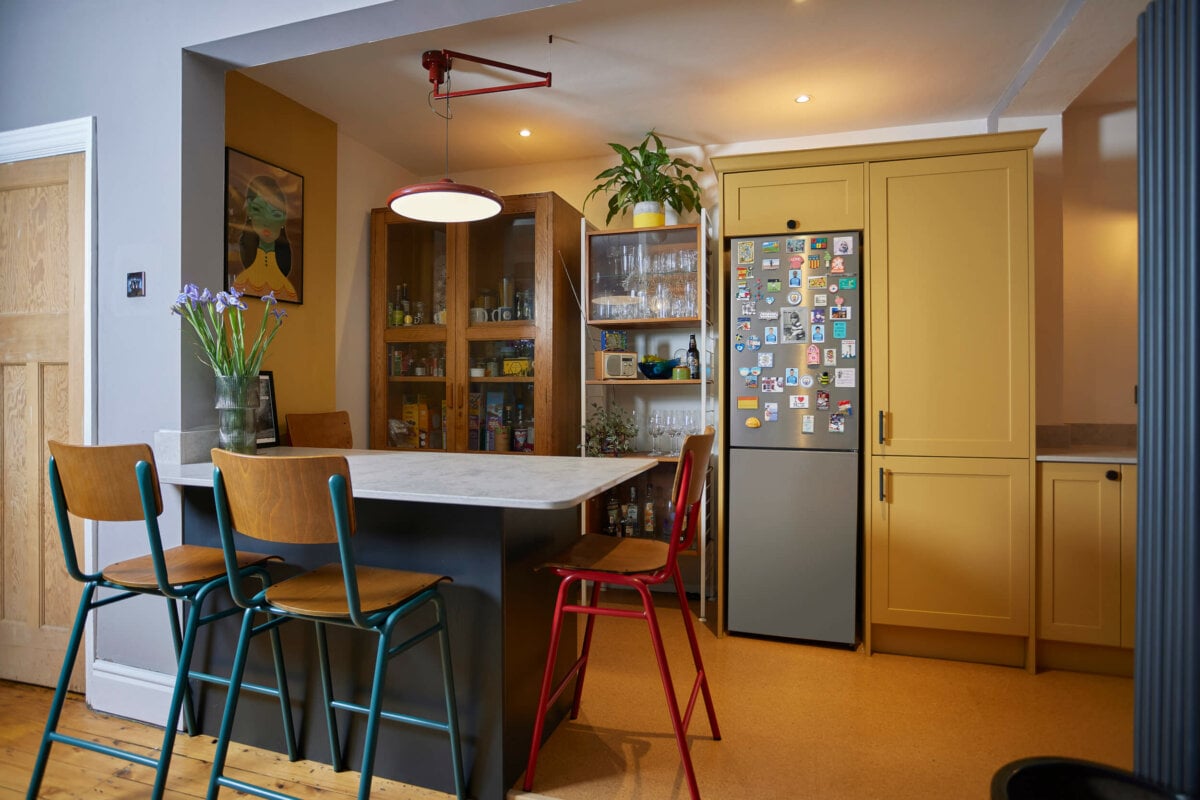
What Do You Want Your Kitchen to ‘Be?’
The kitchen is often described as the most important room in a home, serving as a social hub, a workspace, and a reflection of personal identity. So what do you want the space to be?
Before you think about handles or worktop materials, it is worth getting intentional about the role you want your kitchen to play in your life.
Think about which of these best describes you:
– A family gathering space where children do homework and everyone congregates at the weekend
– A serious cook’s kitchen where precision and efficiency matter most
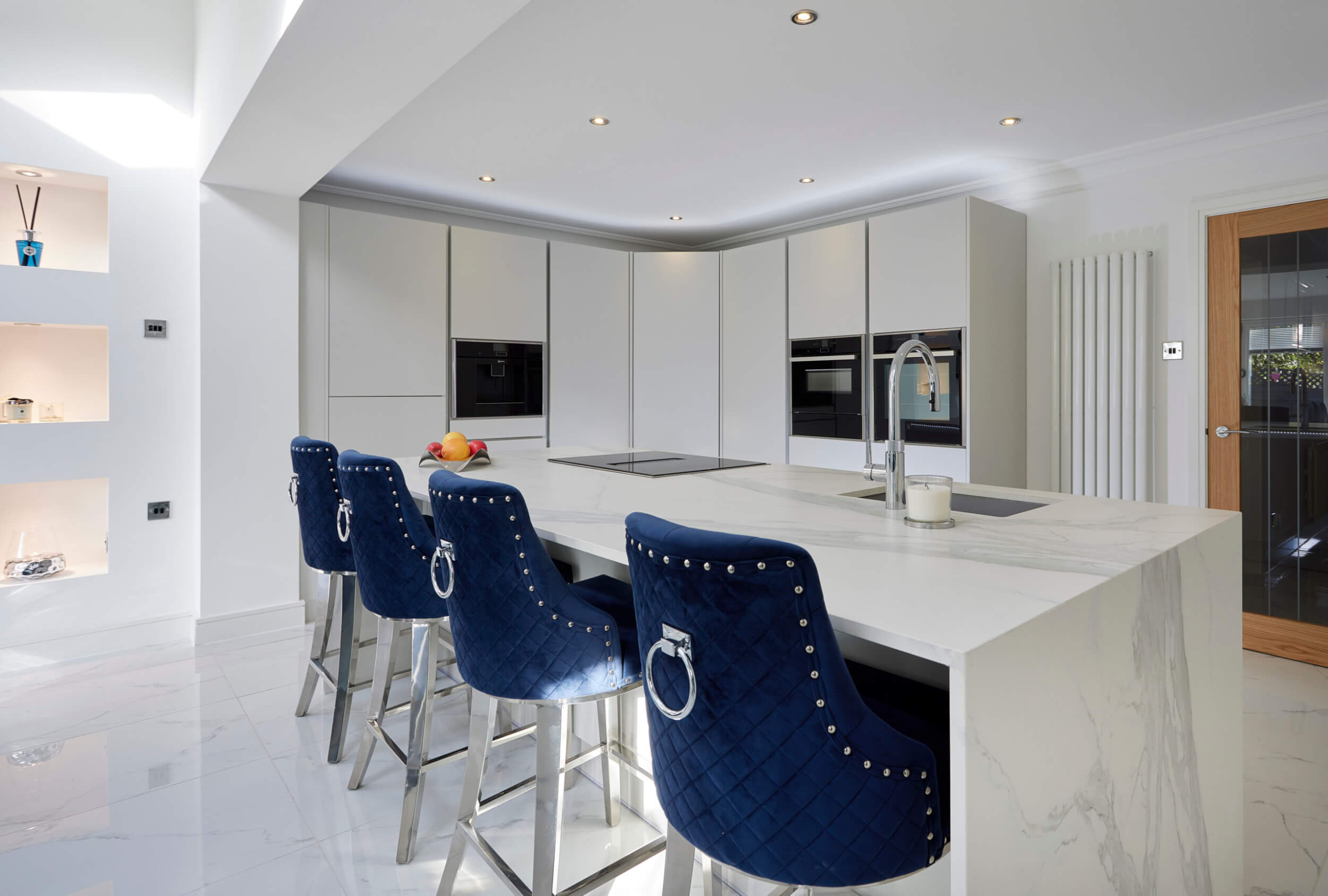
– An entertaining space designed to flow beautifully for guests
– A calm, quiet retreat that feels ordered and uncluttered
Knowing which matters most shapes everything from your layout choice to your storage requirements to whether an island makes sense.
How Do You Measure a Kitchen Correctly?
Before your kitchen design begins, you need accurate measurements of your space.
Incorrect measurements are where many projects can quietly go wrong. Small mistakes can turn into big problems further down the line when fitting cabinets, appliances, and worktops.
However, you don’t need anything complicated when measuring your room. A tape measure, a notepad, and a methodical approach will do (or a laser measure if you have one!)
Work through your room carefully and record the following:
– Overall room dimensions
– Door positions and which way they open
– Window heights from the floor
– Radiator positions and sizes
– Location of soil pipes, boilers, and the consumer unit
– Any structural elements you cannot move
– Ceiling height, especially if it varies across the room
Related guide: How to measure a kitchen

How Do You Plan a Kitchen Layout and Floor Plan?
Once you understand the space you are working with, the next step is planning the layout.
A kitchen floor plan is essentially a scaled drawing that helps you organise units, appliances, and your movement within your space.
Your plan allows a designer to carefully think about how guests will move through your room and how the different kitchen zones work together.
Getting the layout right is arguably the most important decision in the entire kitchen design process. A beautiful kitchen with a poor layout will frustrate you every single day.
Did you know that you can use our online kitchen planner for free. Or try our AI kitchen design tool.

A useful place to start is the classic kitchen work triangle. This is the relationship between your sink, hob, and fridge, and how easily you can move between them.
From there, most kitchens fall into a few common layout types:
– Single-line: suits narrow rooms or open-plan spaces
– Galley: efficient for serious cooking in a compact space
– L-shaped: great flexibility for medium-sized rooms
– U-shaped: maximises storage and worktop space
– Open-plan with island: ideal when space allows and the kitchen is a social centrepiece
Each layout has its strengths, and the right one will depend entirely on the room you are working with.
Related guide: Kitchen layout ideas for every space and lifestyle
Related guide: Where Should the Fridge Go in a Kitchen?

3. Kitchen Style Considerations
How Do You Choose a Kitchen Style That’s Right for You?
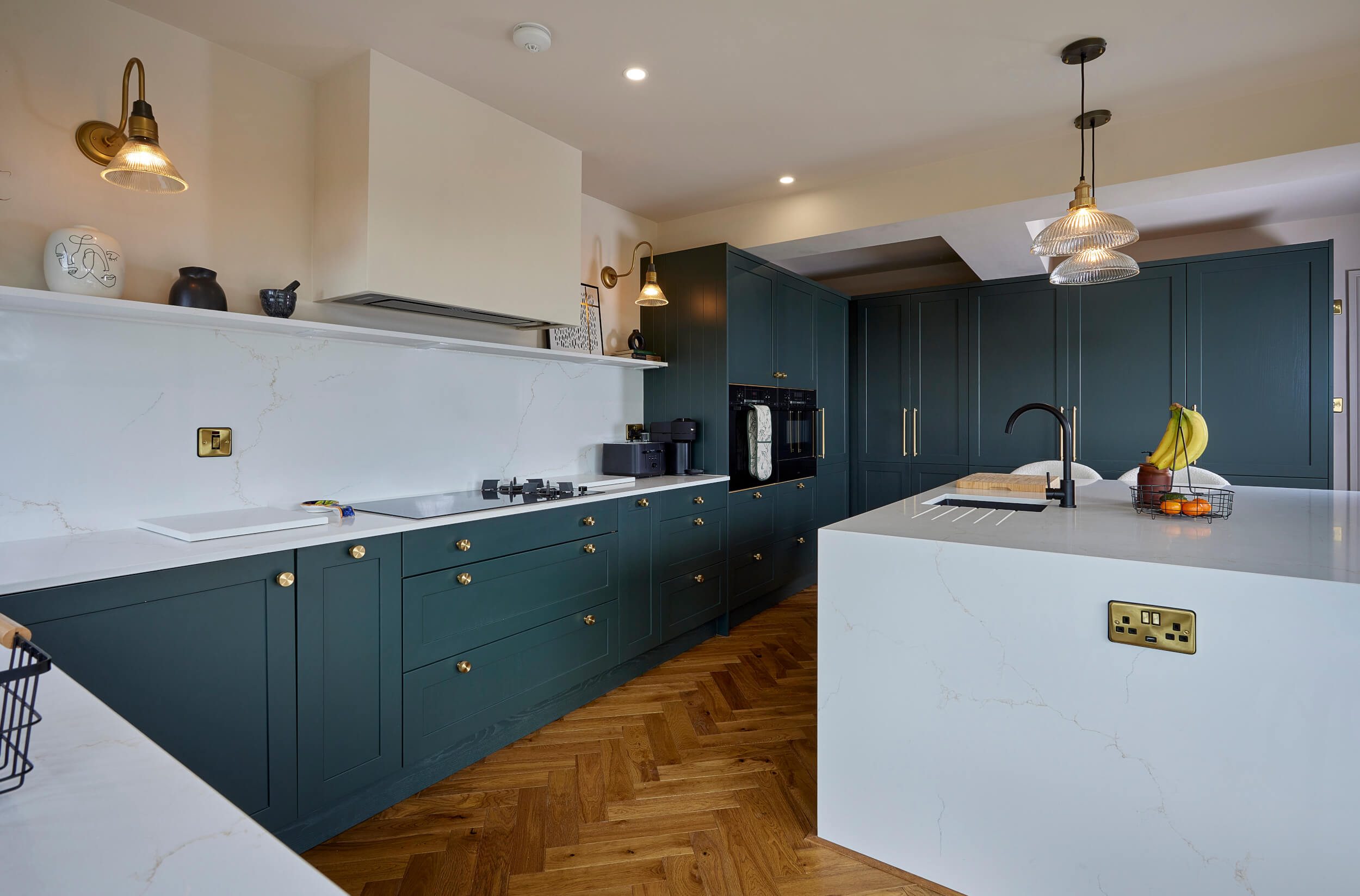
Your kitchen style should reflect the character of your home and the way you actually live.
With so many kitchen styles available to choose from, it may feel overwhelming.. The easiest way to narrow down your options is to anchor your decisions to your home and your lifestyle.
Make your decision on what works for you, not what’s trending.
A kitchen that feels right for your space will always age better than one that simply follows fashion.
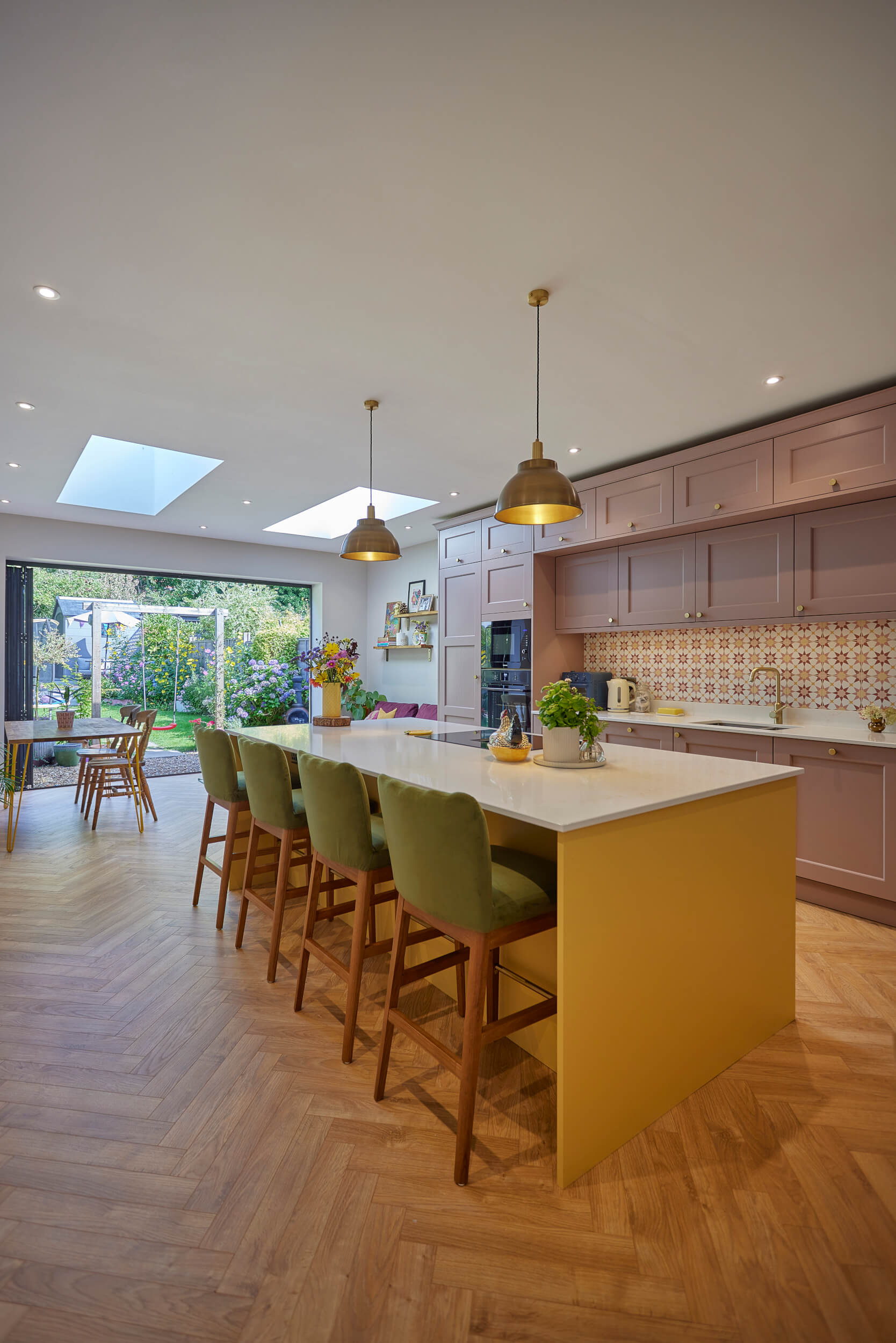
A few simple approaches can help you find your direction:
– Look at the architectural character of your home. A handleless gloss kitchen might look great in a new-build, but can feel slightly out of place in a period property.
– Think about the rest of your interior. Your kitchen should feel like part of the same home, not something completely separate.
– Save images you genuinely like. After a while, you will start to spot patterns in the colours, materials, and shapes you are drawn to.
– Ask yourself a simple question. Do you prefer warmth and texture, or clean lines and simplicity? That alone can point you in the right direction.
Related guide: The ultimate guide to farmhouse kitchens
Related guide: How to design a Scandi kitchen
Related guide: Japandi kitchen design: our best styling ideas
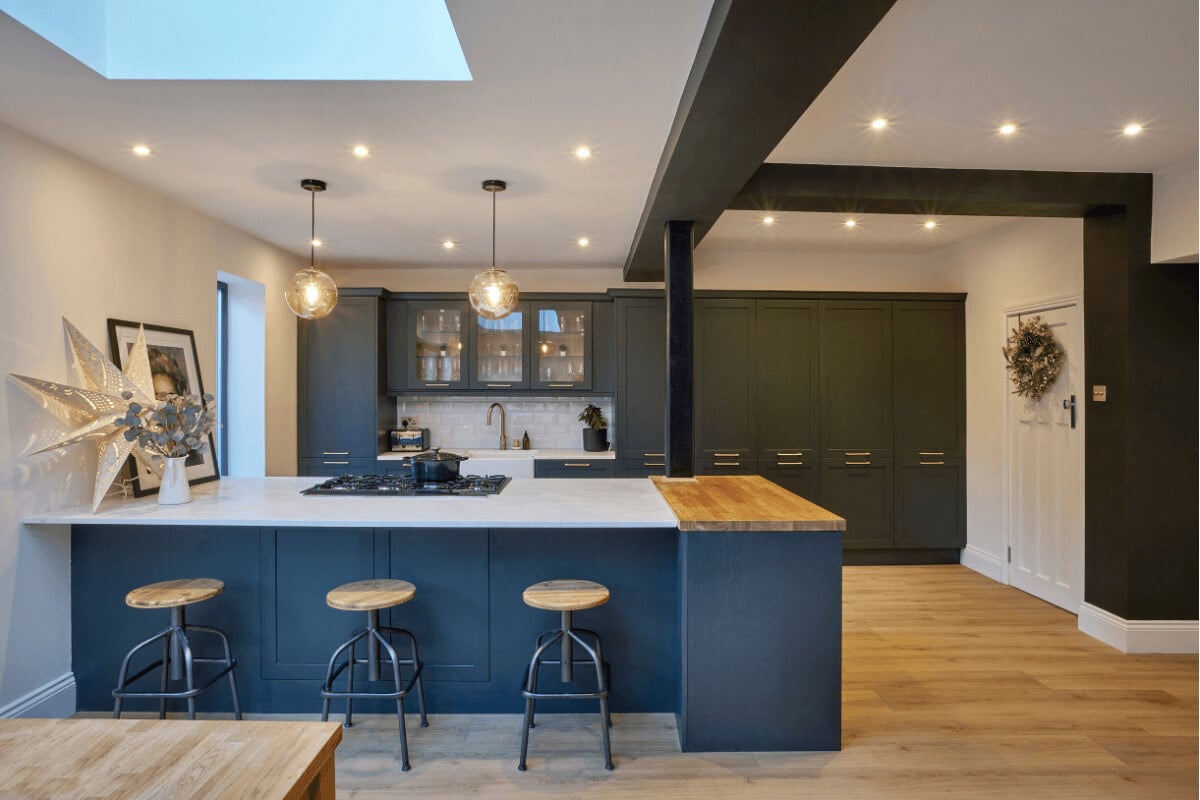

How Do You Choose the Right Kitchen Hardware?
Kitchen hardware might seem like a small detail, but it plays a surprisingly big role in how your kitchen looks and feels.
Handles, hinges, and fittings add character to a design that might otherwise feel understated.
And because you use them dozens of times a day, they need to feel good in your hand as well as look good in the room.
A few things are worth thinking about when choosing hardware:
– Consistency – Your handles shouldn’t be treated like an after thought. Choose a style that matches your design.
– Proportion – Longer bar handles tend to work well on wider drawers and doors. For classic shaker cabinets consider smaller cup handles.
– Finish – Materials like brushed brass, matt black, or brushed nickel each give a very different feel. Think about how they sit alongside your cabinet colour and worktop.
– Practicality – Handleless or recessed designs can look clean and streamlined, and are often easier to wipe down. However, they can be a little less easy to grip.
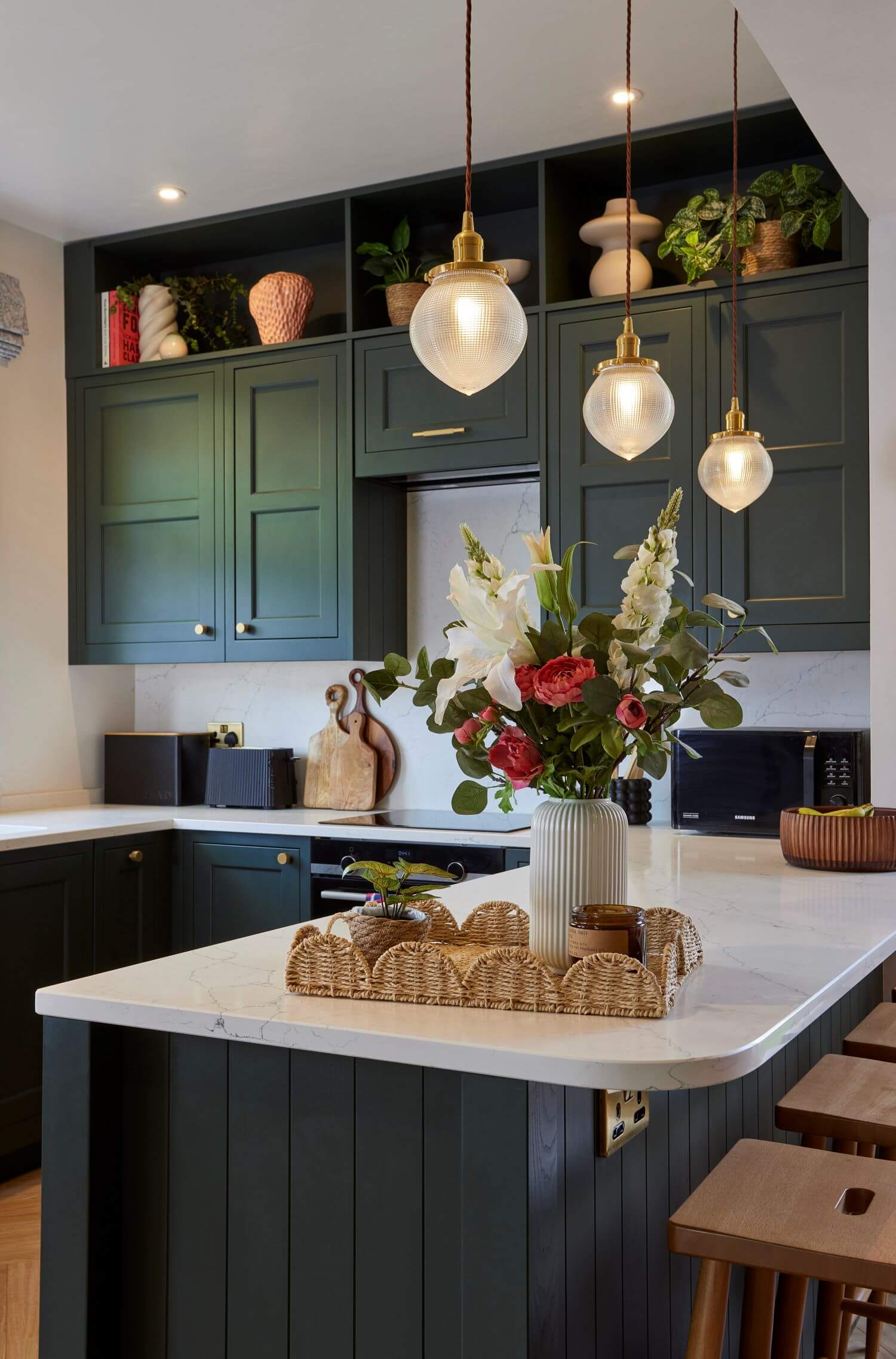
How Do You Choose the Right Kitchen Worktop?
Your kitchen worktop is one of the hardest-working surfaces in the entire home.
Of course it needs to look beautiful, but it also needs to cope with the daily realities of cooking, cleaning, heat, and occasional accidents.
Choosing the right material is about balancing durability, maintenance, and aesthetics.
Here is a quick overview of some of the most common worktop materials available in the UK:
– Quartz: Hard-wearing, low maintenance, and available in a wide range of colours and finishes. One of the most popular choices for good reason.
– Granite: Naturally unique and extremely durable, but it does require sealing and can be heavy.

– Marble: Beautiful and timeless, though more porous and prone to staining. Often best suited to lower-traffic areas.
– Porcelain: Highly resistant to heat and scratches, and increasingly popular in premium kitchens.
– Solid wood: Warm and tactile, but it needs regular oiling and careful maintenance around sinks.
– Laminate: Cost-effective and versatile, with modern options offering far better quality than in the past.
– Dekton: An ultra-compact surface known for excellent resistance to heat, scratches, and UV exposure.
Related guide: Where to save and where to invest in your new kitchen
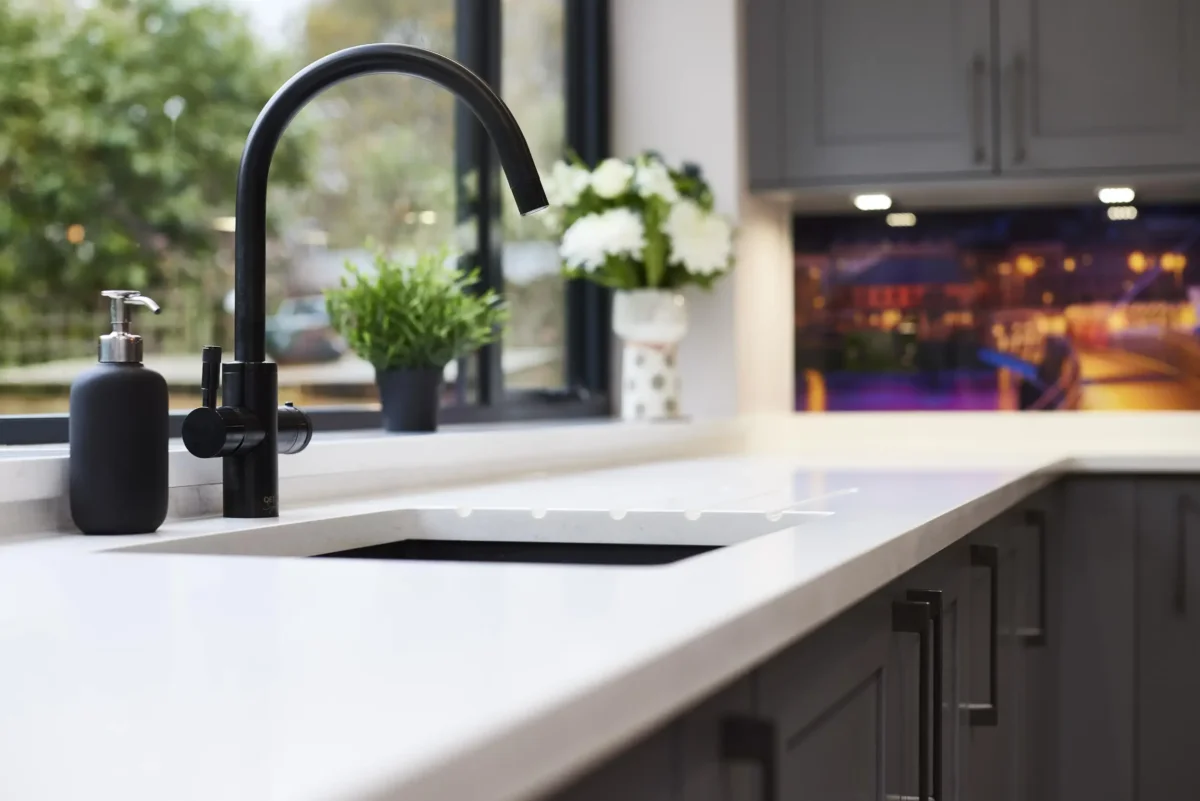

How Do You Pick the Right Kitchen Flooring?
Kitchen flooring needs to strike a careful balance between durability, comfort, practicality, and design.
Because the floor covers such a large surface area, it has a surprisingly big influence on how the entire room feels.
Some of the most common kitchen flooring choices in the UK include:
– Porcelain or ceramic tiles: Extremely durable and waterproof, though they can feel cold underfoot unless paired with underfloor heating.
– Luxury vinyl tile (LVT): Warm, waterproof, and highly practical, making it ideal for busy family kitchens.
– Engineered wood: Beautiful and warm but requires careful installation to manage moisture levels.
– Natural stone: A timeless and striking option that does require sealing and more maintenance.
Polished concrete: Bold and contemporary, often best suited to open-plan kitchens with underfloor heating.
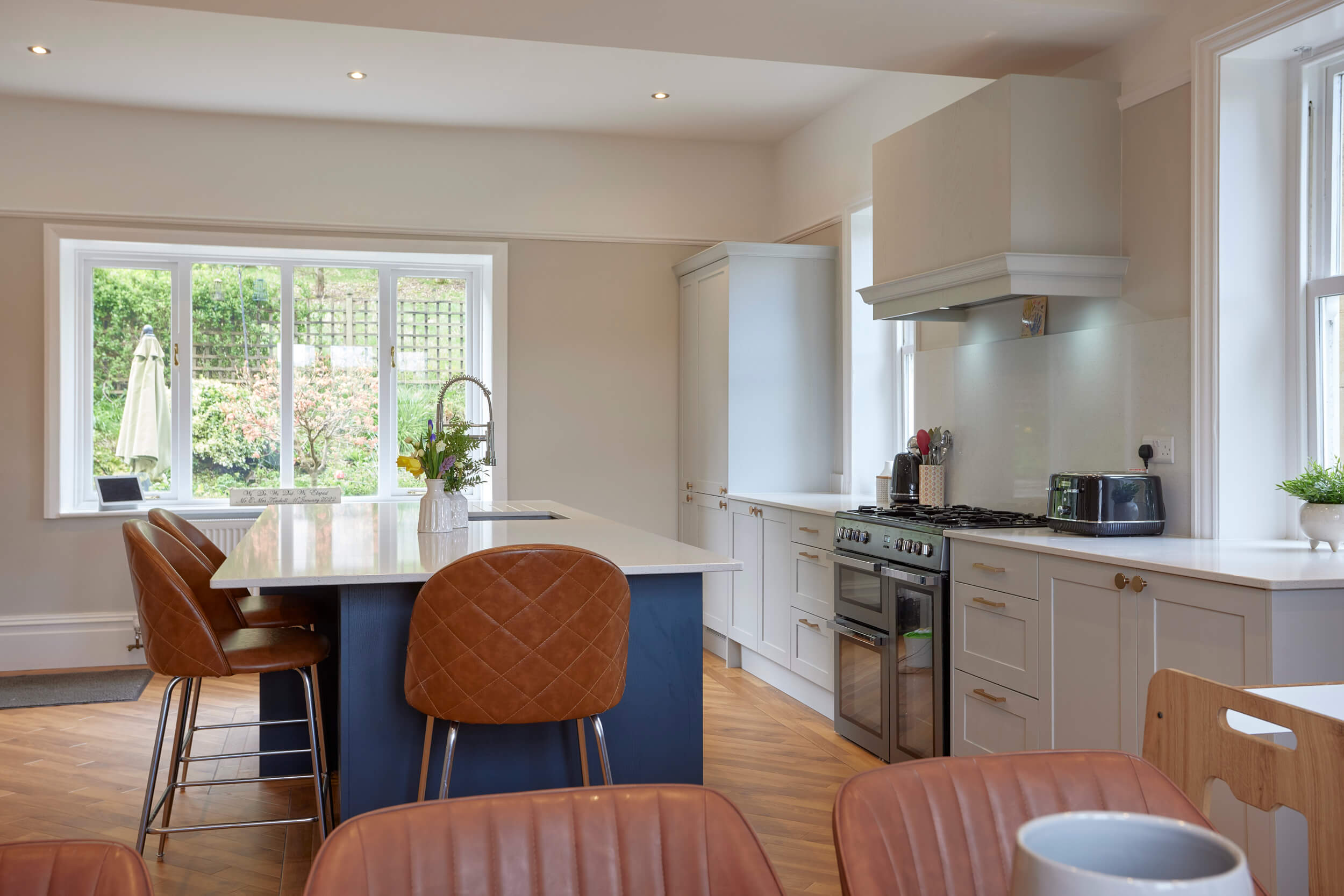
How Much Kitchen Storage Do You Actually Need?
When planning a new kitchen, most people underestimate how much storage they really need.
The amount of storage required will depend on the number of people in your household. It will also be influenced by how often you cook, and the type of equipment and food you keep at home.
Before finalising your design, it’s worth doing a quick audit of your current kitchen. This means opening every cupboard and drawer and making a list of what’s actually inside.
Once you’ve completed this task, you’ll have a clear idea what items need a proper home in your new design.
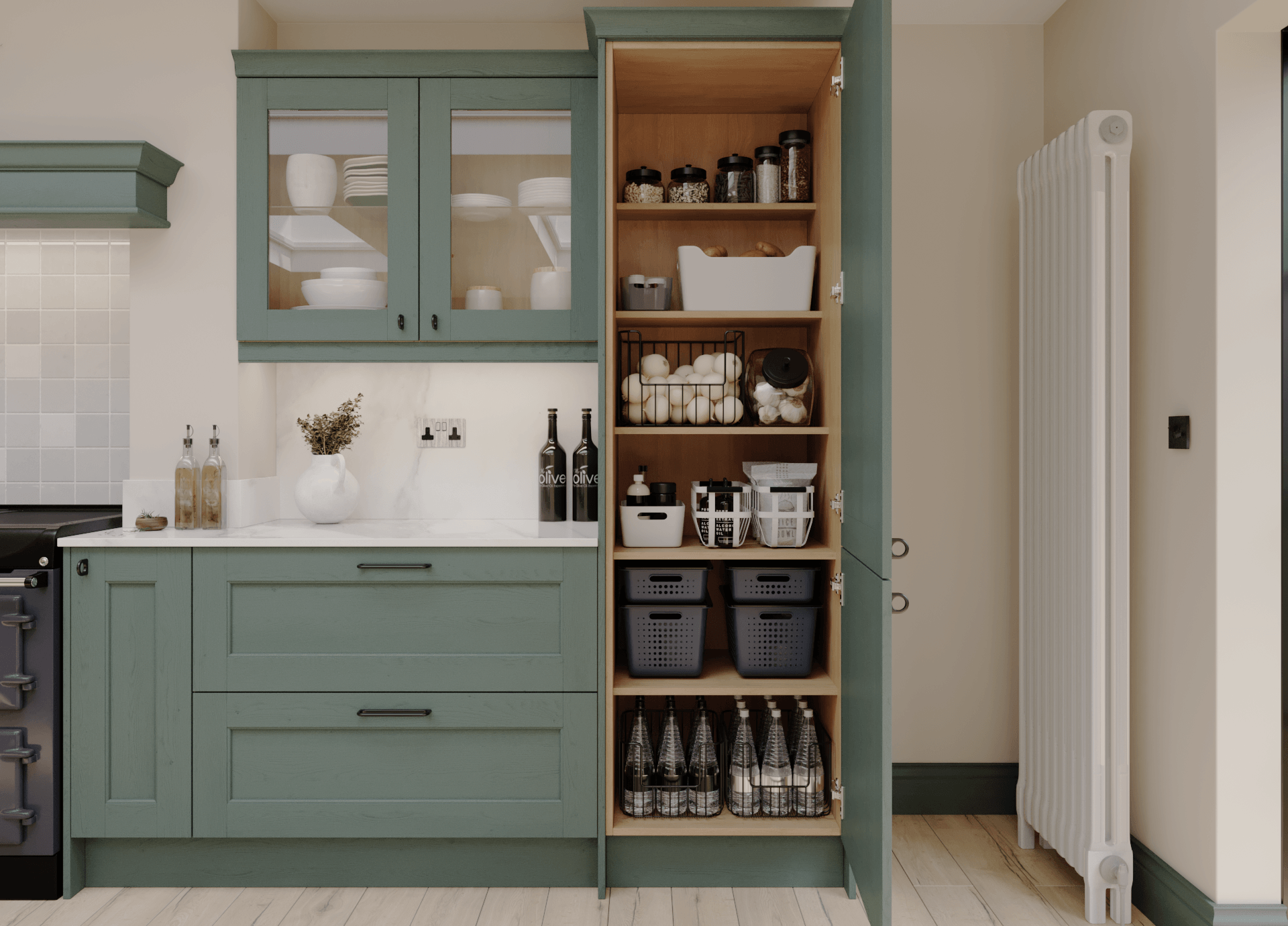
When planning storage, a few principles tend to work well:
– Zone your storage logically – Keep kitchen items close to where they are used. Crockery should be near the dishwasher, pans near the hob, and dry goods near your prep area
– Use drawers where you can – They are often easier to access than deep cupboards, especially for pots and pans, big or small.
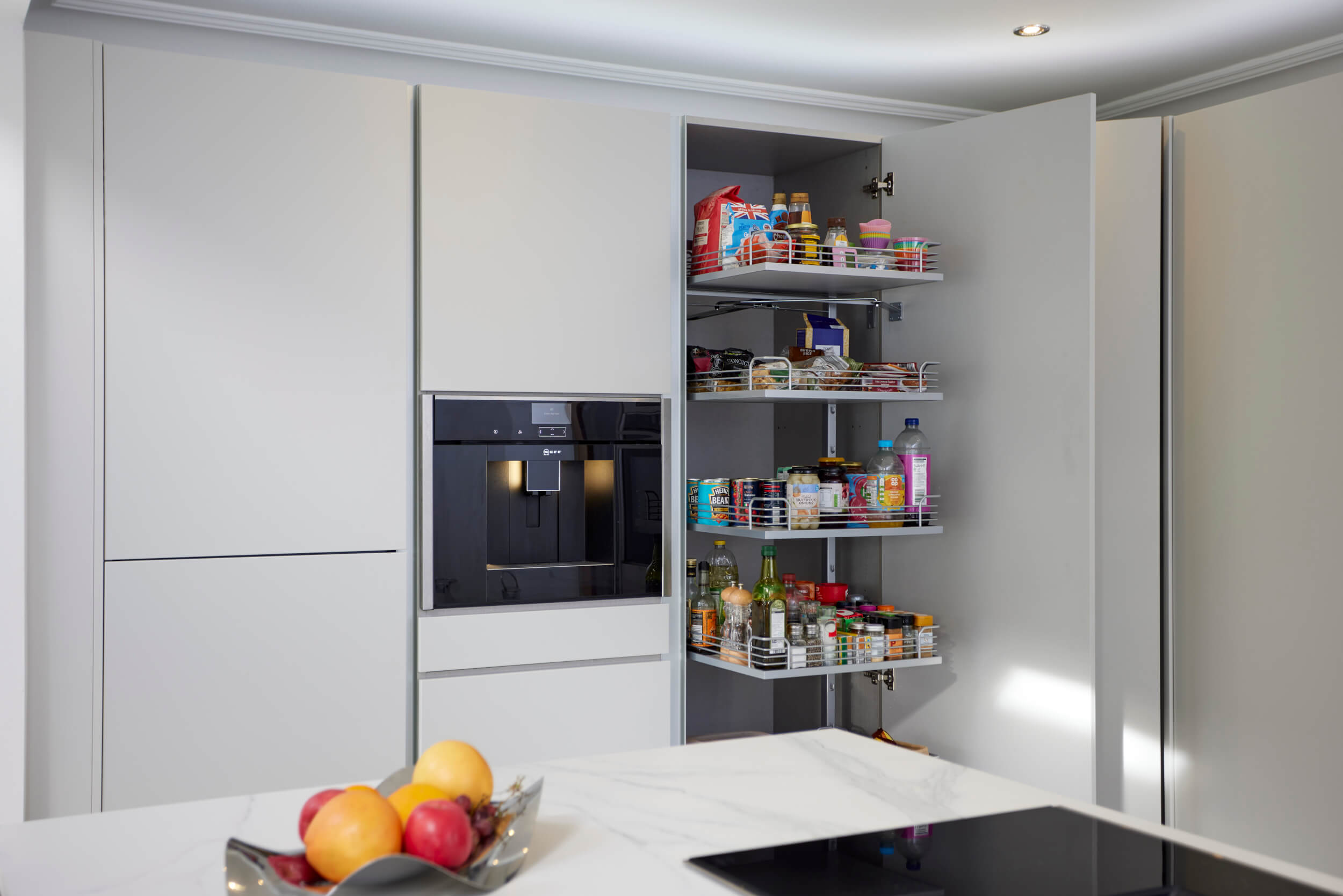
– Include tall larder units – These units are great for keeping dry goods and pantry items organised and easy to see
– Make use of corners – Carousel units or pull-out systems can help you avoid wasted, awkward space
– Be mindful with wall units – They can be very useful, but too many can make your kitchen feel heavy
Well-planned storage keeps your work surfaces clear and makes everyday cooking much easier.
Related guide: 10 kitchen storage ideas
Related guide: The 10 best kitchen storage solutions
Related guide: 6 boot room ideas: design tips for a beautiful, practical space
What Are the Kitchen Fire Regulations You Need to Know About?
Certain building regulations must be followed when installing or renovating a kitchen in the UK. Particularly around ventilation and fire safety.
Your local authority or building control officer may need to confirm your work complies with current standards, especially if structural changes are involved in the project.
Some of the key areas to be aware of include:
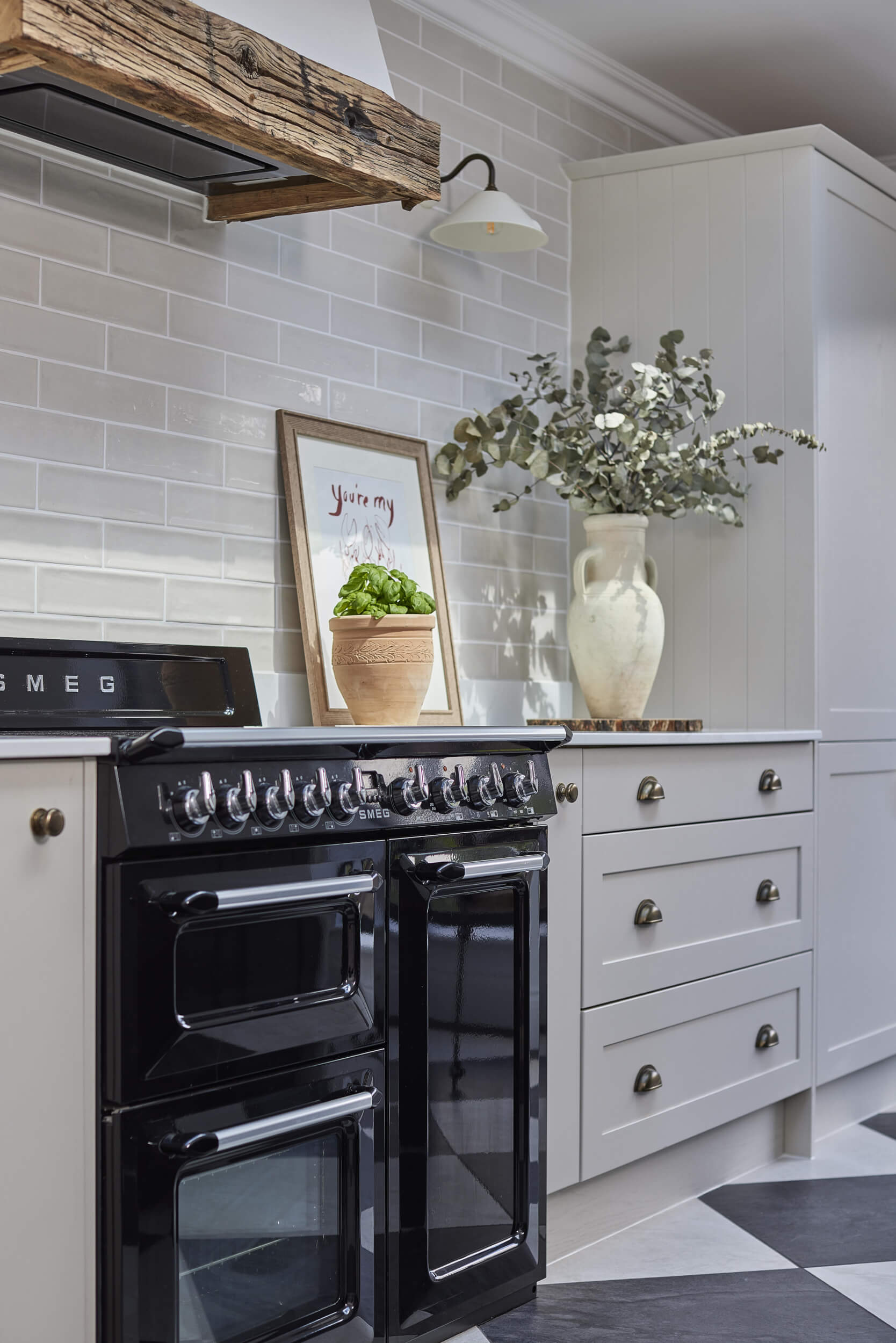
– Adequate ventilation and extraction to remove cooking fumes
– Correct positioning and height of extractor fans
– Safe distances between gas appliances and combustible materials
– Fire door requirements if the kitchen connects to an integral garage
– Building regulations approval for structural alterations or new drainage.
Your kitchen designer, installer, or builder will normally help guide you through these requirements, but it is useful to be aware of them from the start.
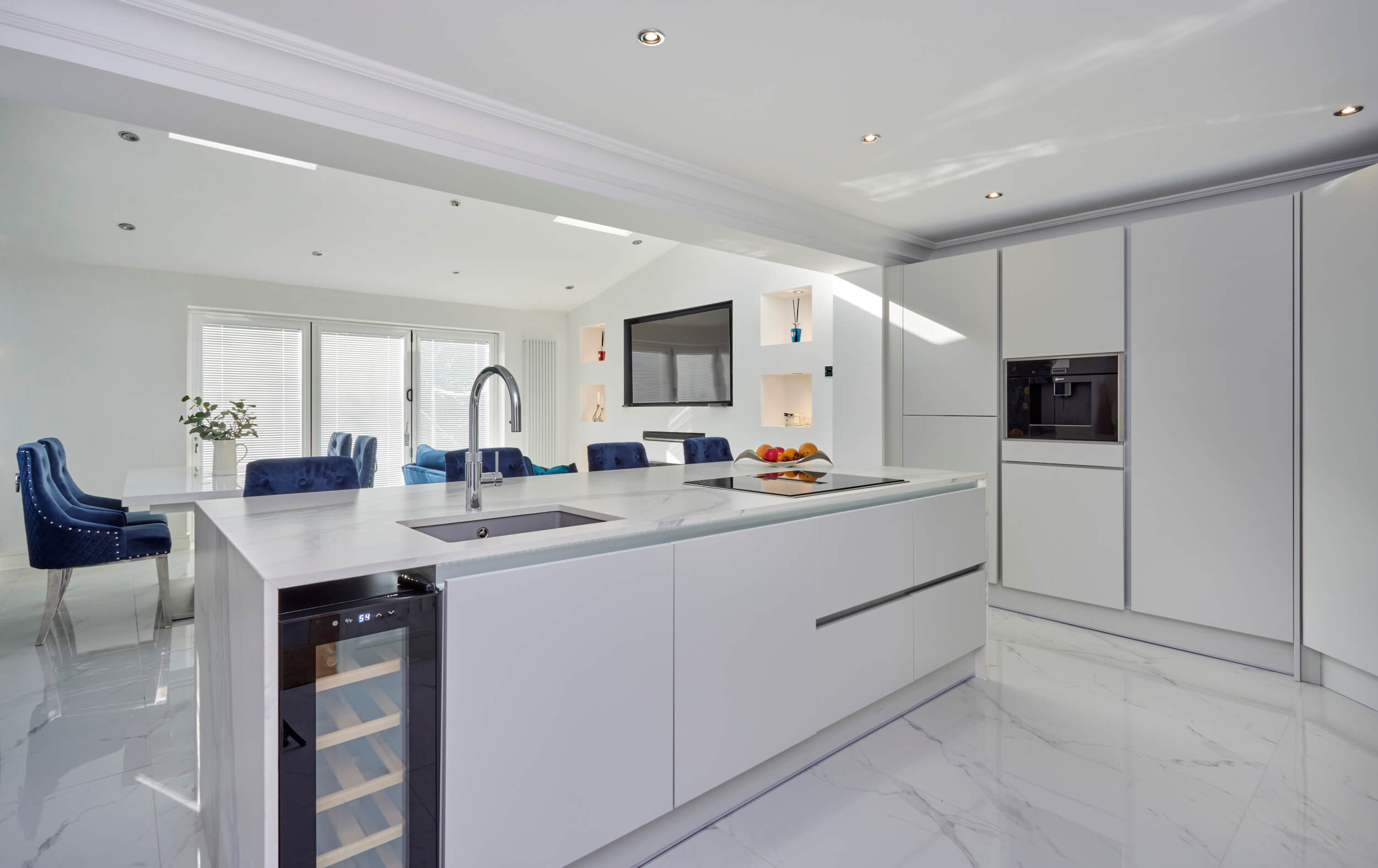
What Are the Heating Considerations for a New Kitchen?
Heating is an important comfort factor in any kitchen, but it also needs to work alongside the layout of cabinets, appliances, and plumbing.
One of the most common mistakes during a renovation is leaving the radiator exactly where it is, only to discover it now sits behind a run of new cabinets.
There are a few common heating approaches used in UK kitchens:
– Repositioned radiators – Often your simplest option. Moving an existing radiator can help it sit more comfortably within your new kitchen layout
– Underfloor heating – A popular choice for homeowners, especially with tile or stone flooring. It also frees up valuable wall space
– Heated towel rails – A useful addition if your kitchen connects to a utility room or boot room
If you are planning underfloor heating, it needs to be incorporated before the floor screed is poured and well before cabinets are installed.
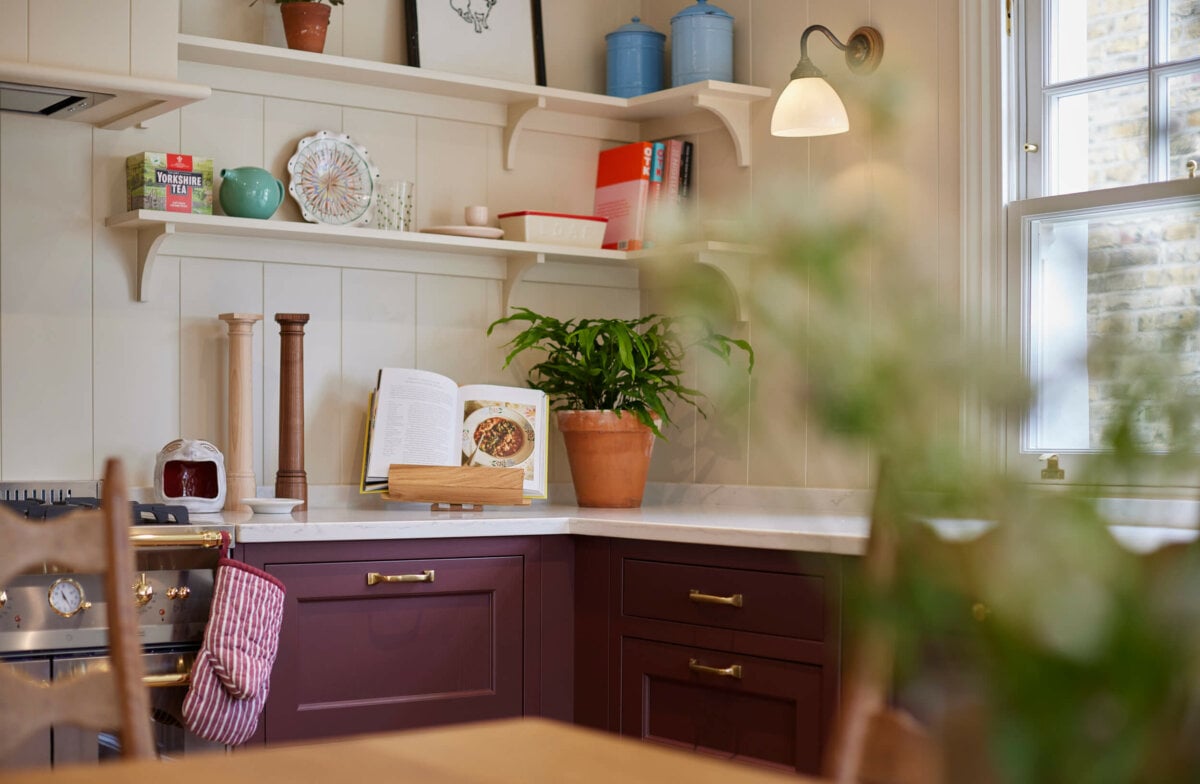
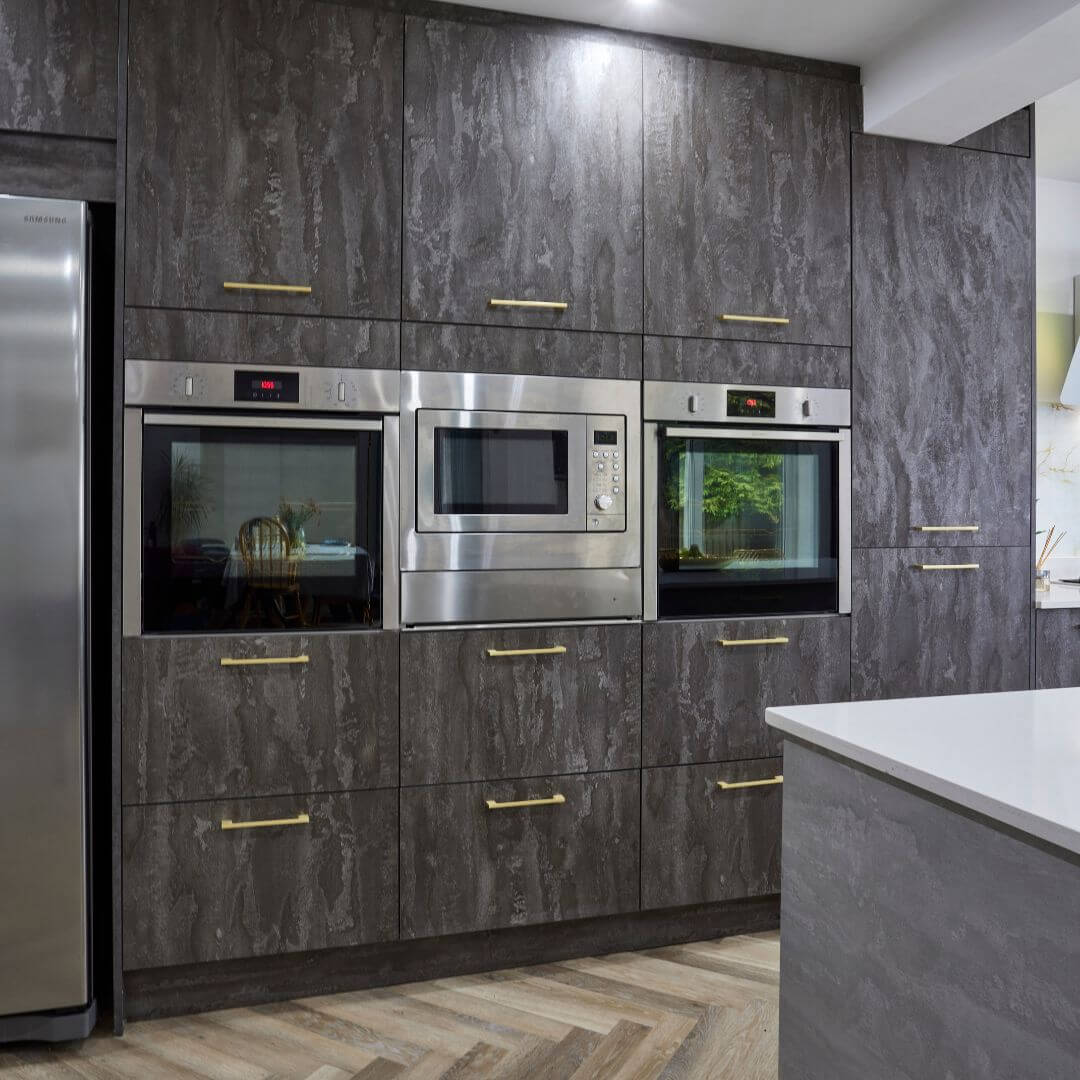
How Do You Plan a Realistic Kitchen Budget?
Before you start your kitchen project, take the time to discuss your budget. Make sure you’re clear on what you are comfortable spending.
Your budget shapes the whole project. Without one, costs can begin to creep up without you realising.
Getting clear on what you can spend and where you want to spend it is one of the most important things you can do before the process starts.
A useful starting point for UK kitchen budgets:
– Mid-range kitchens (supply and installation): typically around £10,000 to £15,000
– Premium or bespoke kitchens: usually £20,000 and upwards, sometimes significantly more depending on materials and specification
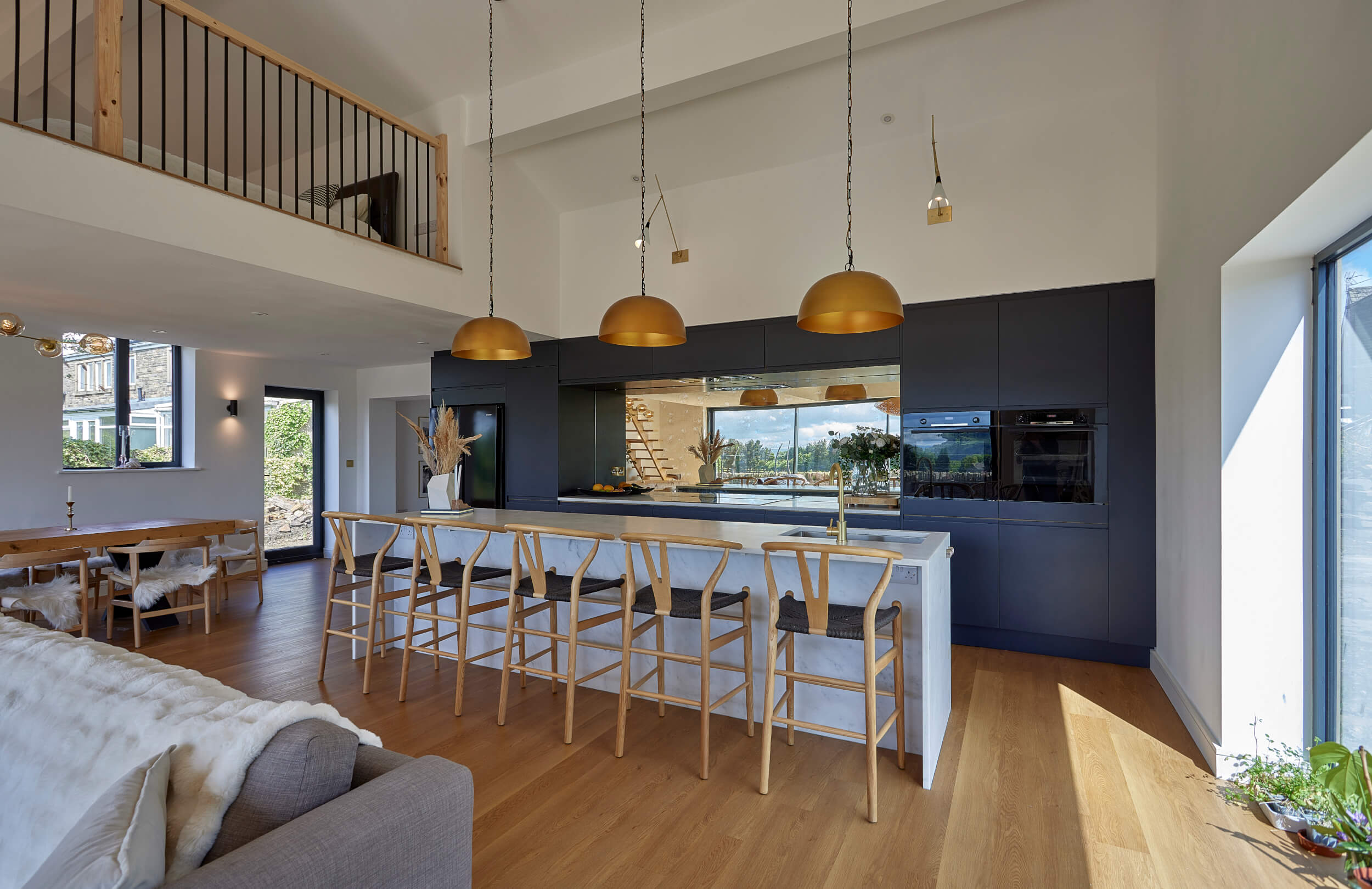
An important rule to consider is to always allow for a contingency. This is usually around 10–15% of your total budget, and will cover any unexpected costs during the renovation.
When deciding where to spend your budget, it often makes sense to prioritise the elements you’ll interact with every day, for instance;
– Cabinet doors and drawer fronts
– Worktops
– Appliances
Remember, internal cabinet carcasses are largely hidden from view.
This can be a sensible place to manage costs without affecting the overall look of the kitchen.
Related guide: How much does a new kitchen cost?
Related guide: Where to save and where to invest in your new kitchen
Related guide: Get a kitchen quotation from Smile Kitchens
How Do You Plan a Kitchen That Will Last?
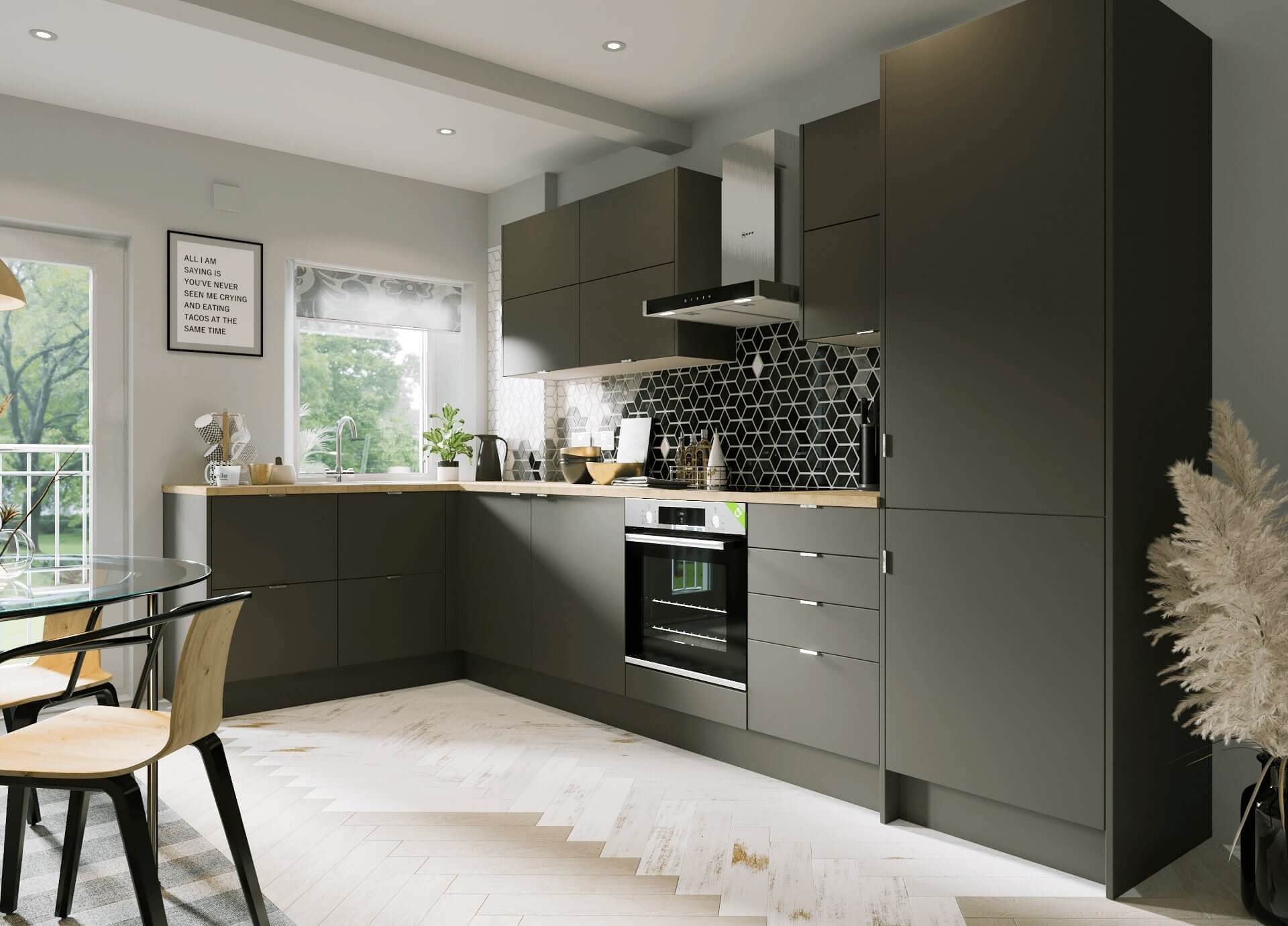
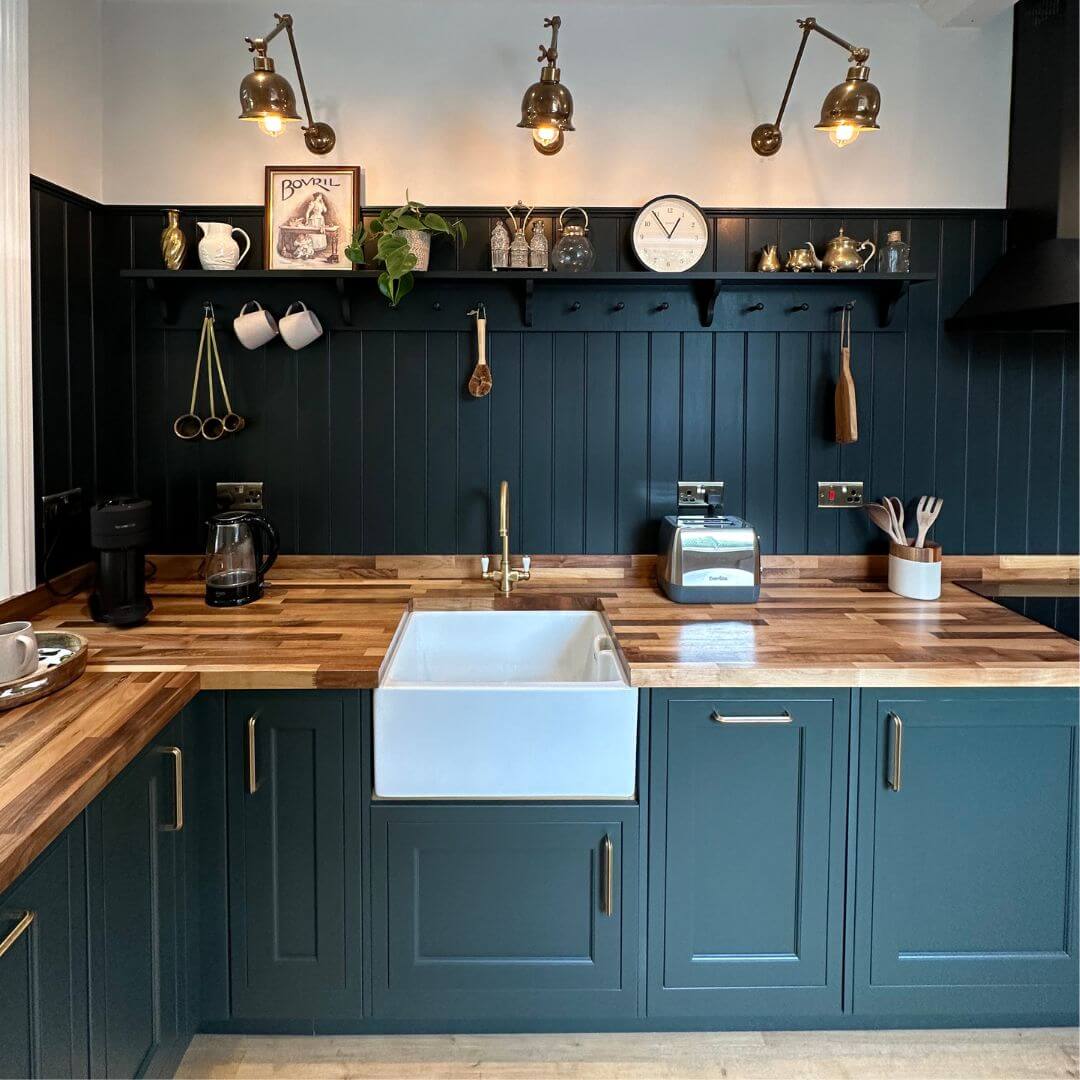
If you want to design a kitchen that lasts, don’t choose short-lived trends. You want durable materials, quality construction, and a timeless design.
An expensive kitchen doesn’t mean it’s the most durable. In kitchen design, the cheapest option often turns out to be the poorest value over time.
You’ll want to invest in the parts of the kitchen that experience daily wear and use.
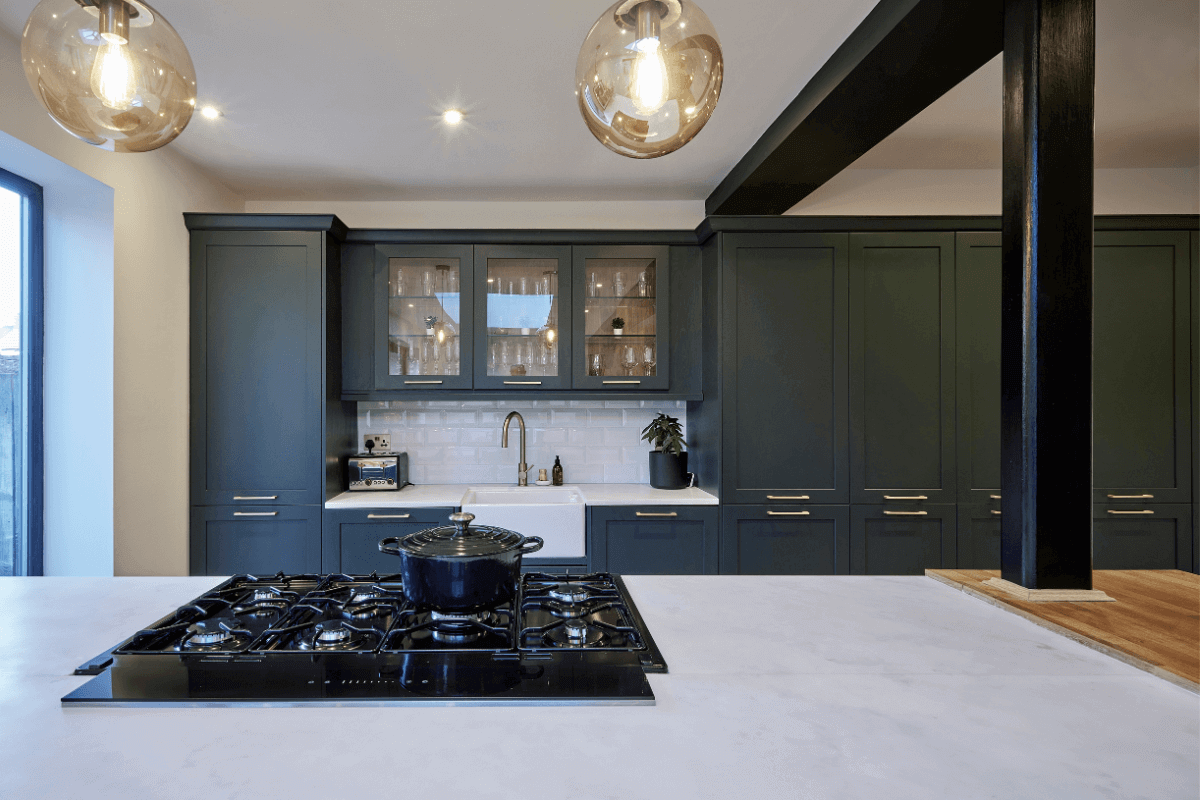
Some areas are particularly important when thinking about longevity:
– Carcass construction: strong, moisture-resistant boards will last far longer than cheaper alternatives
– Hinges and drawer runners: these mechanisms are used hundreds of times each week, so good quality soft-close hardware is worth specifying
– Worktops: choose a surface that genuinely suits the way your household cooks and uses the kitchen
– Doors and drawer fronts: higher-quality finishes resist chipping, fading, and general wear far better over time
– Design choices: timeless proportions and materials tend to age far better than trend-driven designs
A well-built kitchen that still looks good and functions properly twenty years from now is almost always the best long-term investment.
Related guide: Where to save and where to invest in your new kitchen

Should You DIY Your Kitchen or Use a Professional?
When your project reaches the kitchen installation stage, homeowners often weigh up whether to tackle the work themselves or hire professionals.
For confident and experienced DIYers, installing a kitchen can represent a genuine saving.
However, kitchen installation involves a range of skills, like carpentry, plumbing, electrical work, and sometimes gas installation.
The risks are much higher in kitchens than with many other home improvement projects.
Before deciding to go down the DIY route, it’s worth thinking carefully about a few key points:
– Gas work must always be carried out by a Gas Safe registered engineer
– Electrical work involving new circuits or consumer unit changes must be completed by a qualified electrician
– Fitting cabinets and worktops is achievable for skilled DIYers, but it requires precision and patience
– Installation mistakes can be expensive to correct and may invalidate manufacturer warranties
– Be realistic about time: a professional installation that takes three days might take several weekends if you are fitting it yourself
For many homeowners, the reassurance of professional installation is well worth the additional cost.
Related guide: How to choose between DIY or professional kitchen installation
How Do You Compare Kitchen Quotes Fairly?
When collecting kitchen quotes, it’s important to look beyond the headline price.
Two quotes that appear similar at first glance may include very different elements, making them difficult to compare. It’s vital to look at the finer details.
When reviewing quotations, check exactly what is included for each of the following:
– Supply and delivery of cabinets, worktops, and appliances
– Installation labour and any project management
– Removal and disposal of the existing kitchen
– Plumbing and electrical connections
– Tiling, flooring, or plastering work
– Decorating after installation
– Aftercare visits, snagging adjustments, and warranty terms
A good quote should be clear, detailed, and easy to understand.Related guide: Get a kitchen quotation from Smile Kitchens
How Do You Survive Without a Kitchen During Renovation?
Living without a kitchen during the renovation is often the most disruptive part of your project. However, with a little planning you can make it far more manageable.
Most kitchen renovations take between one and three weeks from strip-out to completion, depending on the complexity of the project.
A few simple strategies can make the transition much easier:
– Set up a temporary kitchen area in another room with a kettle, microwave, and mini fridge
– Plan simple meals for the first week and allow for the occasional takeaway
– Pack frequently used items somewhere accessible before the old kitchen is removed
– Use dust sheets and protective coverings to limit dust spreading into nearby rooms
– If you have young children or specific dietary needs, plan meals and storage particularly carefully
A little preparation goes a long way in reducing the disruption.
7. Smile Kitchens Insights
What Are the Most Common Kitchen Renovation Mistakes to Avoid?
Kitchen renovation is a learning curve. Many mistakes can happen because people are making a lot of big decisions for the first time.
Designing a kitchen involves a lot of conversations and many decisions about layout, materials, services, and budget.
There’s a lot to think about and it’s very easy to overlook something important when you have never been through the process before.
The encouraging news is that most common mistakes are entirely avoidable once you know what to look out for.
Some of the issues we see most often include:
– Underestimating the total project budget, particularly the cost of associated trades such as plumbing, electrics, and plastering
– Choosing style before function, which can lead to a beautiful kitchen that does not work well day to day
– Finalising a design before taking accurate measurements
– Forgetting to plan the extraction route when specifying the cooker hood
– Installing an island that is too large for the room, making movement around the kitchen awkward
– Leaving the lighting plan too late, when it becomes expensive to change
– Choosing a heavily trend-led design that feels dated after a few years
– Not planning for the disruption that comes with a renovation
None of these mistakes are unusual. They simply reflect how complex kitchen projects can be.
The key is to take your time, plan carefully, and work with professionals who guide you through the process step by step.
Related guide: Common kitchen mistakes to avoid.
Related guide: The dos and don’ts of kitchen island design
Related guide: What Size Kitchen Island Do I Need? – Smile Kitchens

8. FAQs: Questions to Ask Before Buying a Kitchen
How Long Does the Whole Kitchen Process Take?
One of the biggest surprises for many homeowners is how long the kitchen process actually takes.
From the first design conversation to the finished installation, most kitchen projects take between three and six months.
The majority of this time is spent in the planning, design, and manufacturing stages rather than the installation itself.

A typical kitchen project timeline often looks something like this:
– Initial consultation and design: around two to four weeks
– Revisions and finalising the design: another two to four weeks
– Ordering and manufacturing lead time: typically six to twelve weeks depending on the supplier
– Preparatory work (electrics, plumbing, structural changes): one to two weeks if required
– Installation: usually between one and three weeks
If your project includes structural work or a home extension, the overall timeline will naturally be longer.
Related guide: Book a free design consultation
When Should You Book a Kitchen Design Consultation?
The best time to book a kitchen design consultation is as early as possible in the planning process.
Many homeowners wait until they have already made several decisions, but a consultation is often most valuable before anything is fixed in place.
Early advice can help you avoid expensive changes later.
With Smile Kitchens, our design consultations are free and without obligation.
They are most productive when you bring:
– A rough idea of what you would like to change in your current kitchen
– Basic room measurements, even if they are approximate at this stage
– A realistic budget range you feel comfortable working within
– A rough timeline for the project
Even if you are still at the early “thinking about it” stage, a conversation with a designer can quickly bring clarity to the process.
Related guide: Book a free design consultation

What Are the Most Common Hidden Costs in a Kitchen Renovation?
Hidden costs in a kitchen renovation usually appear when certain elements of the project were not included in the original quote.
Being aware of these potential expenses early allows you to budget more realistically and avoid surprises during the renovation.
Some of the most common additional costs include:
– Removal and disposal of the existing kitchen
– Plastering or making good the walls after cabinets are removed
– Decoration after installation, including painting or tiling
– New flooring if it was not included in the original quote
– Electrical upgrades, particularly if the consumer unit needs updating
– Plumbing changes if the sink or appliances are moved
– Structural work if walls or openings are modified
A good question to ask any kitchen supplier is what is not included in the quote, so you can plan your contingency accordingly.