
Contents
1. Introduction: How to Design a Kitchen
2. Key Takeaways: Kitchen Design Essentials
3. Your Kitchen Design Checklist
4. Measuring Your Space
5. Choosing the Right Layout
6. Planning Storage
7. Selecting a Kitchen Style
8. Picking Worktops
9. Why Book a Design Consultation?
10. Common Kitchen Design Mistakes to Avoid
11. How to Prepare for a Kitchen Design Consultation
12. Using an Online Kitchen Planner Tool
13. Frequently Asked Questions
14. Conclusion and Next Steps
Why Book a Design Consultation Before Designing a New Kitchen?
Investing in a new kitchen is exciting, but getting the design details right will make your home improvement project more enjoyable, and helps avoid issues such as inaccurate measurements later in the process.
Smile Kitchens says, ‘The best kitchens always begin with an intentional plan, where we chat about how you want your kitchen to feel and function, and any specific features that you’ve always wanted within your home.
That means you’ll have a kitchen with ample storage capacity and that suits the way you use the space day to day, rather than having a gorgeous kitchen that ends up being impractical or difficult to maintain.’
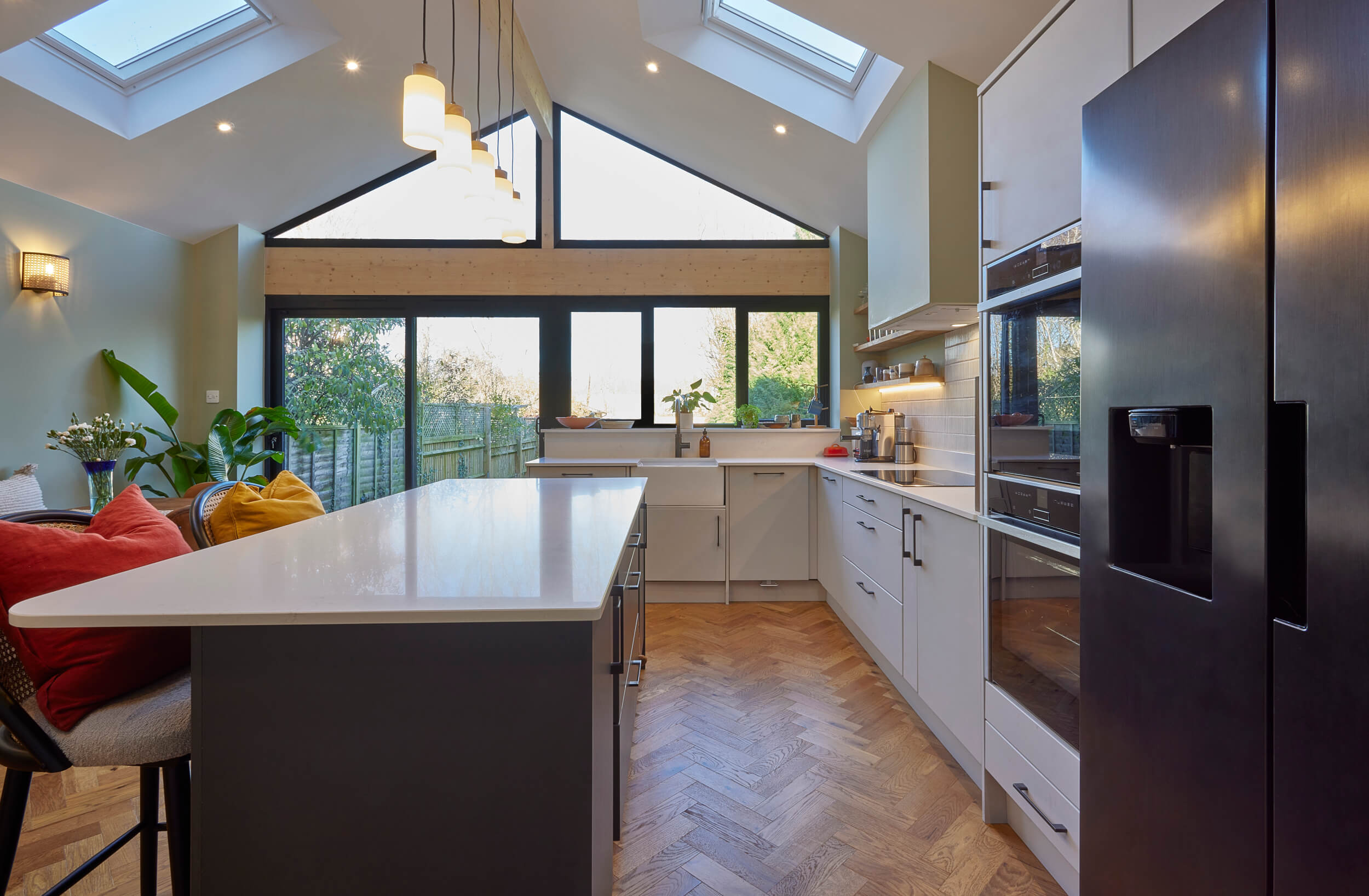
Common issues include filling a kitchen with cabinets and appliances without leaving sufficient room to move around, a concept often referred to as the kitchen work triangle.
How to Prepare for a Kitchen Online Design Consultation
Kitchen design specialists are on hand to provide input and recommendations based on your wish list, and to ensure those suggestions are relevant, you will need to take a few measurements beforehand:
- Sketching a plan of the room’s shape is a useful way to ensure you’ve measured every wall in mm and can plot them on your diagram.
- Measuring the ceiling at two points on opposite sides of the room is helpful, as ceilings can vary slightly.
- Doors and windows should also be measured, including windowsills, and marking whether doors open inwards or out can help your designer decide on the best placements for appliances or cabinets.
- Including additional details such as plug sockets, boilers, plumbing, and radiators will ensure they are incorporated into your design.
While many details can be refined later, such as moving plug sockets, this all supports a straightforward initial design plan. Taking images to send to your designer, including any awkward corners, pillars, beams, or slopes, will be beneficial.