Smile Kitchens vs IKEA Kitchens

By

4 min read

Compare Smile Kitchens vs IKEA Kitchens and find the right kitchen for your home. Explore design services, quality, guarantees, and value.

Contents

1. Smile Kitchens vs IKEA Kitchens: Key Takeaways

2. What Is the Biggest Difference Between Smile Kitchens and IKEA Kitchens?

3. How Does the IKEA Kitchens Design Process Work?

4. How Does the Smile Kitchens Design Process Differ?

5. What about materials and construction quality

6. Direct Comparisons: Smile Kitchens vs IKEA Kitchens

7. Other Differences Worth Considering

8. What Factors Might Make IKEA Kitchens or Smile Kitchens More Appealing to Homeowners?

9. What Do Real Customers Think About Smile Kitchens vs IKEA Kitchens?

10. Frequently Asked Questions

11. Related Reading

12. References

Request Our Brochure

For consumers who are comparing the well-known IKEA brand with specialist competitors like Smile Kitchens, the primary differences include a modular, self-planned kitchen vs a designer-led service.

IKEA is, of course, known for affordable flat-pack furniture and modular layouts, with many homeowners choosing the brand for DIY projects. Smile Kitchens is a very different proposition, focusing on kitchen designs that are tailored to each customer’s space, preferences, and requirements.

Both services help homeowners create a functional and attractive kitchen, but the experience along the way, particularly in terms of customisation, design input and how much support customers receive isn’t comparable.

For Smile Kitchens, a specialist installations team is on hand throughout the fitting process. IKEA operates as a general retail business and does not have a dedicated kitchen support team, which can make resolving issues after purchase more difficult.

Smile Kitchens vs IKEA Kitchens: Key Takeaways 

  • Smile Kitchens offers a bespoke, design-led service with one-to-one support from experienced kitchen designers. In contrast, IKEA kitchens are based around a modular system created for affordability and flexibility.
  • IKEA can appeal to customers who are comfortable using planning tools, selecting standardised units, and organising installation independently or through a third party.

Smile Kitchens may be better suited to homeowners who want expert guidance, highly customised layouts, and ongoing support throughout the kitchen design process. We also still have kitchen planning tools! See our AI kitchen planner here.

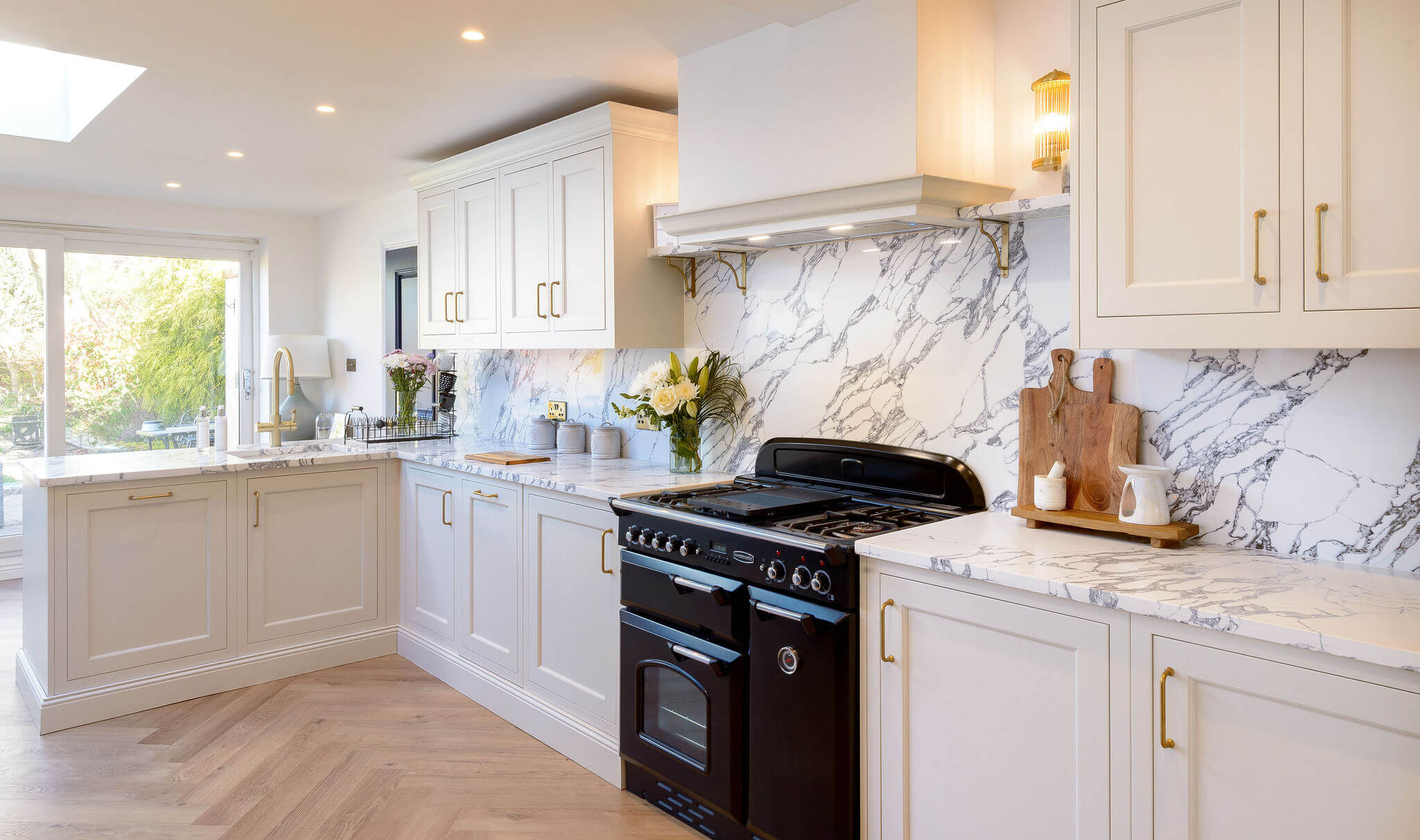
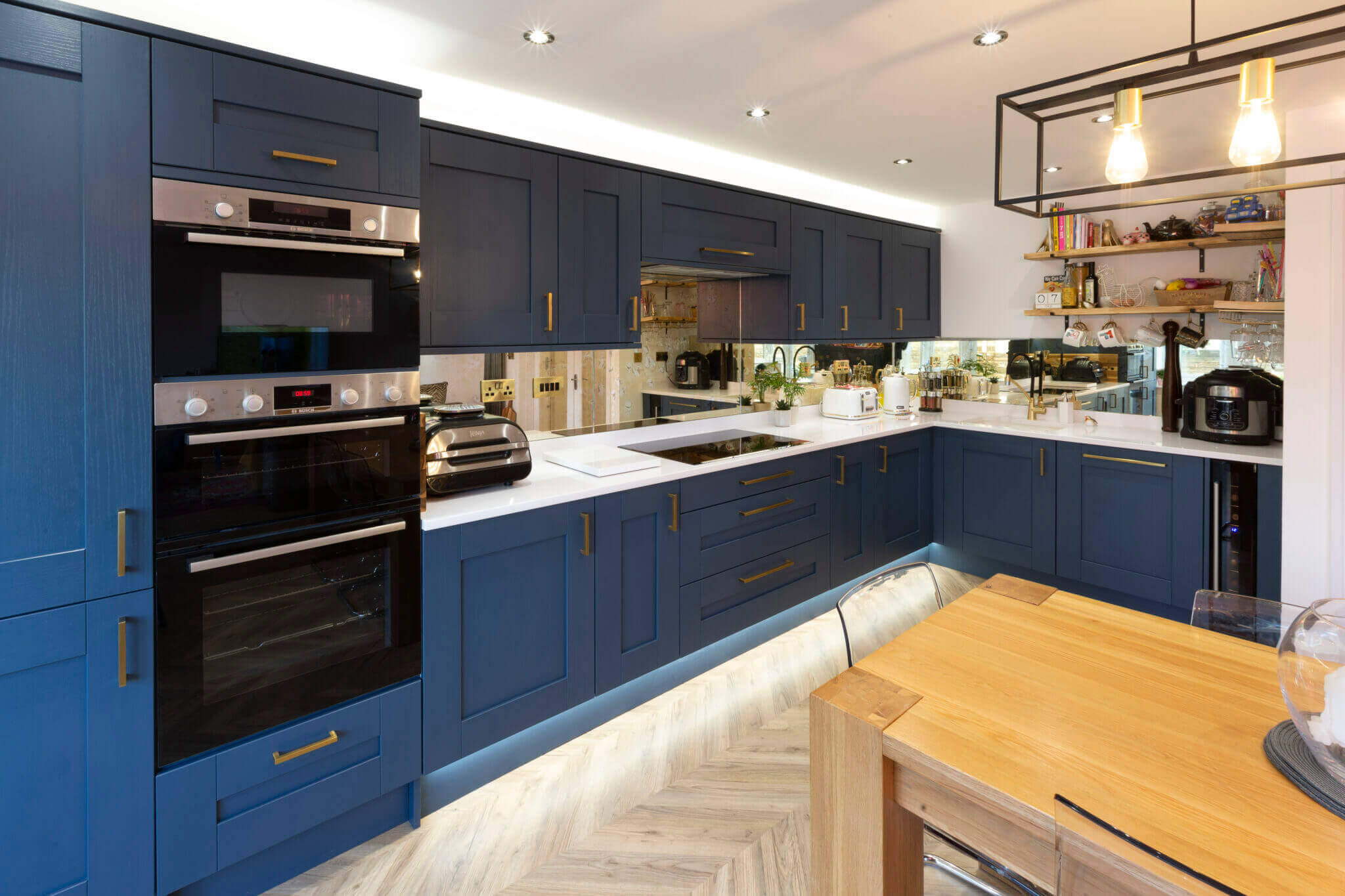
Smile Kitchen, Bromsgrove.

What Is the Biggest Difference Between Smile Kitchens and IKEA Kitchens?

The biggest contrast between Smile Kitchens and IKEA kitchens is the level of personalisation involved, but also the extent of advice and guidance they’re able to offer.

IKEA is a service firmly based around modular units and standardised cabinet sizes. That can, potentially, give customers a degree of flexibility through online planning tools to mix and match products – and it’s also a way to keep costs competitive and ensure services are accessible.

Smile Kitchens takes a bespoke approach, with experienced designers who work alongside homeowners to create layouts that are tailored specifically around the customer’s home, lifestyle, and preferred finishes.

Instead of trying to piece together combinations of standard units, homeowners communicate directly with a designer to refine layouts, storage, finishes and practical details based on how they actually use their kitchen day to day.

How Does the IKEA Kitchens Design Process Work?

Many homeowners start by using IKEA’s online planning tools or by visiting a local store to explore displays and available kitchen ranges. Customers can typically:

  • Use self-service digital planning tools to experiment with layouts 
  • Choose from modular cabinet systems and standard unit sizes 
  • Visit an IKEA store to view finishes and accessories in person 
  • Arrange delivery and self-installation or third-party fitting services 

This approach is normally attractive to budget-conscious homeowners and customers who are comfortable managing all aspects of the process independently.

However, because the system is modular, there may be limitations compared to a fully bespoke kitchen design service.

How Does the Smile Kitchens Design Process Differ?

Smile Kitchens offers a personalised and collaborative design experience, centred around one-to-one communications with professional kitchen designers. The process involves:

  • Remote consultations arranged around the homeowner’s schedule 
  • Bespoke kitchen layouts customised to their property 
  • 3D visualisations and digital designs 
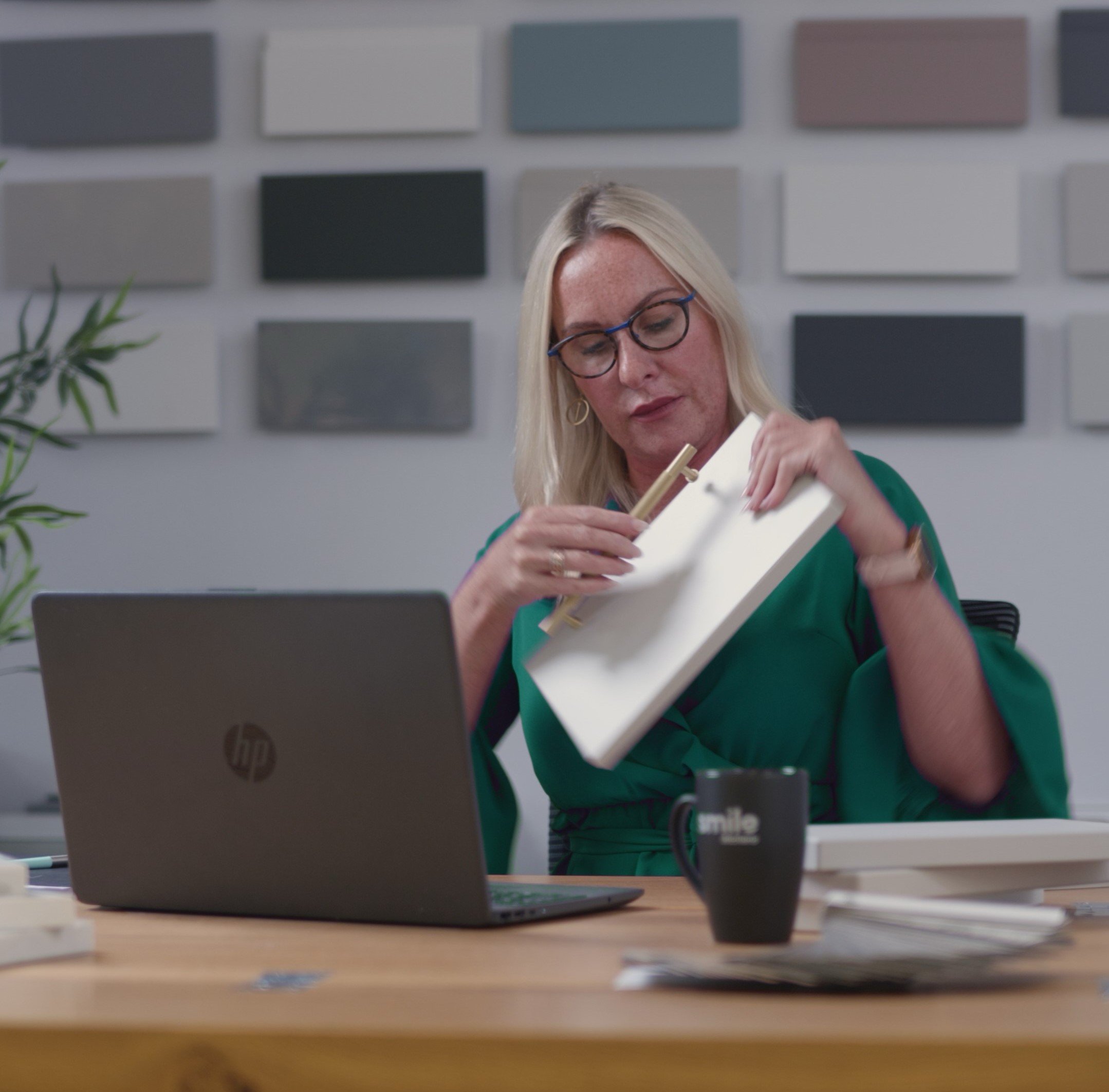
  • Samples delivered directly to the customer’s home 
  • Ongoing support throughout both planning and installation 

The remote approach means homeowners can work around their own schedules, while still having direct contact with an experienced design team.

Rather than relying on standardised cabinet configurations, Smile Kitchens focuses on maximising available space and tailoring the kitchen to each customer’s priorities, whether that involves storage, entertaining, family use, or a particular aesthetic.

What about materials and construction quality 

The construction of kitchen cabinets varies considerably between Smile Kitchens and IKEA, and these differences are worth understanding before making a decision.

Smile Kitchens cabinets are rigid-built as standard and manufactured in the UK.

Wall units are 330mm deep, exceeding the typical 300mm found at many competitors. Cabinet panels are 18mm high-density board throughout, and doors range from 18-22mm thick depending on the range. 

Cabinets include an adjustable service void to aid installation — meaning fitters can more easily accommodate pipework and electrics without having to modify the units themselves. Soft close hinges are included as standard, and back panels are 18mm and removable, allowing straightforward access for plumbing and electrics.


IKEA’s METOD range takes a different approach. The cabinet is designed to maximise internal space for the customer rather than ease of installation. There is no service void, and the back panel is thin — similar in construction to an IKEA wardrobe. 

While this increases usable cabinet depth, it can create complications during installation, as fitters may need to modify units to work around existing pipework. IKEA’s plinth height is fixed at 8cm.

You can read more here: How does Smile kitchens compare to other brands? 

Direct Comparisons: Smile Kitchens vs IKEA Kitchens


Service Area Smile Kitchens IKEA Kitchens
Design approach Fully bespoke and designer-led Modular kitchen system
Customer support One-to-one consultations with dedicated designers Self-service planning tools with optional support
Guarantee  10 year guarantee at Smile IKEA give 25 year guarantee on their METOD kitchen range 
Flexibility Highly customised layouts and finishes Based on standardised units and cabinet sizes
Materials and construction 18mm high density panels, 18-22mm doors, rigid built units with adjustable service void and removable back panel. UK Manufacture.  Modular, flat pack, thin back panels and no service void. Design to maximise internal cabinet space. 
Installation Customers choose their preferred installer DIY or third-party installation options
Convenience Remote design process with home-delivered samples Online tools and in-store planning services
Pricing model Competitive and tailored to specifications Budget-conscious and modular
Best for Personalised kitchens and professional guidance DIY-focused and cost-conscious projects
Trustpilot rating 4.8 – ‘Excellent’ [1] 1.4 – ‘Bad’ [2]

Other Differences Worth Considering

Delivery

IKEA charges a delivery fee of £40 on kitchen orders. Smile Kitchens offers free delivery as standard. For customers ordering multiple items or larger kitchens, the IKEA fee can add up, particularly if separate deliveries are required for out-of-stock items. That said, customers who live near an IKEA store and whose items are in stock have the option to collect their kitchen on the same day, which can be a genuine advantage for those working to a tight timeline.

Aftersales Support

IKEA does not have a dedicated kitchen aftersales team. Customer service queries are handled by IKEA’s general store staff, who may not have the specialist knowledge required to resolve kitchen-specific issues. 

This is reflected in a portion of negative IKEA kitchen reviews, which cite difficulty getting accurate support after purchase.

Smile Kitchens provides dedicated post-order support through the designer who managed the project, alongside a separate installations team available during the fitting process.

Returns and Planning Errors

Because IKEA’s kitchen planning is largely self-service, there is a higher rate of returned items compared to professionally managed services. Customers who plan and order independently are more likely to make measurement errors or ordering mistakes, which can cause delays and additional cost.

Smile Kitchens’ design process includes multiple measurement checks by both the designer and the customer’s chosen fitter before any order is placed, which significantly reduces the risk of errors.

What Factors Might Make IKEA Kitchens or Smile Kitchens More Appealing to Homeowners?

IKEA kitchens could work well for homeowners who want affordability, are comfortable assembling flat-pack furniture or coordinating installation, and are happy to design within a modular self-guided system.

The IKEA model may also suit customers who enjoy hands-on planning and want the flexibility to build a DIY-style kitchen using standardised components and accessories.

Smile Kitchens is often preferred by homeowners seeking a tailored design experience, particularly when room layouts are unusual, storage requirements are specific, or the customer wants more detailed guidance throughout the process.

Because the service is managed remotely and collaboratively, it can also appeal to customers who want greater flexibility without needing to attend multiple showroom appointments.

What Do Real Customers Think About Smile Kitchens vs IKEA Kitchens?

Independent review platforms like Trustpilot provide useful insights into how customers feel about the design, ordering, and installation experience offered by each company.

Smile Kitchens currently holds a strong Trustpilot rating of 4.8 stars, with reviews highlighting the expertise of designers, the ease of the remote consultation process, and the quality of the finished kitchens. 

IKEA reviews are more mixed, reflecting the scale of the business and the broad range of products and services offered. 

Most positive reviews mention the affordability and the practicality of the modular system, particularly for DIY-focused homeowners. However, some lower-rated reviews talk about issues around deliveries, customer service responses, or difficulties resolving issues linked to third-party logistics and installation.

The headline comparison is that IKEA is rated 1.4/5, based on 29,000+ review submissions compared to 4.8/5 after 500+ reviews of Smile Kitchens.

Frequently Asked Questions 

Are IKEA Kitchens Fully Customisable?

Not entirely. IKEA kitchens are modular rather than fully bespoke, meaning layouts are created using standard cabinet sizes and pre-designed components.

Do I Need Installation Help With IKEA Kitchens?

Many homeowners either assemble IKEA kitchens themselves or hire independent installers or third-party fitting services to complete the installation.

Related Reading:

  1. Smile Kitchens vs DIY kitchens
  2. Smile Kitchens vs Howdens 

References:

  1. Trustpilot: Smile Kitchens
  2. Trustpilot: IKEA Kitchens