Breakfast Bar Ideas for Your Kitchen

By Nicholas McDonald

4 min read

Make the most of your kitchen with a breakfast bar that's as practical as it is stylish. Explore inspiring breakfast bar ideas, clever layouts and expert design tips to help you create a space that works beautifully for everyday life.

Table of Contents

1. Why a Breakfast Bar Is a Smart Addition to Your Kitchen

2. Different Types of Kitchen Breakfast Bars

3. Ten Stylish Breakfast Bar Ideas for Modern Kitchens

4. Breakfast Bar Ideas for Small Kitchens

5. Key Breakfast Bar Design Considerations

6. Frequently Asked Questions

Book a Free Design Consultation

Breakfast bars have become one of the most-requested features in modern kitchen design – and it’s not hard to see why! They’re places that can change every aspect of how your kitchen works, as a space for grabbing a quick coffee, food prep, seating, and socialising.

For so many of the homeowners we work with at Smile Kitchens, the main appeal is flexibility.

Breakfast bars can replace dining tables in smaller kitchens, act as a divider in larger, open-plan layouts, and create a spot to sit back and relax between cooking and entertaining. 

The trick to an amazing breakfast bar lies in its design, layout, materials, and proportions, all of which contribute to an aesthetically pleasing breakfast bar you’ll use day after day.

We’ve compiled our top breakfast bar ideas for your kitchen. 

Why a Breakfast Bar Is a Smart Addition to Your Kitchen

Breakfast bars work because they offer practicality that caters to your family’s lifestyle. That could be based on casual, comfy seating without designating a separate dining area, which is especially useful in open-plan kitchens, compact homes and apartments.

However, it could also be about space-saving functionality if you have limited worktops and need an extra counter for food prep and entertaining without feeling squeezed into a smaller area.

Another element is socialisation. Rather than being away from your guests or loved ones, a breakfast bar is where everyone can gather, chat or help out – which makes cooking meals more inclusive, not least for the chef!

In busy family homes, breakfast bars won’t disappoint either, as they’re just as great for eating, working from home, helping with the kids’ homework, or entertaining.

Different Types of Kitchen Breakfast Bars

The number of choices can make designing a breakfast bar difficult, but our seasoned designers are always here to suggest styles and layouts that make the very best of your layout. If you’re unsure, here are some ideas as design inspiration!

The Classic Worktop Overhang

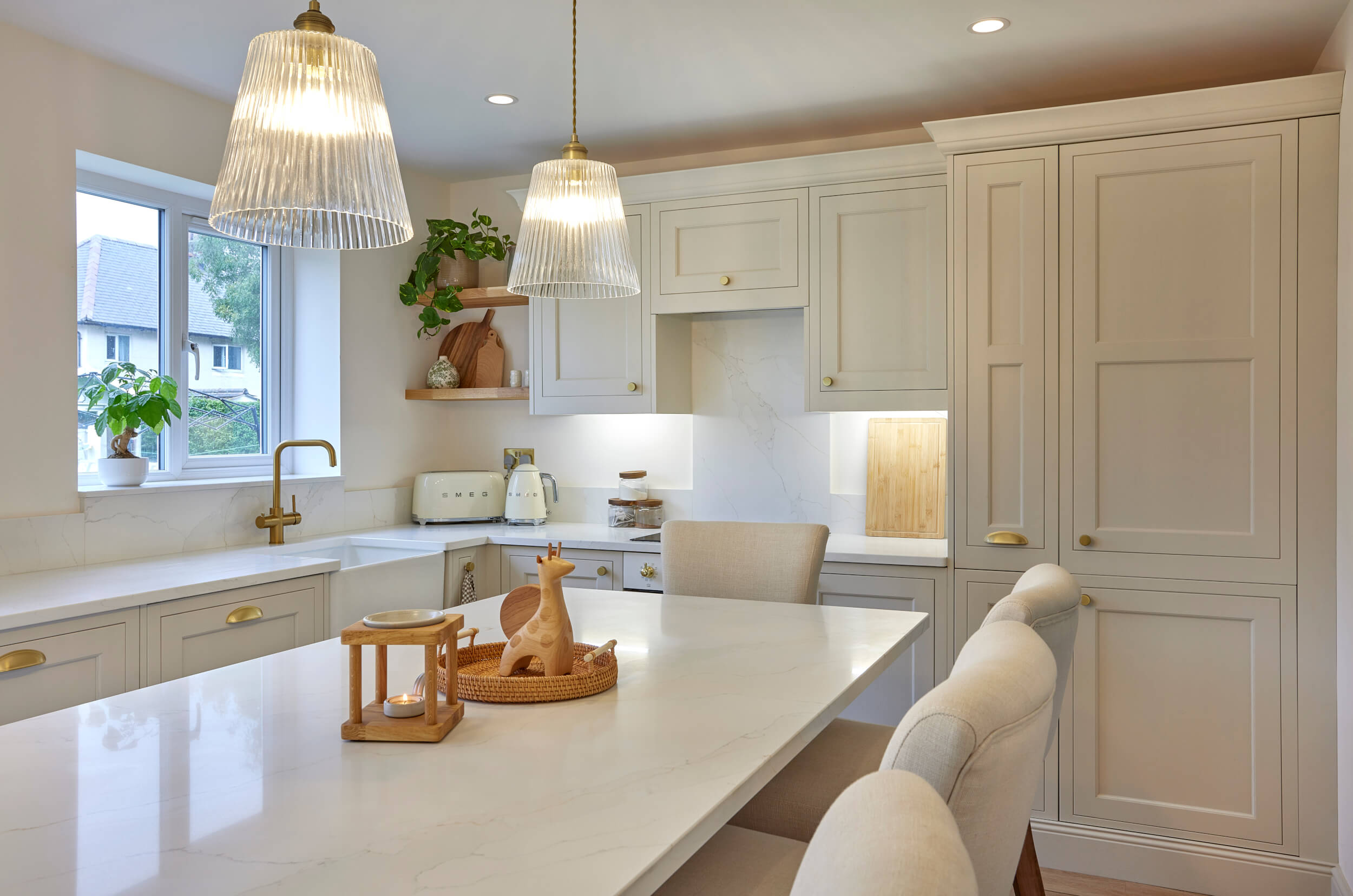
Worktop overhangs are simple and require little space. They mean your worktop overhangs the cabinetry just enough to provide room for stools – as a fantastic way for kitchens to incorporate some extra seats and social areas without extensive remodelling.

Integrated Island Breakfast Bars

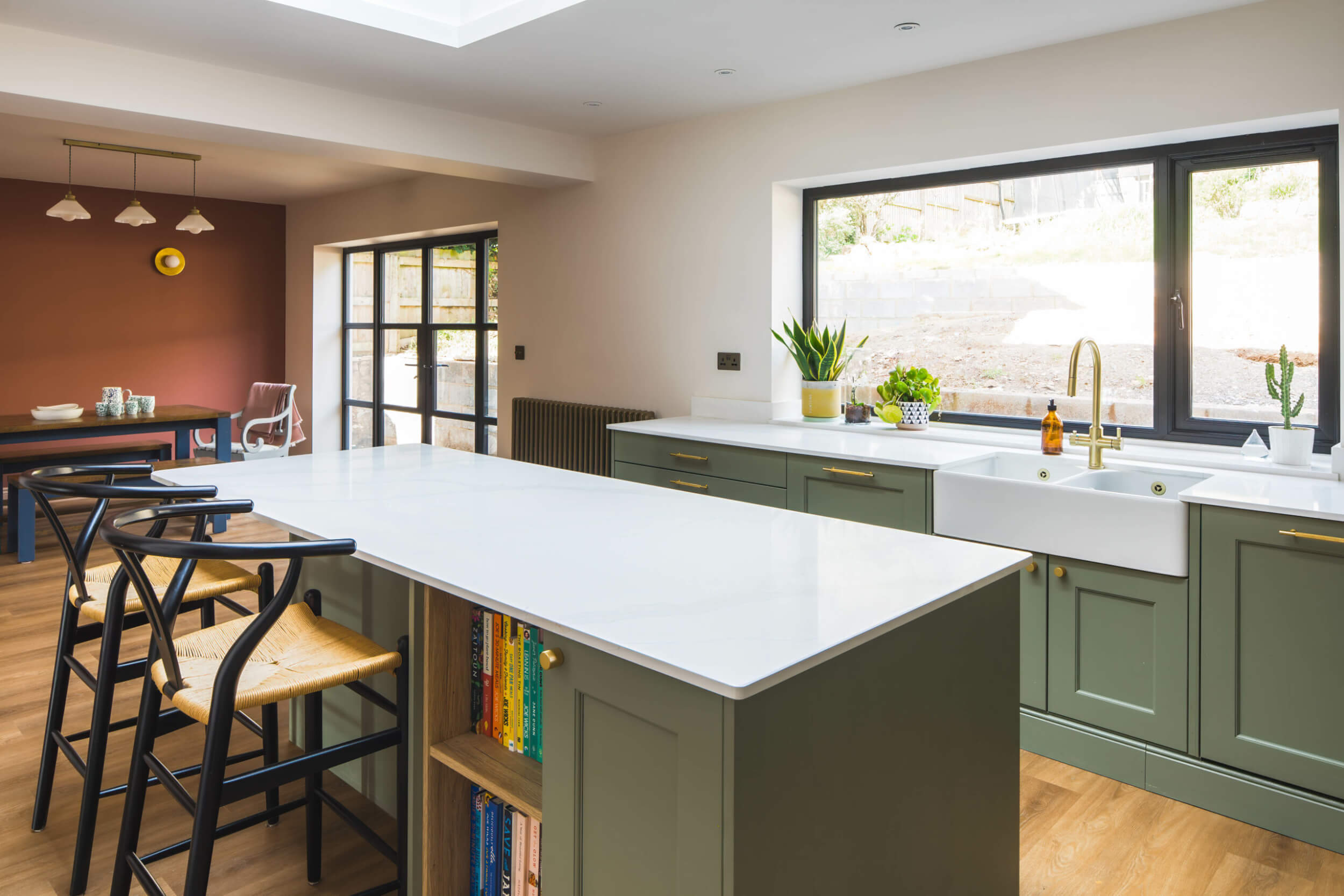
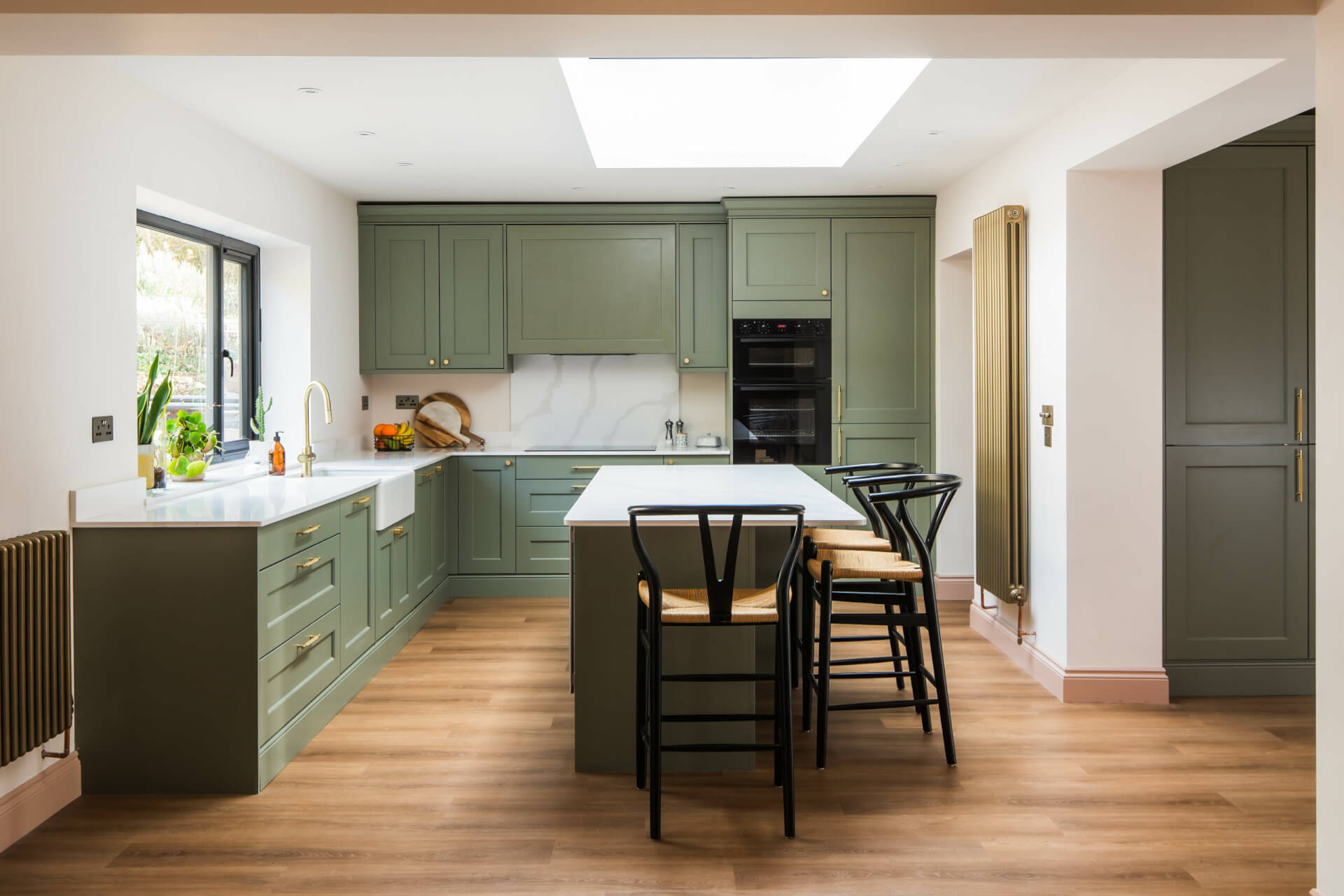
Having space for a kitchen island is brilliant, but integrating seating is a popular choice, where a breakfast bar becomes an alternative to a traditional table.

You can turn this into a focal point of your kitchen design, which works particularly well within open-plan spaces.

Peninsula Breakfast Bars

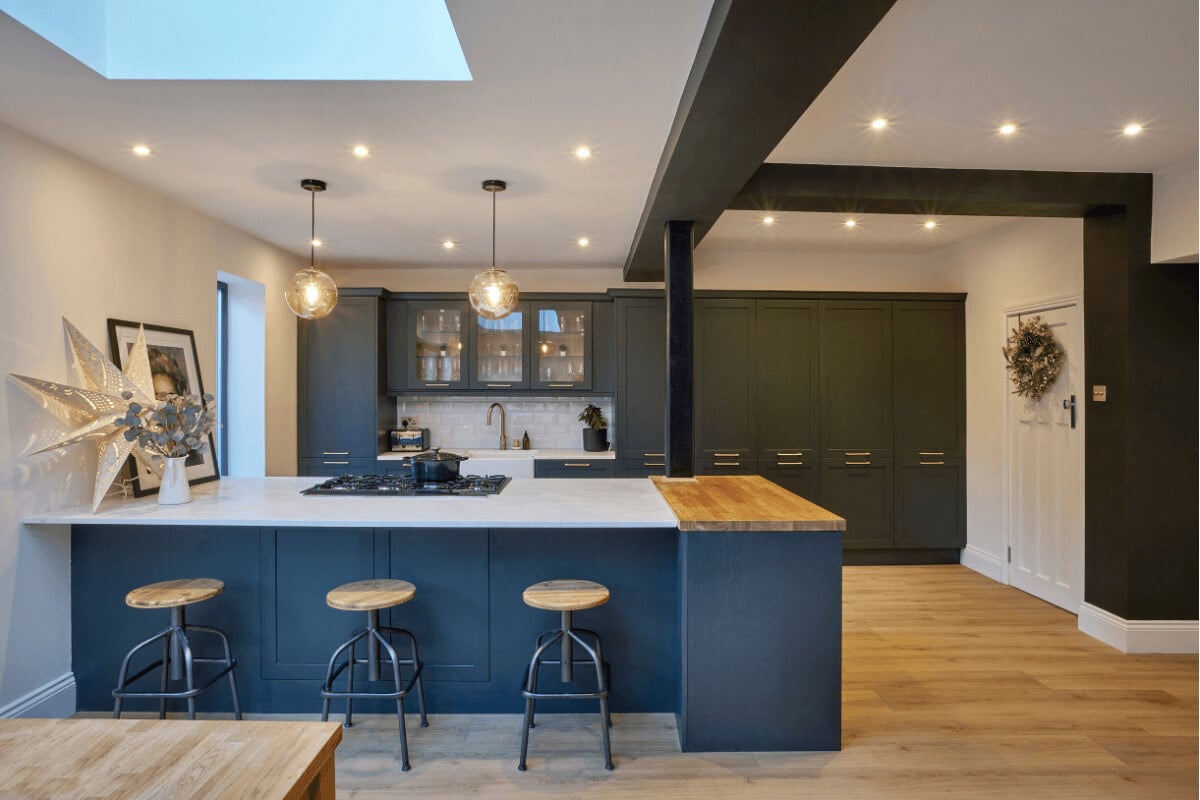
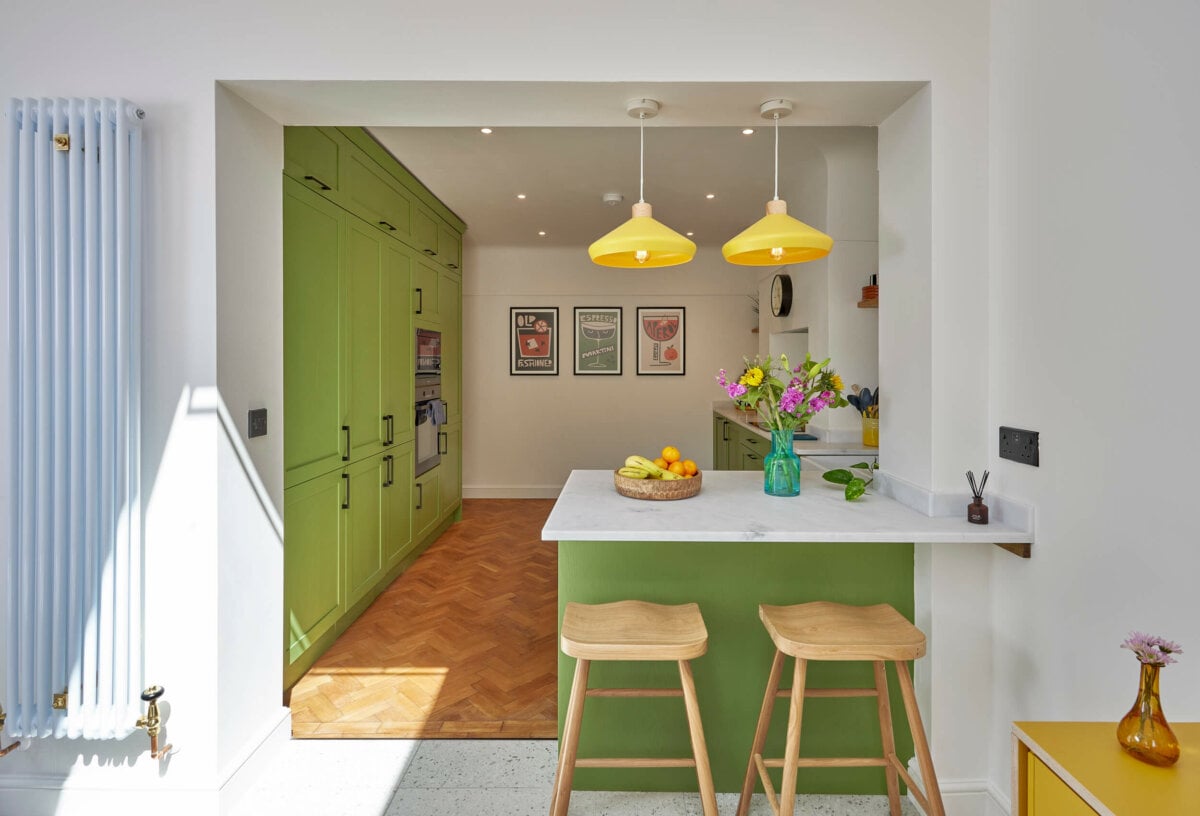
Peninsulas are a modern take on a conventional breakfast bar, and they’re a good way to add extra seats, worktop space or prep areas if you have an L-shaped kitchen or limited space.

Peninsulas can extend outward from walls or cabinets without creating an island, while still building a new seating area.

Raised Breakfast Bars

If your kitchen has uneven or tiered flooring, a raised section is an easy way to separate cooking and dining areas even if you don’t have a standalone dining room.

The idea is often to conceal food prep areas, but that all depends on whether you love open-plan or one-room designs.

Waterfall Edge Designs

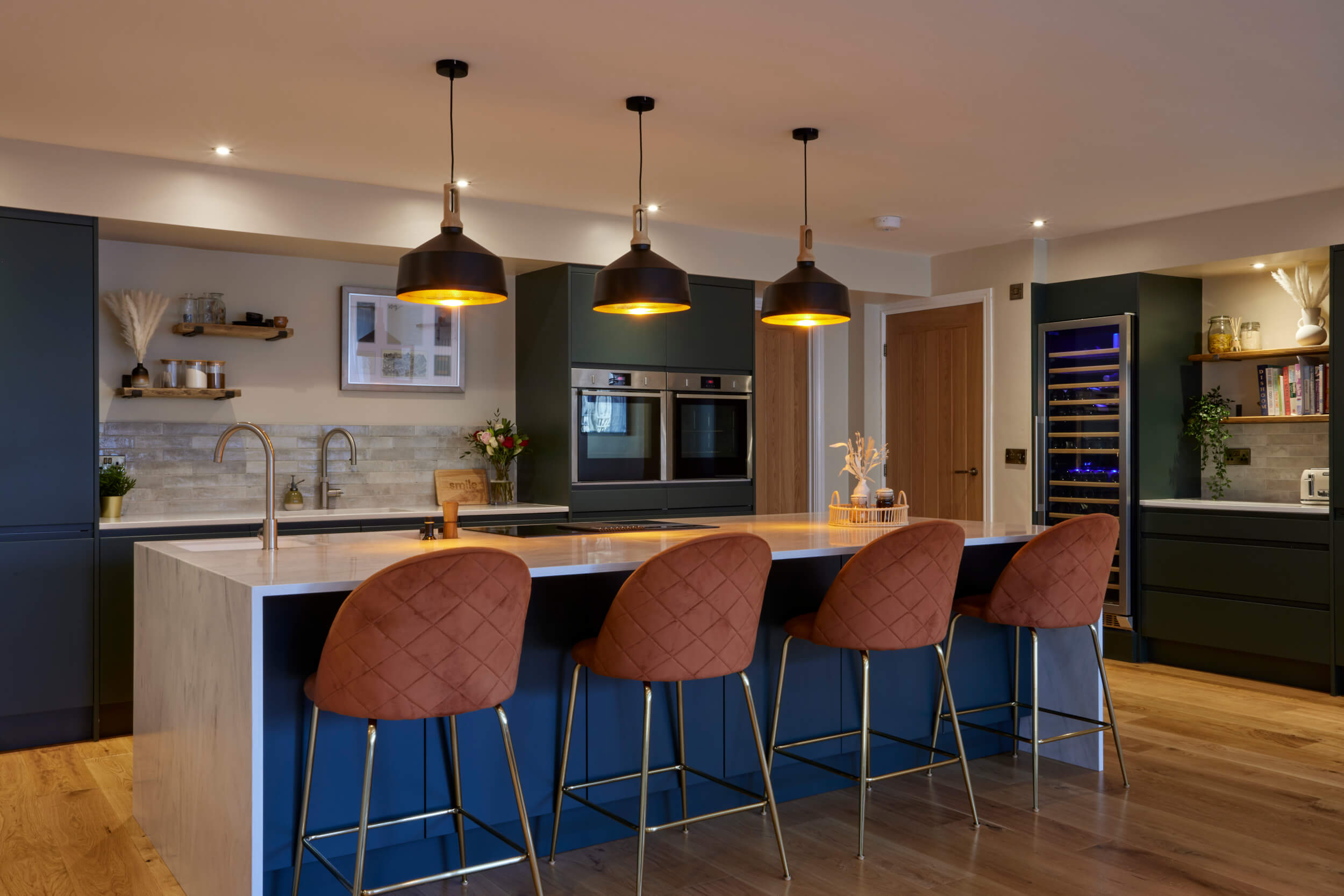
Waterfall worktops are a way to maximise space while incorporating a modern, sharp look.

The worktop extends down the sides of the breakfast bar and is especially effective with surfaces like quartz or stone.

Pull-Out Breakfast Bars

Ideal for compact kitchens, pull-out breakfast bars can be tucked away when not in use.

They’re practical, space-saving and increasingly popular in apartment layouts – amazing if you want a breakfast bar but don’t have the capacity for a permanent table.  

Wall-Mounted and Fold-Down Bars

For smaller spaces, fold-down or wall-mounted options offer a simple solution that provides the benefit of an extra work or dining space, or an occasional table you can use as and when needed.

Looking to add a stylish breakfast bar to your kitchen? Smile Kitchens can help you design a layout tailored to your space and lifestyle.

Ten Stylish Breakfast Bar Ideas for Modern Kitchens

While there are limitless ways our designers can customise your kitchen layout and the positioning of your breakfast bar to suit your home, we’ve shared just 10 of our favourites.

1. Minimalist Quartz Breakfast Bars

The smooth, tactile surface of quartz provides a low-maintenance breakfast bar that is resistant to stains and scratches. From an aesthetic viewpoint, they work really well with handleless cabinets for a contemporary look.  

2. Rustic Wooden Breakfast Bars

Natural timber tones are comfortable and warm, well suited to farmhouse or shaker-style kitchens, where breakfast bars are needed for family gatherings and quick snack catch-ups without overwhelming the space.

3. Two-Tone Island Seating

The conventional breakfast bar is one shade, but if you’re a lover of colour and contrast, this needn’t be the case! Matching or contrasting colours between islands and breakfast bars lets you create a space that reflects your interior décor preferences.

4. Compact Apartment Breakfast Bars

A proportion of Smile Kitchens clients live in apartments or flats where space-saving can’t be compromised. Using slimline surfaces with simple, comfy stools can transform even the smallest kitchens into functional dining areas.

5. Scandinavian-Inspired Designs

Light wood tones and uncluttered surfaces create a calm, practical breakfast bar space. Scandi-chic breakfast bars are incredibly stylish, using organic timber finishes and natural tones that reflect your tastes.

6. Waterfall Edge Statement Bars

Perfect for modern homes, these create a seamless, architectural feel. In waterfall edges, the counter extends at a 90-degree angle and flows to the floor, folding over the edges of the breakfast bar.

7. Industrial-Style Breakfast Bars

You can pair darker worktops with metal stools and exposed finishes for a more urban look. These ultra-modern breakfast bars are functional and attractive, often using reclaimed wood and exposed metal to create a durable, space-saving design.

8. Curved Breakfast Bars

Soft curves can make a kitchen feel more fluid and are particularly effective in open-plan layouts. They offer the functionality of a snack-sharing breakfast bar but with softer lines that reflect the shape of a traditional dining table. 

9. Breakfast Bars with Built-In Storage

Incorporating shelving or cabinets into the design can maximise functionality, and storage is often a key requirement for busy kitchens. Breakfast bars can add storage with open shelves, hidden cabinets and drawers. 

10. Slimline Peninsula Bars

Ideal for narrower or awkwardly shaped kitchens, slimline breakfast bars offer seating without overcrowding the space and often extend from walls or cabinets.  They create a multi-purpose dining or prep area without requiring much clearance on either side.

Breakfast Bar Ideas for Small Kitchens

If you’re dealing with a compact kitchen floor space, your breakfast bar needs to work within that limitation. 

In place of a traditional dining table, a fold-down or pull-out breakfast bar can work even in very tight rooms, or slimline peninsulas add a seating area while requiring little floor space.

Galley kitchens also often feature narrower breakfast bars along one wall, with compact stools that tuck under when not in use.

Key Breakfast Bar Design Considerations

Unsure whether your breakfast bar will deliver on your expectations? Here are some of the aspects our designers recommend focusing on!

Choosing the Right Materials

Breakfast bars can be used to match the rest of your kitchen or create a focal point, with materials like stone or quartz for premium durability, or timber finishes for warmth.

Dimensions and Overhangs

You’ll usually need to allow around 25 to 30 cm of overhang to ensure sitting around your breakfast bar is comfortable and that guests have enough legroom.

Lighting Placement

If your main kitchen lights are further from your breakfast bar, you could install an overhead pendant light to brighten the area for eating and socialising.

Seating and Stool Spacing

Most families need 60 cm of space around their breakfast bar for each stall, and stools should sit about 25 to 30 cm below the worktop.

Frequently Asked Questions

What Is the Ideal Height for a Breakfast Bar?

Most breakfast bars are the same height as a standard worktop, which is normally around 90 cm. However, homeowners can also use raised breakfast bars, depending on where the breakfast bar is placed and their kitchen layout.

How Much Overhang Do You Need for Seating?

Normally, you’ll find that 25 to 30 cm of overhang is enough, ensuring your family and guests can sit around the breakfast bar without feeling cramped or being unable to rest their legs underneath.

Explore Smile Kitchens’ bespoke kitchen designs to discover breakfast bar ideas that combine functionality with modern style. Book a free kitchen consultation to discuss your next kitchen. 

Are breakfast bars suitable for small kitchens?

A breakfast bar is suitable for a small kitchen and can actually make the space work harder by combining a prep area with a seating, removing the need for a separate dining table altogether.

Peninsula-style breakfast bars are particularly well suited to smaller layouts, as they extend from an existing run of units rather than taking up additional floor space.

Choosing a slimmer overhang and bar stools that tuck fully underneath will keep the space feeling open when the bar is not in use.

Can a breakfast bar replace a dining table?

For many households, yes. A breakfast bar works well as a primary eating space for everyday meals, particularly in open-plan kitchens where a separate dining table would feel disconnected from the main living area.

It suits informal dining and works especially well for families with younger children.

For larger gatherings or more formal occasions, a separate dining table remains practical, but for day-to-day use, a well-designed breakfast bar can comfortably replace it.

What are the best stools for a kitchen breakfast bar?

The right stool depends on the height of your breakfast bar. For a standard worktop height of around 90 cm, counter-height stools with a seat height of 60 to 65 cm are the correct fit.

For raised breakfast bars, bar-height stools with a seat height of around 70 to 75 cm are more appropriate.

Look for stools with a footrest for comfort during longer meals, and choose a backrest style if the bar will be used regularly for dining rather than just casual perching.

Material should be practical as well as stylish,  easy-clean upholstery or metal and wood finishes tend to hold up well in a kitchen environment.

Book a Free Kitchen Design Consultation