The Smile Guide to Shaker Kitchens

By Dawn Filkins

6 min read

Discover everything you need to know about shaker kitchens, including colours, costs, design ideas and more in our complete guide.

Red Kitchens

Table of Contents

– What Is a Shaker Kitchen?

– The History of Shaker Kitchens

– Key Features of a Shaker Kitchen

– Are Shaker Kitchens Still in Style?

– Modern Shaker vs Traditional Shaker: What’s the Difference?

– Shaker Kitchen Colours

– Shaker Kitchen Worktops: What Works Best?

– Shaker Kitchen Handles: How to Choose

– Shaker Kitchen Layouts

– Shaker Kitchens With an Island

– Shaker Kitchen Storage Ideas

– Shaker vs In-Frame Kitchens: What’s the Difference?

– How Much Does a Shaker Kitchen Cost?

– How to Design Your Shaker Kitchen With Smile Kitchens

Book a Free Kitchen Design Consultation

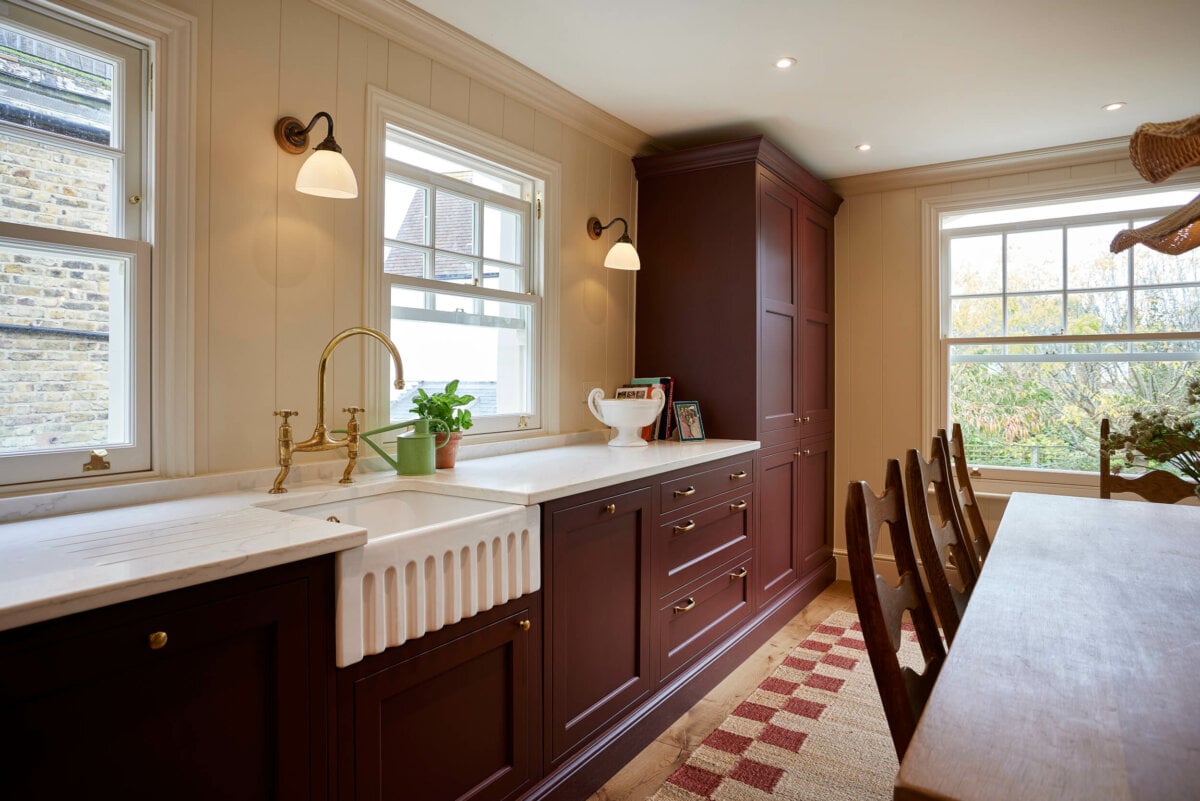
A shaker kitchen is a kitchen style built around simple, recessed-panel cabinet doors with clean, straight lines and no unnecessary details. 

Shaker kitchens feature a classic five-panel door shape you will recognise from country homes and city apartments alike, and it remains one of the most popular kitchen styles in the UK (and here at Smile Kitchens).

Their clean lines and understated elegance mean they feel equally at home in period properties, family homes and contemporary open-plan spaces.

In this guide, Smile Kitchens explains everything you need to know about shaker kitchens, from their history and defining features to colours, worktops, layouts, costs and design ideas, helping you decide whether a shaker kitchen is the right choice for your home.

What Is a Shaker Kitchen?

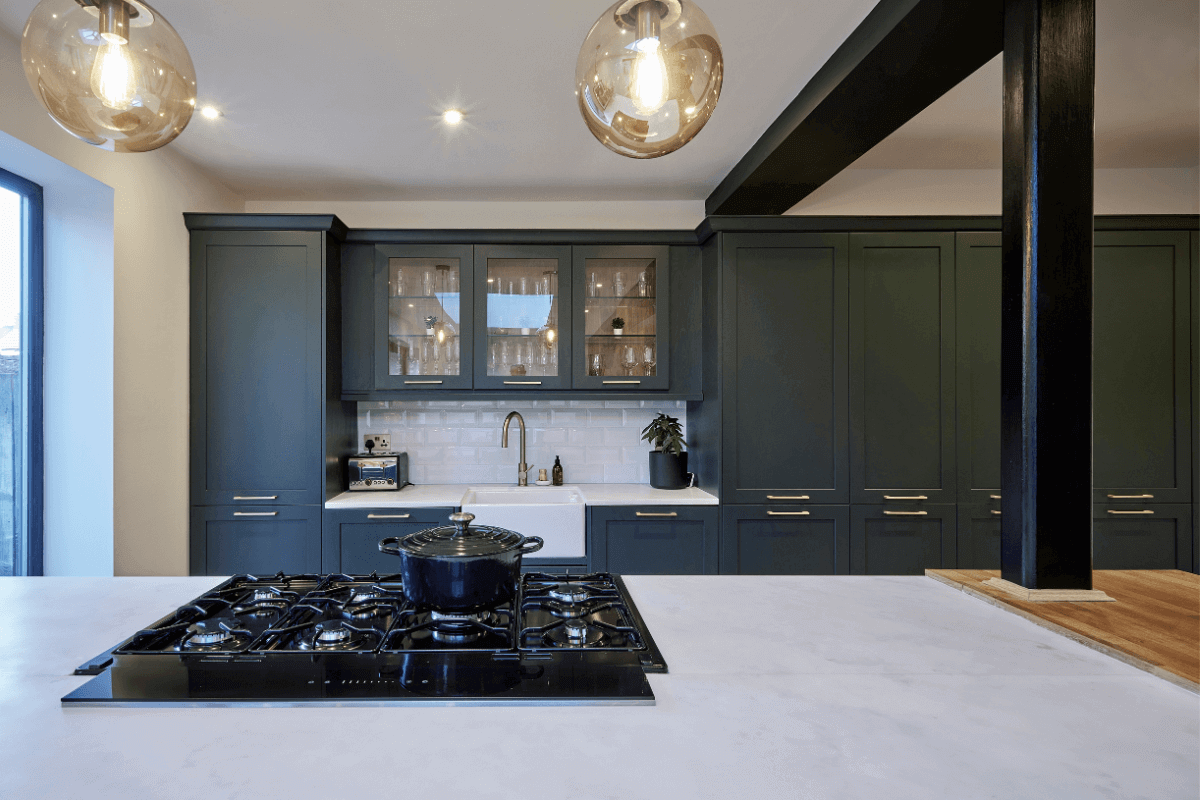
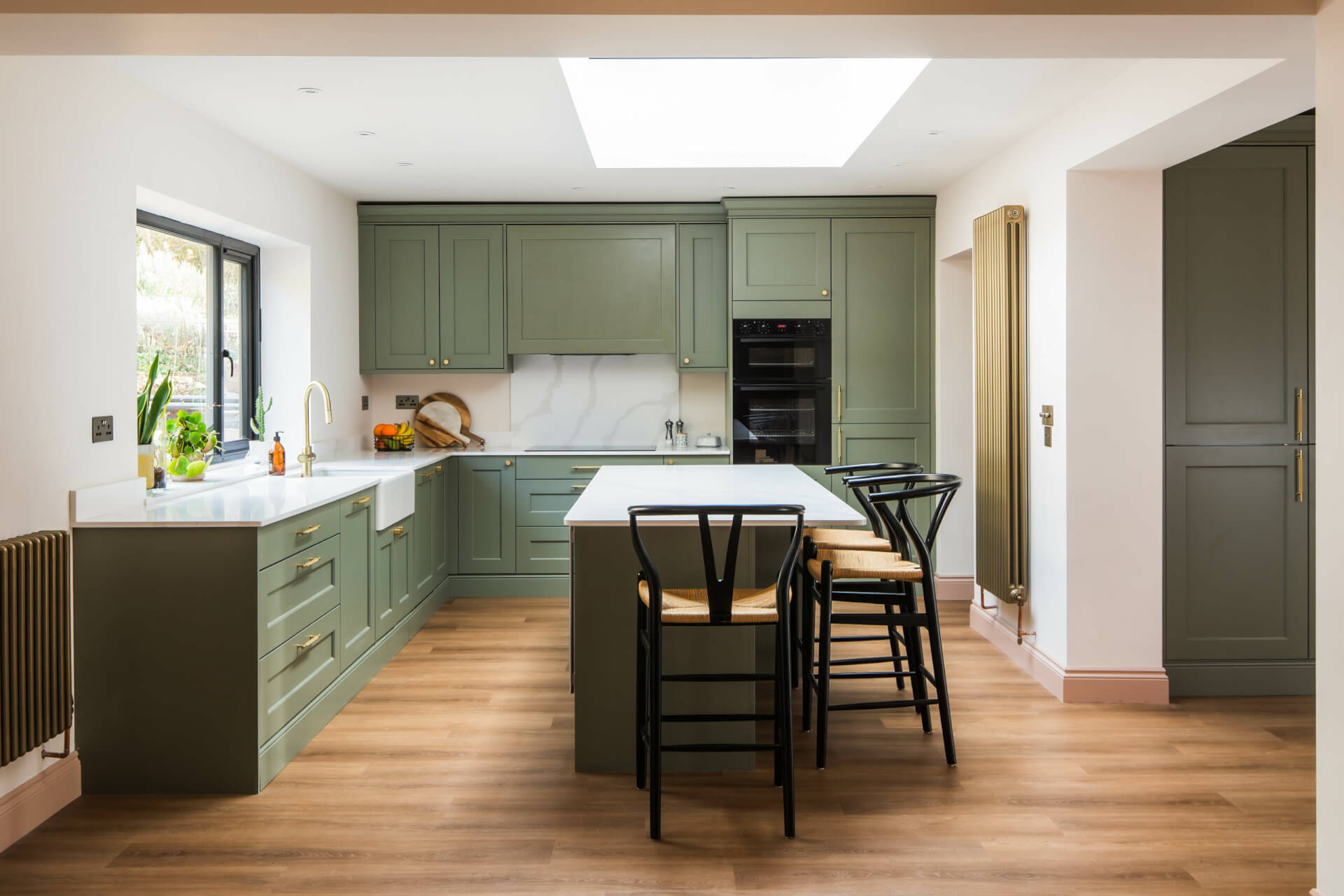
A shaker kitchen has simple cabinet doors with recessed centre panels, a symmetrical layout and a practical, timeless design. 

Shaker kitchens are often either finished with varnishes and stains to allow the grain of the wood to stand out, or with neutral or pastel tones, from sage greens to softer whites and creams.

Because the design of a shaker kitchen isn’t either fussy or minimalist, it looks amazing in properties of all ages and sizes, with the flexibility to pick layouts, finishes and colours that complement each homeowner’s taste.

Another key benefit of choosing a shaker kitchen, aside from its versatility, is that the cabinets and worktops are easy to update, less likely to become dated than more stylised kitchens, and can enhance your home’s appeal to future buyers.

The History of Shaker Kitchens

Shaker kitchens originally date back to the Shakers, a religious movement in 18th-century New England. [1] These communities focused on self-sufficiency and practical living, and built kitchens with this in mind, without elaborate finishes or flourishes.

The aesthetic gained popularity when Shaker communities started selling furniture to the public and has since become one of the most recognisable kitchen designs.

Key Features of a Shaker Kitchen

Each kitchen design might vary depending on the colours and finishes you prefer, the layout of your kitchen and the size of the space, but the primary features of a shaker kitchen include:

– Framed cabinet doors with recessed centre panels

– Square edges without curves or bevels

– Symmetrical cabinet layouts

– Practical storage space

– Painted or natural wood finishes

Focusing on functionality and quality materials ensures shaker kitchens look and feel classic, while being customisable with elements such as splashbacks, handles, worktops or lighting.

Are Shaker Kitchens Still in Style?

Shaker kitchens are definitely still one of the most popular kitchen designs, [2] and over the years they’ve retained their simple design, but been updated to include modern fixings, finishes and materials. 

Options to mix traditional cabinet styles with aged brass or copper for a heritage look, or blend timber doors with matte black handles and granite worktops means each kitchen can be adapted to suit your style.

Modern Shaker vs Traditional Shaker: What’s the Difference?

As we’ve touched on, the way you finish a shaker kitchen can have an impact on the end result, and there are several contrasts between a contemporary take on the classic shaker kitchen and a more traditional feel:


Modern Shaker Kitchen


Traditional Shaker Kitchen


Matte finishes with bold accents, or dark cabinet colours and metallic handles


Heritage timber cabinets with neutral tones or painted surfaces 


Bar-shaped handles or handleless units, with materials like quartz and stainless steel


Cup handles or traditional knobs in finishes like brushed brass or antique bronze


Contemporary worktop materials and finishes, such as polished concrete


Worktops made of wood or marble to give a classic look


Monochrome or vibrant colour palettes with feature walls and statement pieces


Natural tones such as whites and greys or creams and sage greens


If you’re interested in how modern and traditional shaker kitchens compare, we’d suggest taking a look at our Jasper Handleless Kitchen, a shaker kitchen with a modern twist, and the Hambleton Shaker Kitchen with its more classic styling.

Shaker Kitchen Colours

The choice of colours is, of course, yours, but there are a few palettes that are most often used in shaker kitchen designs:

White: Pale white is perfect for smaller kitchens, reflecting light to make the room feel bigger, and ensuring cabinets pair with any worktop materials.

Cream: These tones have a warmer, traditional and welcoming feel, commonly used in farmhouse-style shaker kitchens or larger rooms to ensure they don’t appear cold.

Grey: Homeowners who want a more modern aesthetic tend to prefer greys, which are versatile given the number of shades.

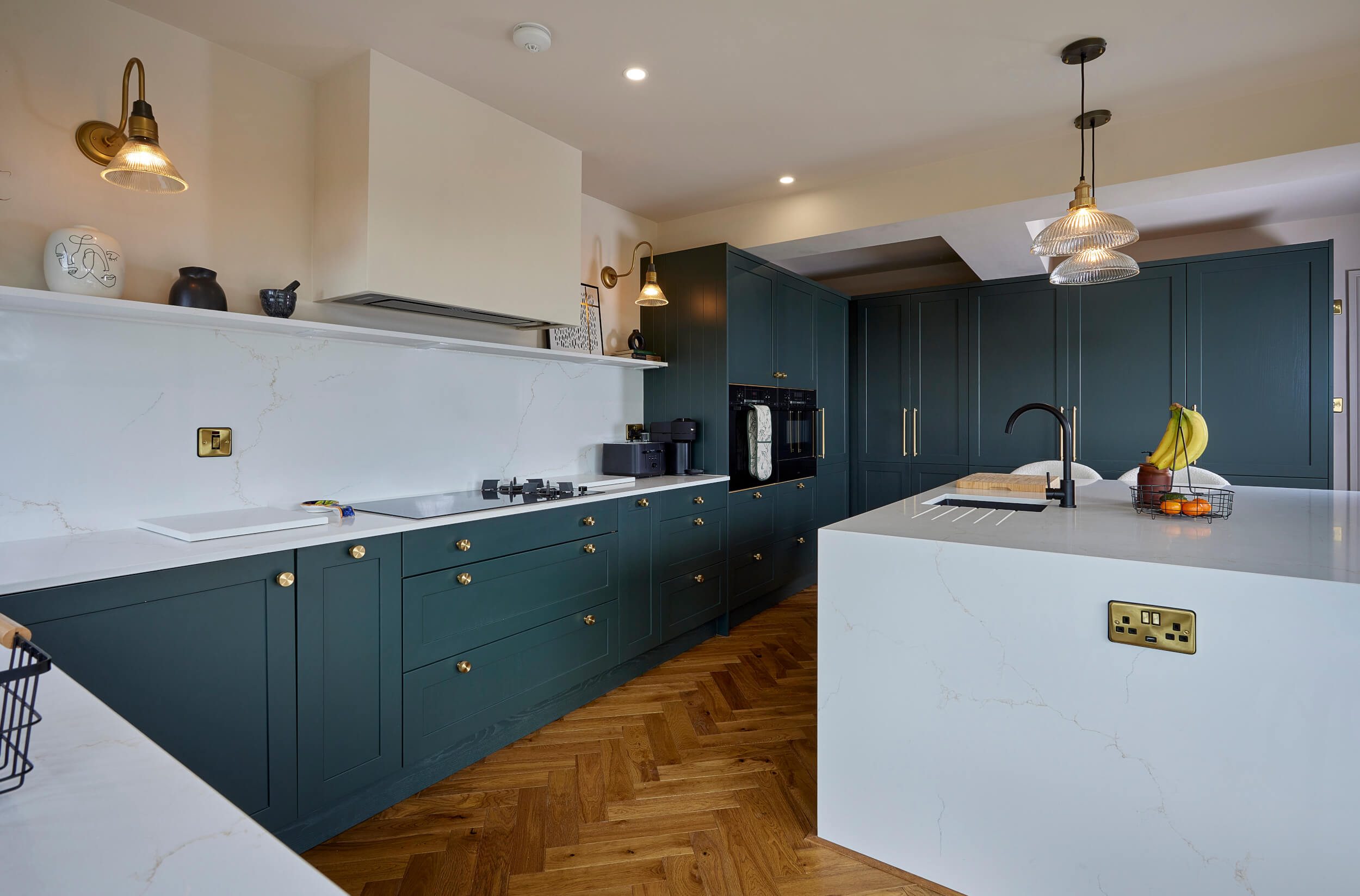
Deep Blue: Navy and midnight blues make a bolder colour statement and create shaker kitchens with greater visual impact.

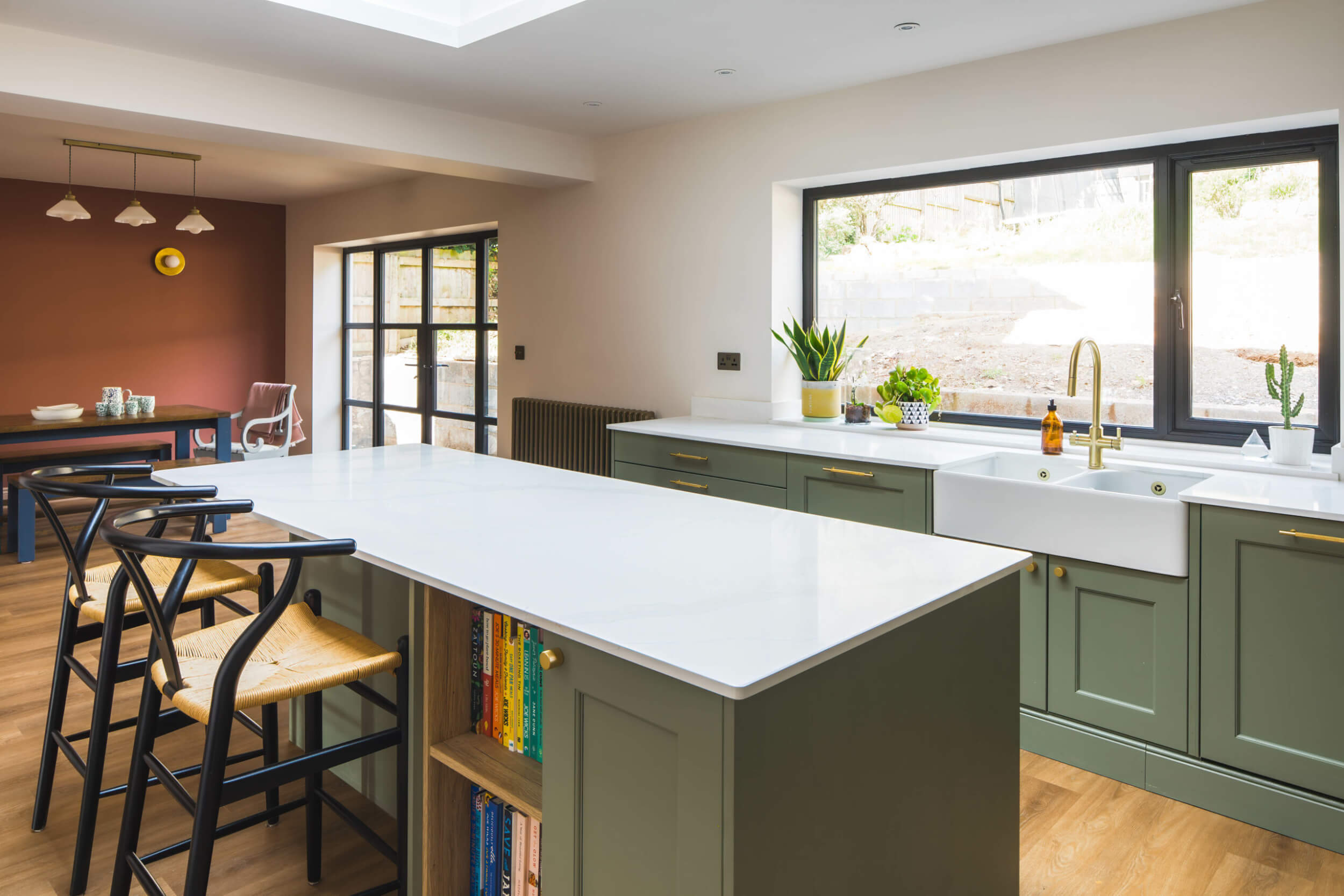
Sage Green: Soft greens are very on-trend, and work well with natural timbers, bringing out the richness of the wood grain.

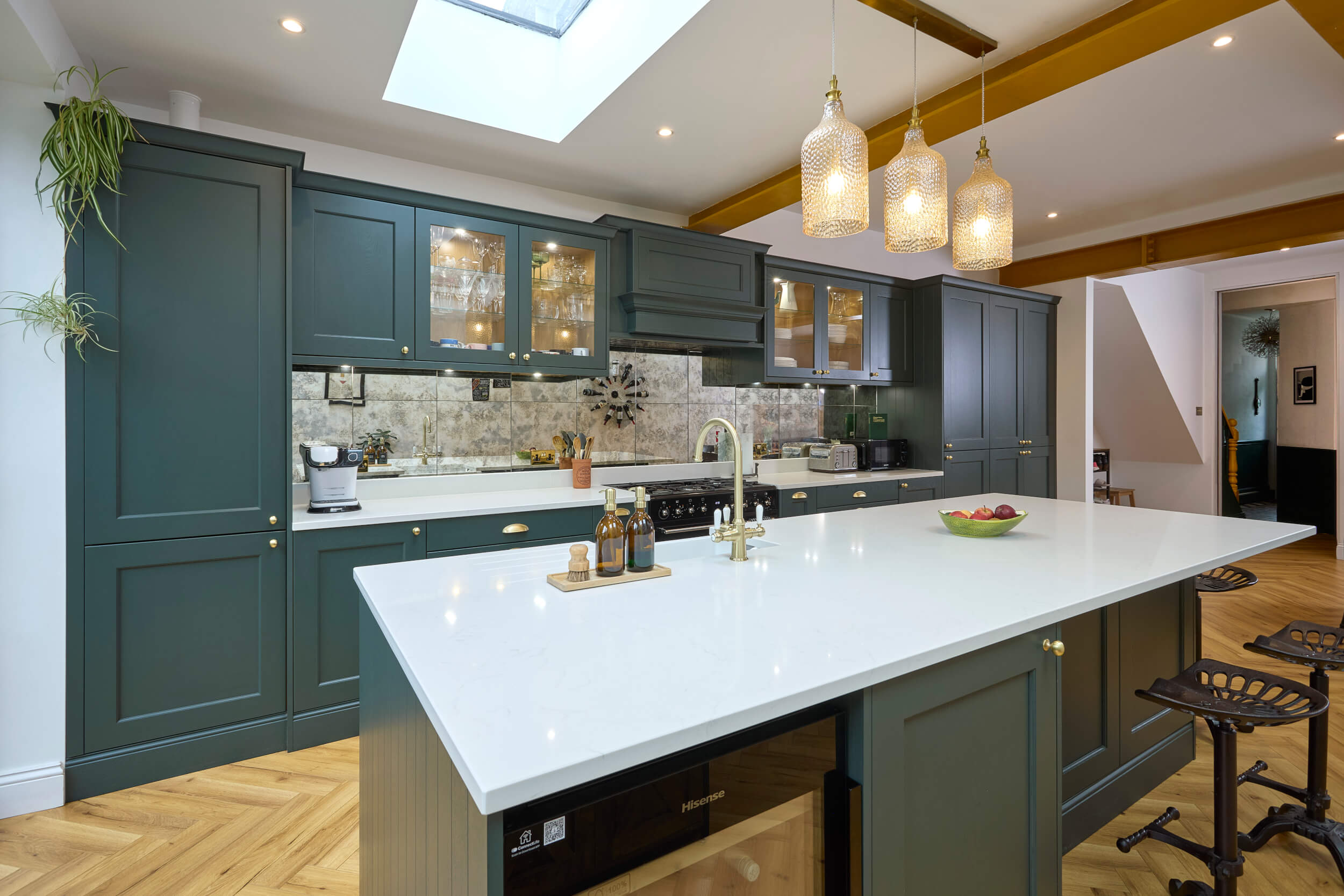
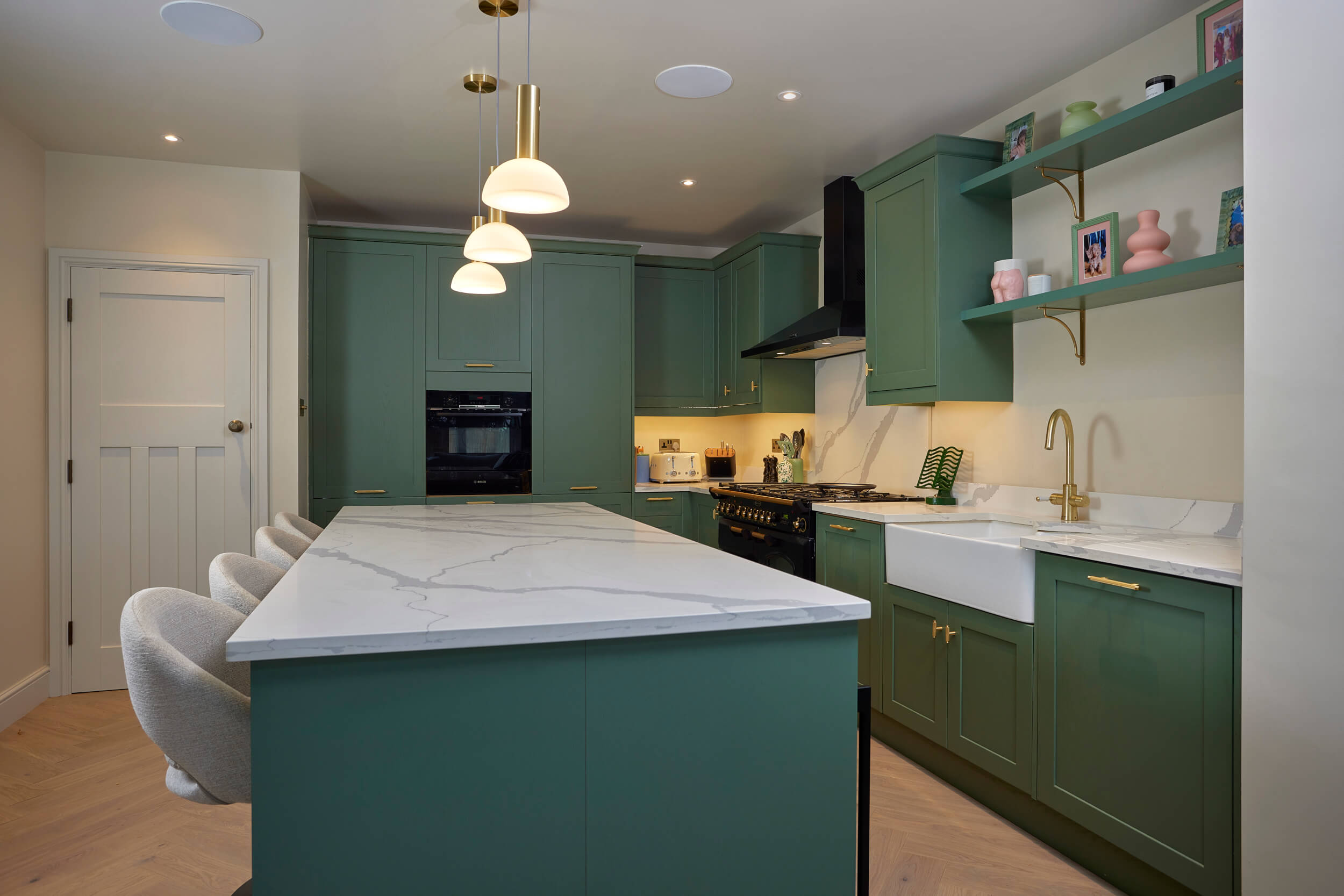
Dark Green: Forest greens and deeper hues are more dramatic than pastels and are most popular in open-plan kitchens where a splash of colour finishes the space.

Black: Charcoal and granite blacks are among the most modern options and are particularly effective within monochrome and two-toned kitchens.

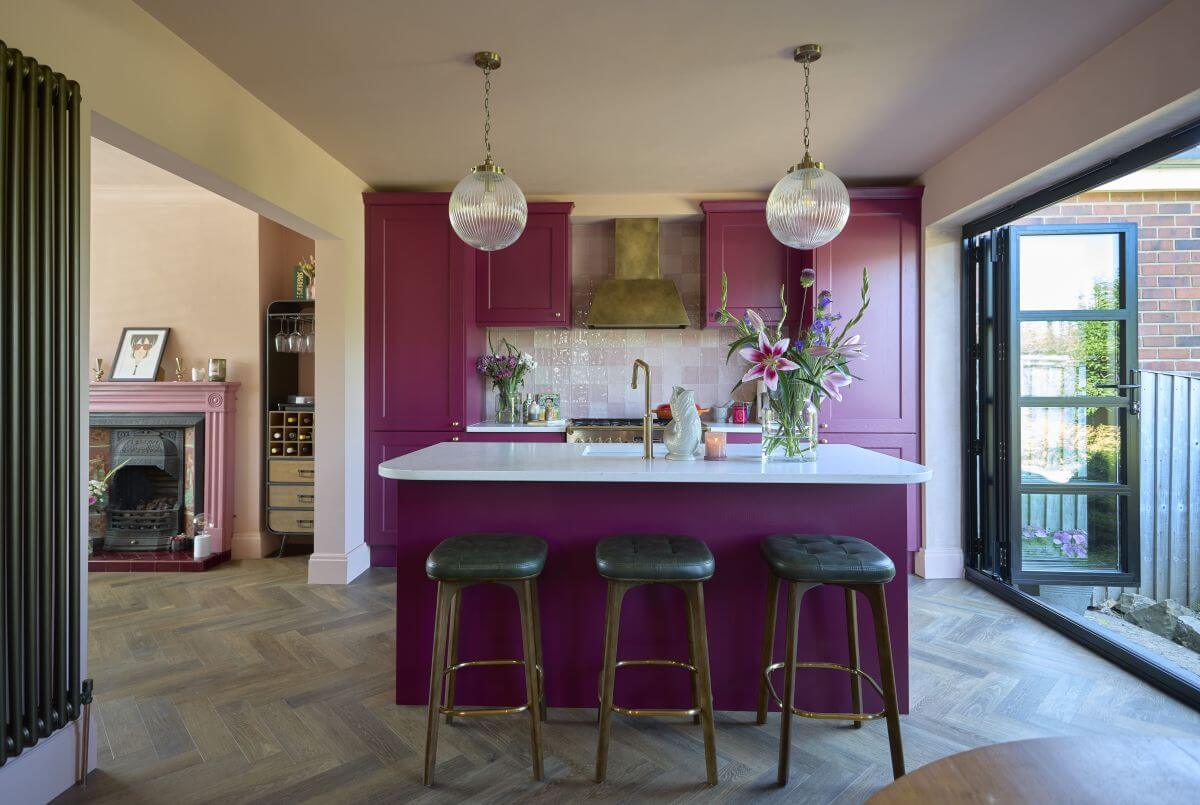
Importantly, shaker kitchens don’t need to feature just one colour. Dual tones can make sure features really stand out, such as having an island in a different colour from the main run of cabinets.

You’ll find more colour inspiration through our Painted-Finish Ranges and can see how these shades have worked in other designs.

Shaker Kitchen Worktops: What Works Best?

One of the key decisions to make when designing a shaker kitchen is the type of worktop you have. Many homeowners opt for one of the following:

– Solid wood, which pairs well with painted or cream shaker cabinets with a warm, traditional vibe

– Durable, low-maintenance quartz, ideal for modern shaker kitchens

– Marble effect worktops which provide a touch of luxury and look great contrasting with white or navy walls and surfaces

– Concrete effect worktops, providing an industrial, ultra-modern edge especially when combined with grey or charcoal black

– Laminate-finish countertops, as a budget-friendly and practical solution.

Smile Kitchens’ tip: If you’re unsure, you might want to consider whether your worktop should contrast or complement the rest of your kitchen.

Contrasts, such as having darker cabinets and lighter worktops, are often more impactful, with popular choices like navy shaker cabinets with light quartz counters.

Shaker Kitchen Handles: How to Choose

On to the handles you pick for your shaker kitchen cabinets and drawers, and these small features can have a surprisingly big influence on how the room feels as a whole. 

Handles are also relatively inexpensive to change in the future, which means you could upgrade outdated handles to make an older shaker kitchen more current.

Classic, farmhouse-style shaker kitchens most often use cup handles, whereas traditional, period properties tend to have kitchen cabinet knobs.

For modern shaker kitchens, contemporary, sleek bar handles and T-bar handles are a better option, or handleless cabinets with an integrated grip rail are popular in newer build properties.

Handles can feature finishes like timber, brushed and antique brass, chrome, and matte black.

Matching the handles to taps and other fixtures is a great way to ensure your colour scheme is cohesive throughout the room.

Shaker Kitchen Layouts

The flexibility of shaker kitchens ensures you can incorporate this kitchen style into your home regardless of how your room is laid out, and whether you’re embarking on a simple upgrade of your cabinets, or building an extension to create a far larger, more spacious kitchen.

Shaker kitchens use clean symmetry that works in narrower galley kitchens without overwhelming the space, but they’re also one of the most popular choices for bigger open-plan kitchens with islands.

Likewise, they create practical family kitchens for homes with an L-shaped space, and maximise practical storage with capacity for pots, pans, plates and glassware within U-shaped kitchens.


Read more: Kitchen layout ideas 

Shaker Kitchens With an Island

Homeowners with sufficient space often choose to incorporate an island into their shaker kitchen design, which brings more opportunities to customise the room. You could:

– Create a contrasting colour island as a focal point, or pick matching shades and worktops for a seamless look.

– Pick wood end grain for island worktops, or coordinate your island countertop with the rest of the kitchen.

– Decide whether you want an island used primarily as a seating and socialising space, an additional sink or food prep area, or open shelving and a wine rack to improve overall storage.

Provided there is enough overhang to sit comfortably around the island, and all doors and appliances can be opened fully without blocking access, an island may be a great addition.

Smile Kitchens’ tip: Islands are versatile but require careful planning to ensure they don’t impede the way you walk around your kitchen. 

We’ll, of course, discuss this and the specific dimensions of your kitchen during your design consultation.

Shaker Kitchen Storage Ideas

The Shaker communities who first designed this kitchen style placed a huge emphasis on practical storage, and this is still a core principle. 

There are multiple clever ways to make the best use of the storage space on offer, including:

– Installing pan drawers rather than base cupboards for larger pans, casserole dishes and woks.

– Hiding bins, recycling and food storage within pantry or larder units to keep worktops free of clutter.

– Adding magic corners and other solutions, making awkward angles easier to use for pots, pans, small appliances or food storage.

– Using open shelving for display items such as fresh herbs, cooking books and collectable glassware.

– Fitting classic peg rails, which were an original feature in the first shaker kitchens.

– Opting for tray dividers and internal drawer organisers to keep cutlery and smaller items well-organised.

-Picking vertical tray storage, breakfast cupboards or appliance garages, concealing anything you won’t want on display while ensuring everything is within easy reach.

While there are many potential storage options, we work with every homeowner to decide on the combinations of organisers, drawers, shelving, and cupboards that will work best in their kitchen.

Shaker vs In-Frame Kitchens: What’s the Difference?

Shaker kitchens have doors that sit within or overlay the main cabinet, with a recessed panel that is part of the classic design.

In-frame kitchens differ because the door is set into a frame, which is then attached to the base unit, using traditional construction techniques and premium finishes.

Typically, shaker kitchens are more budget-friendly and in-frame kitchens a little higher-end, but this will depend on numerous variables which we’ll look at next.

Smile Kitchens offers both types of kitchen designs, and you could combine the styling of an in-frame kitchen with the ambience of a shaker kitchen, with hybrids like the Hampton range which fall somewhere between the two. 

How Much Does a Shaker Kitchen Cost?

Shaker kitchens are available across a wide range of budgets, with final costs depending on:

– The number of units required and their sizing

– Finishes, from woodgrain to textured and painted cabinets

– The worktop material 

– Whether you require new freestanding or built-in appliances

– The complexity of the installation, such as whether plumbing and electrical points need to be moved

We don’t offer one-size-fits-all pricing because every Smile kitchen is unique and designed for you. Instead, we’ll offer a personalised quotation during the design process and will share comparable options along the way.

With our competitor price-match guarantee and finance available for up to 120 months, we endeavour to make your dream kitchen accessible and affordable.

Read more: How much does a new kitchen cost? 

How to Design Your Shaker Kitchen With Smile Kitchens

Smile Kitchens offers free one-to-one virtual design consultations with experienced kitchen designers.

You’ll be able to discuss layouts, compare colours and finishes, view samples (which we can post to your door), and see your ideas brought to life in a detailed 3D design before making any decisions.

Book your free virtual design consultation today, and we’ll help you create a shaker kitchen tailored to your home, lifestyle and budget.

References:

1. National Park Service: History of the Shakers

2. Brickwork Bulletin: Is Shaker Still the Most Popular Kitchen Style?

Frequently Asked Questions

What Is a Shaker Kitchen?

A shaker kitchen is a kitchen style defined by simple cabinet doors with a recessed centre panel and clean, square framing. It’s a timeless kitchen design that combines understated styling with practical functionality. 

Are Shaker Kitchens Old Fashioned?

No, shaker kitchens are not old-fashioned. Modern shaker kitchens can feature bold colours, handleless designs and contemporary worktops, while traditional spaces use classic painted finishes, timber worktops and heritage-style handles.

What Is the Most Popular Colour for a Shaker Kitchen?

White is generally the most popular colour for a shaker kitchen because it creates a bright, timeless look that complements any home or decor style. 

However, sage green, navy blue, soft grey and cream have also become popular, particularly in modern shaker kitchens.

Are Shaker Kitchens Easy to Clean?

Yes, shaker kitchens are low-maintenance. Flat recessed centre panels collect less dust and grease than decorative cabinets, while modern painted finishes can usually be wiped clean with a soft cloth. 

What Handles Suit a Shaker Kitchen?

The best handles for a shaker kitchen depend on your style preferences! Cup handles and traditional knobs suit classic shaker kitchens, while bar handles and slim T-bars are more contemporary. 

Can You Have a Handleless Shaker Kitchen?

Yes. Many modern shaker kitchens combine traditional recessed cabinets with integrated grip rails or handleless doors to create a clean, contemporary look. 

What Worktop Goes With a Shaker Kitchen?

There are several options. Solid wood creates warmth and character, quartz offers durability, marble-effect surfaces add luxury, while concrete-effect worktops complement modern shaker kitchens.

What Is the Difference Between a Shaker and an In-Frame Kitchen?

A shaker kitchen refers to the style of the cabinet door, while an in-frame kitchen refers to the way the cabinets are constructed. Shaker doors feature a recessed centre panel, whereas in-frame kitchens have cabinet doors fitted within a visible frame attached to the cabinet. 

How Long Does a Shaker Kitchen Last?

A well-made shaker kitchen can last for decades when properly maintained. Choosing quality materials and professional installation helps maximise the lifespan of your kitchen.

Explore our Colour Match Service Book a Free Kitchen Design Consultation