Frequently Asked Questions
Is a Kitchen Island Better Than a Peninsula?
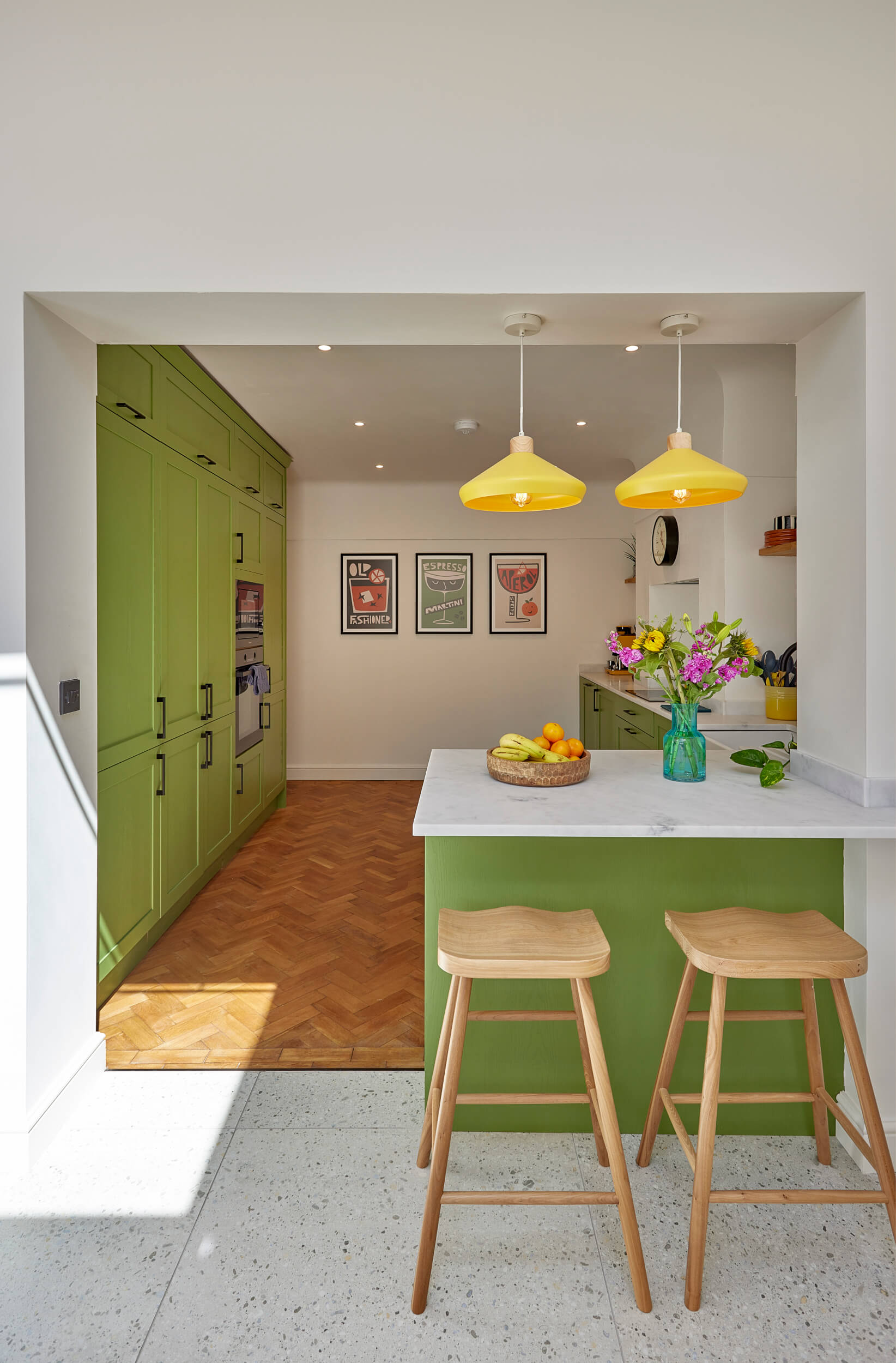
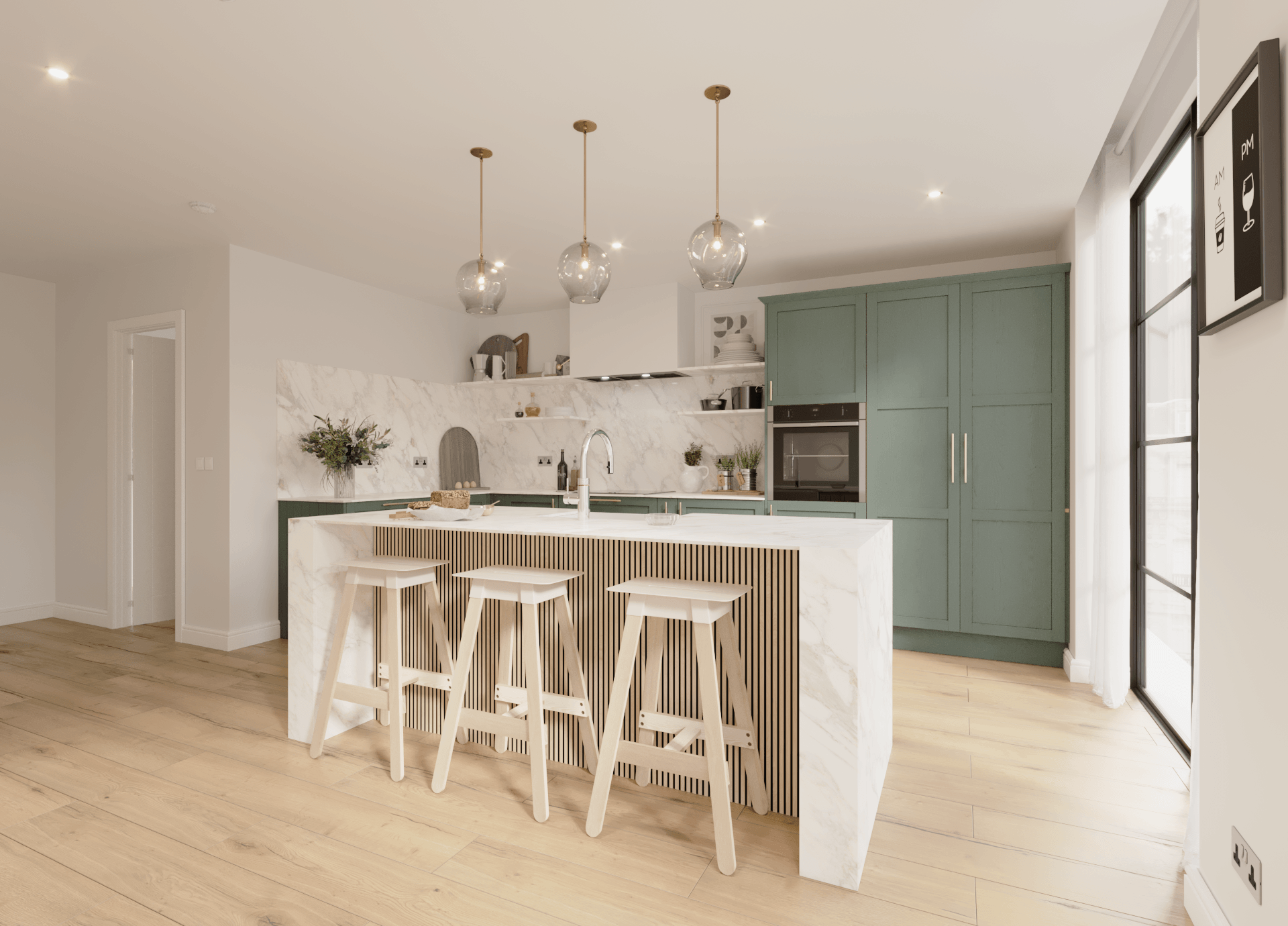
Not always, no, because while an island might be perfect in a large kitchen, peninsula layouts could be a far better option for smaller spaces.
Which Is More Affordable – a Kitchen Peninsula or an Island?
Generally speaking, peninsulas tend to be more affordable because they connect to existing cabinets, reducing the cost of structural work. However, this will depend on the size and layout of your existing kitchen.
What About Walkway Space Around a Kitchen Island or Peninsula?
One of the most important factors when deciding between a kitchen peninsula and an island is the amount of clearance space available around the layout.
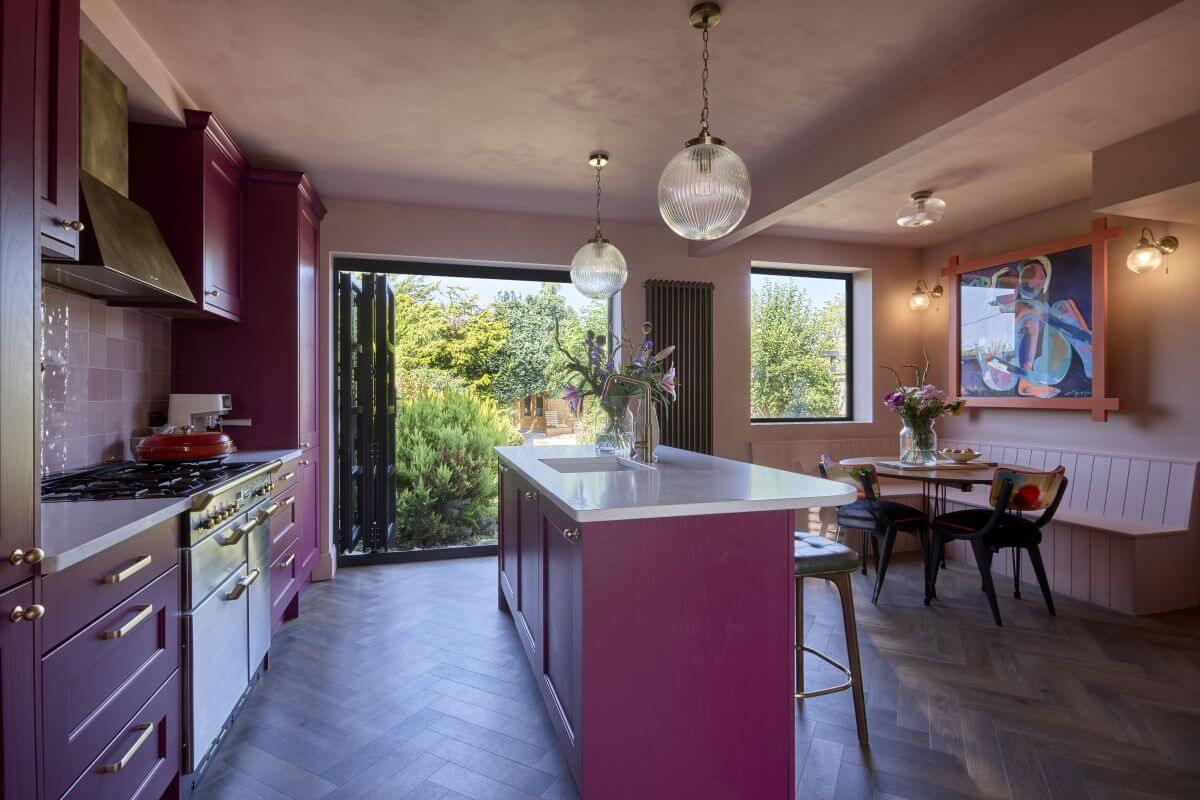
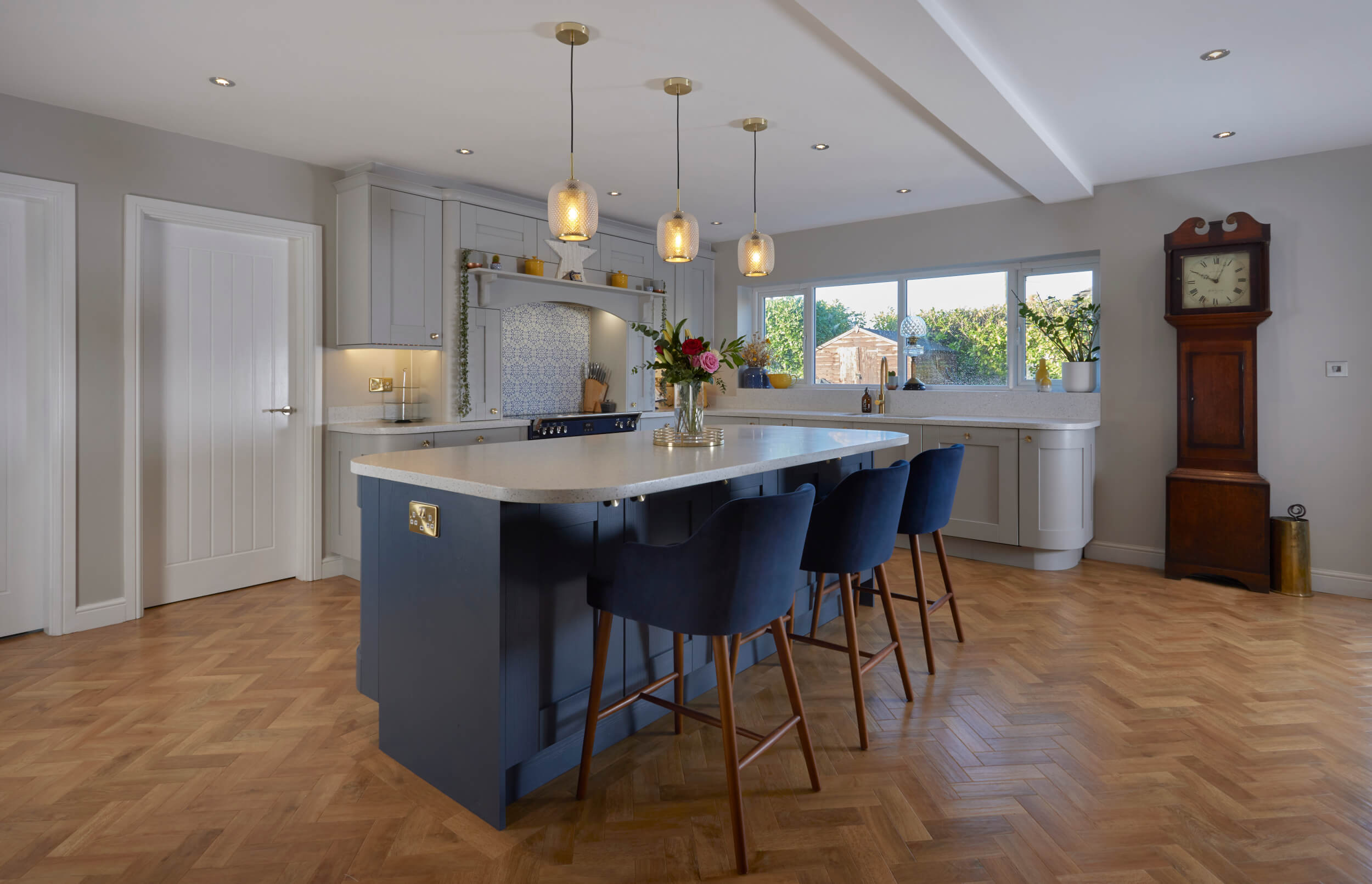
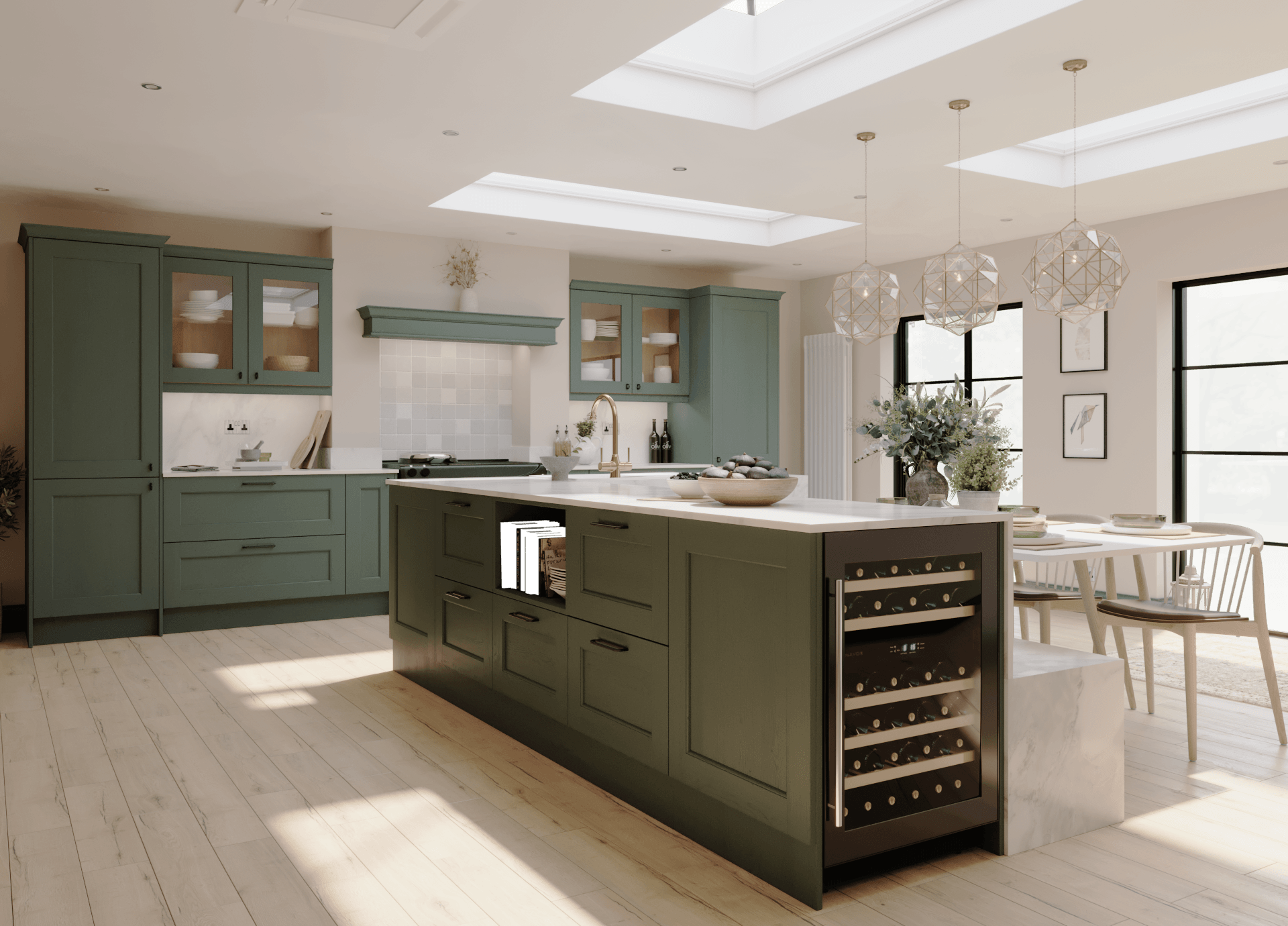
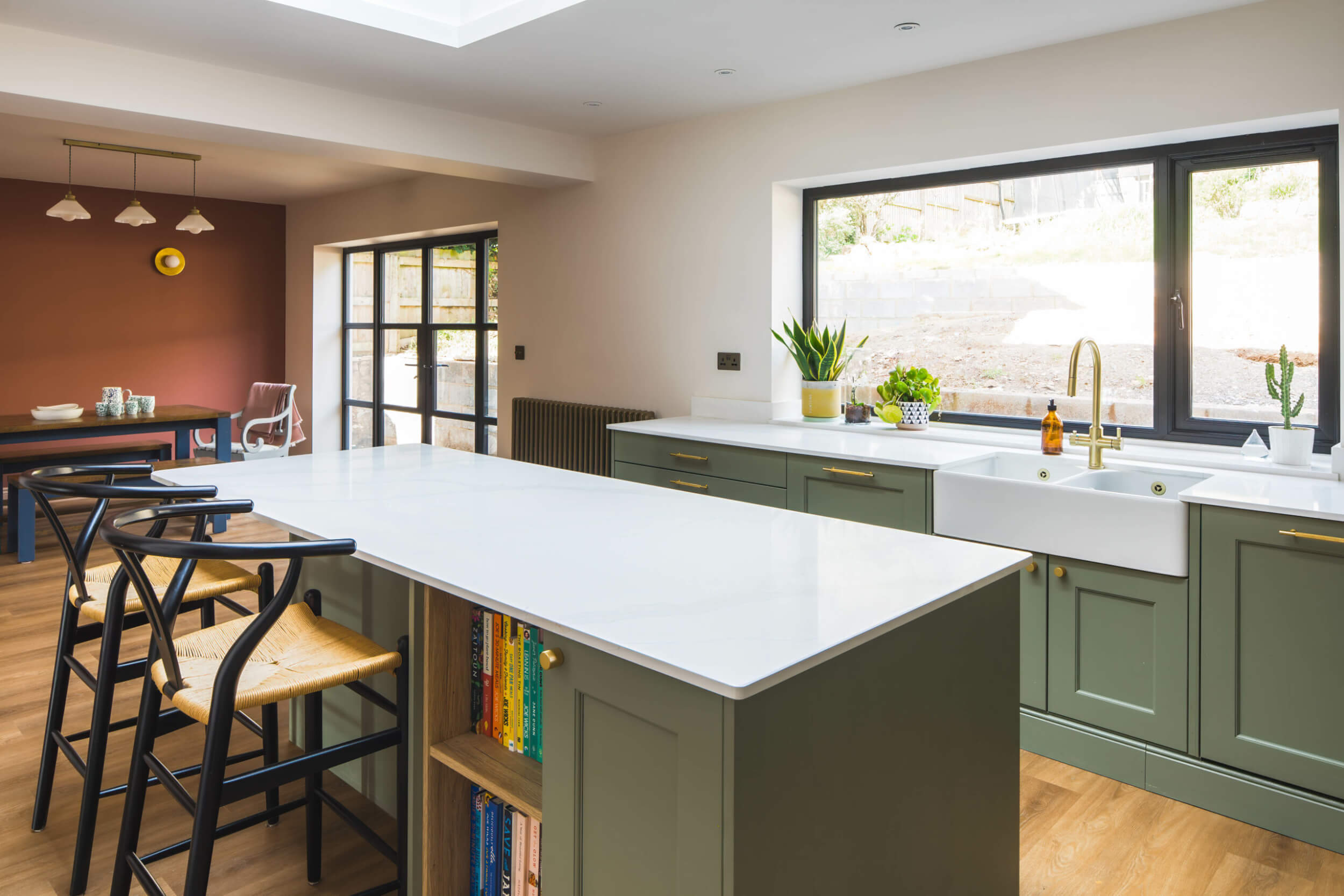
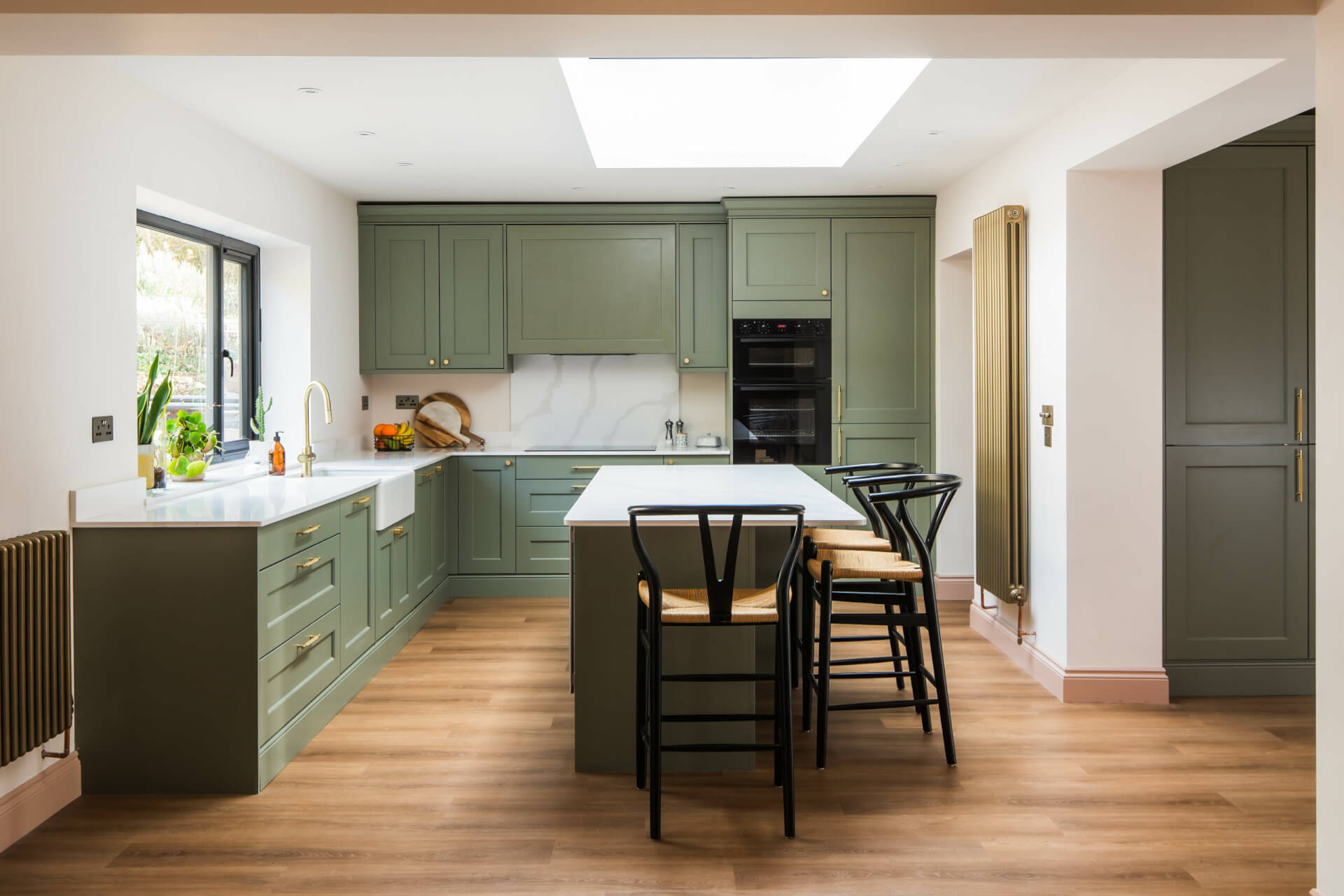
For a kitchen island to function comfortably, designers typically recommend leaving at least 1000mm to 1200mm of walkway space around each side of the island. This allows enough room for people to move freely, open cupboards and appliances, and avoid the kitchen feeling cramped.
Read our blog: how much space should you leave between your kitchen island and units.
In smaller kitchens, fitting an island without enough clearance can restrict movement and make the space harder to use on a day-to-day basis. In these situations, a peninsula may offer a better alternative because it delivers additional seating and worktop space without requiring circulation space on every side.
As a general rule:
900mm clearance works for compact kitchens with lower traffic
1000mm to 1200mm is more comfortable for family kitchens and open-plan layouts
Extra space may be needed where appliances, dishwashers or ovens open into walkways
The right balance is always about ensuring the kitchen feels practical and easy to move around in, rather than trying to force an island into a layout that cannot comfortably accommodate it.