
Contents
1. Introduction: L-Shaped Kitchen Design Ideas – Designing an L-Shaped Kitchen
2. Key Takeaways: Designing an L-Shaped Kitchen
3. What Is an L-Shaped Kitchen?
4. L-Shaped vs U-Shaped Kitchens: What Are the Differences?
5. Design Ideas for Homeowners Planning an L-Shaped Kitchen
6. Frequently Asked Questions
7. Conclusion and Next Steps
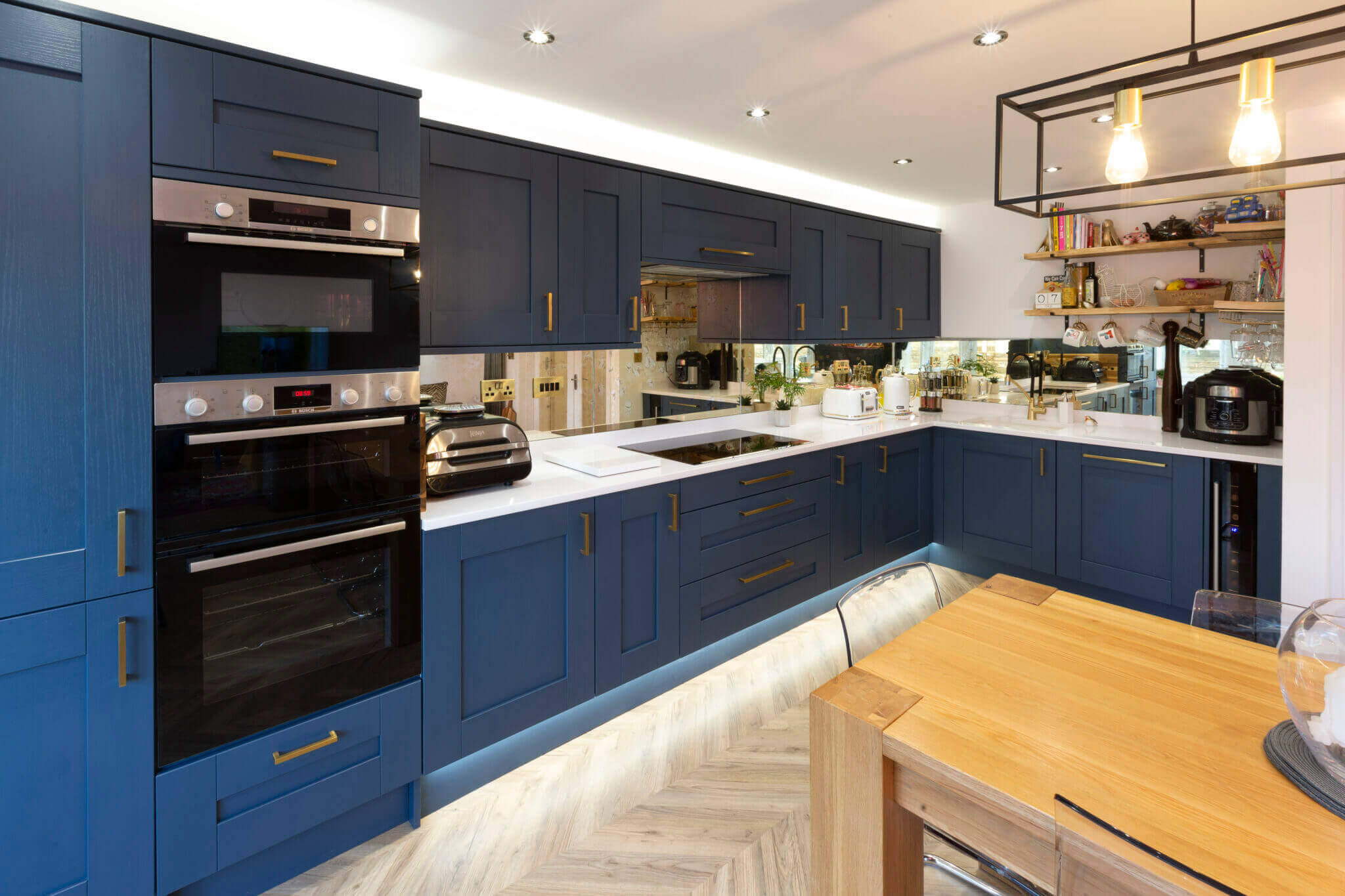
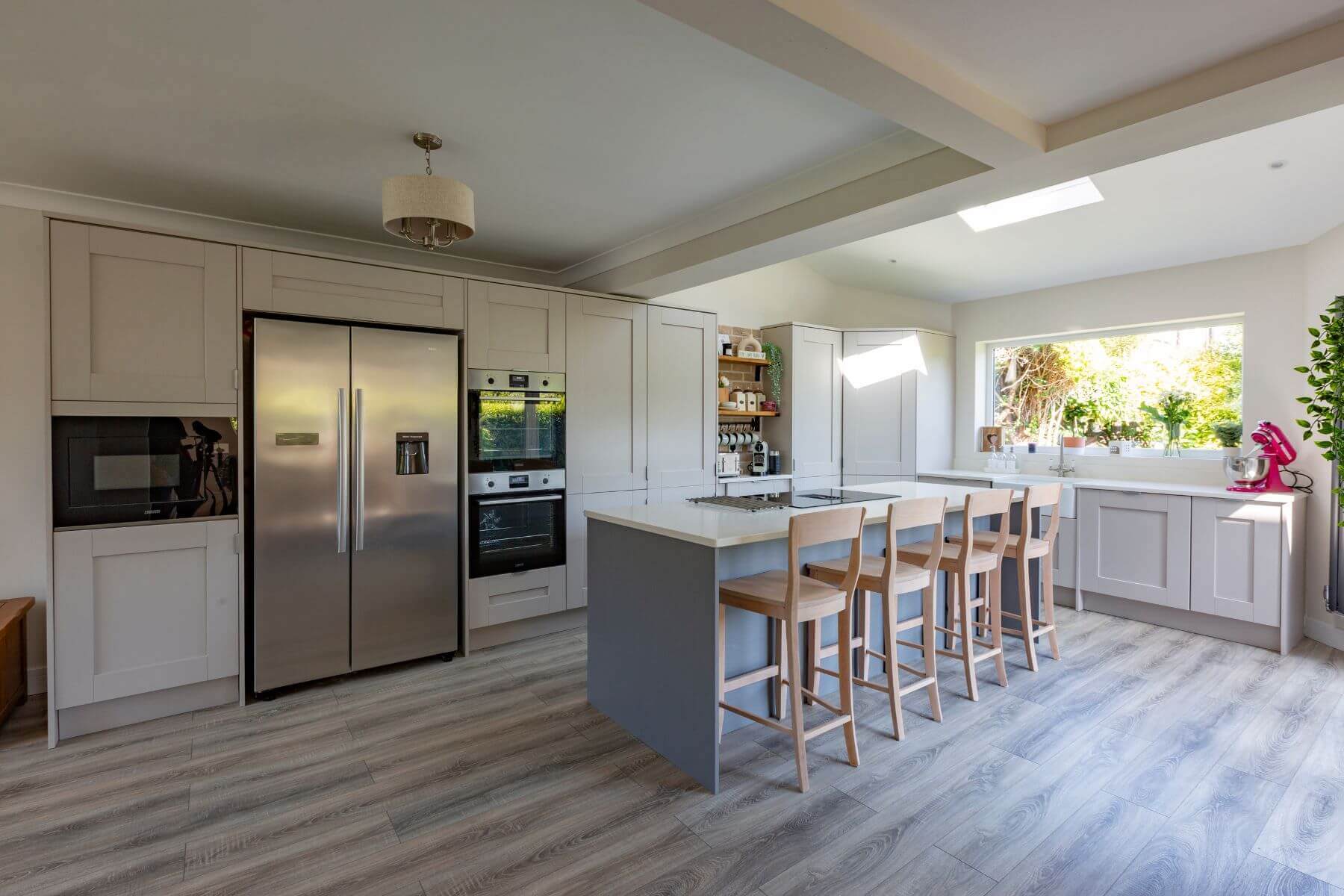
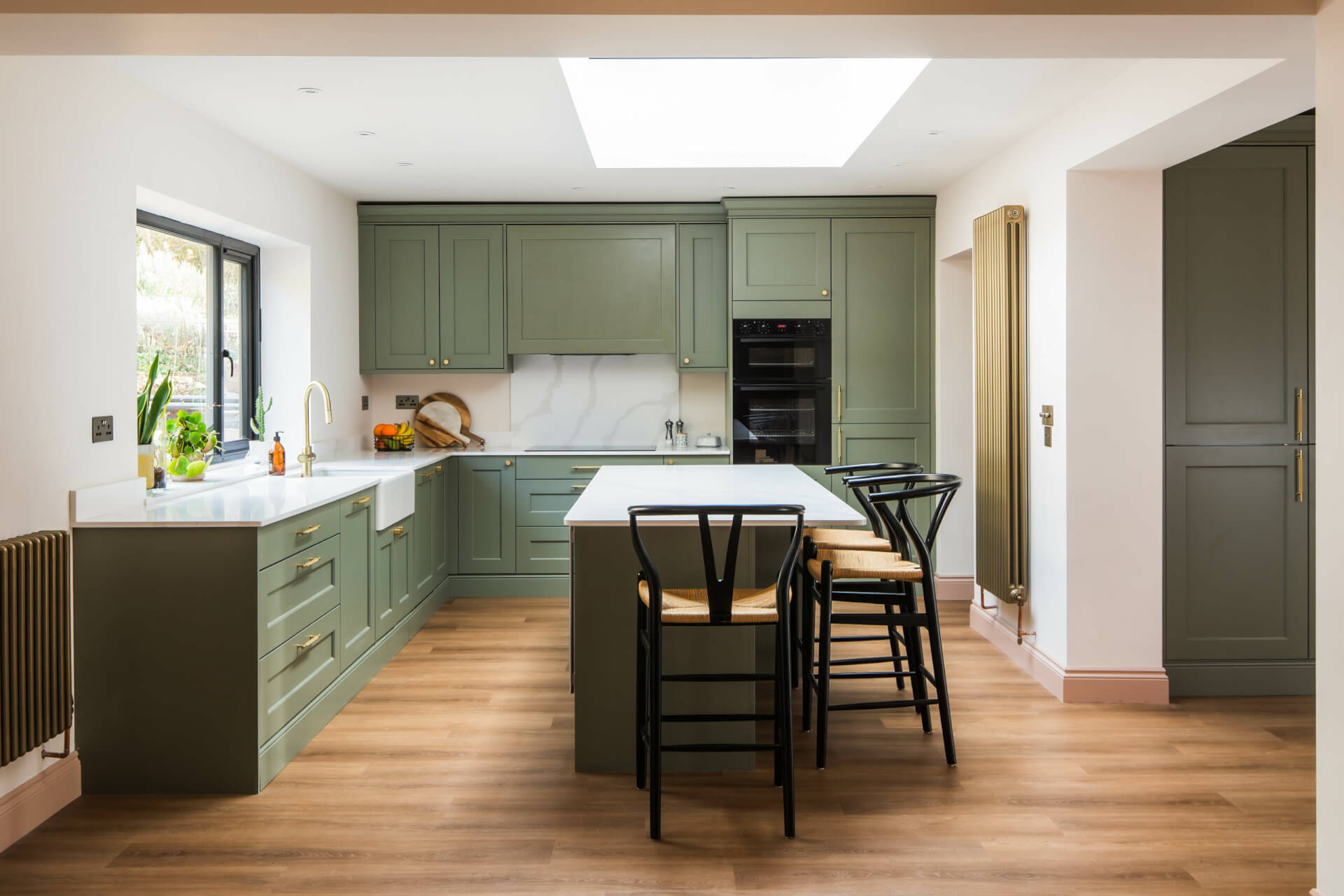
At Smile Kitchens, we say, ‘Although we’d always want to take a look at your floor plan before recommending a kitchen design, an L-shaped kitchen is popular as it’s functional without being enclosed.’
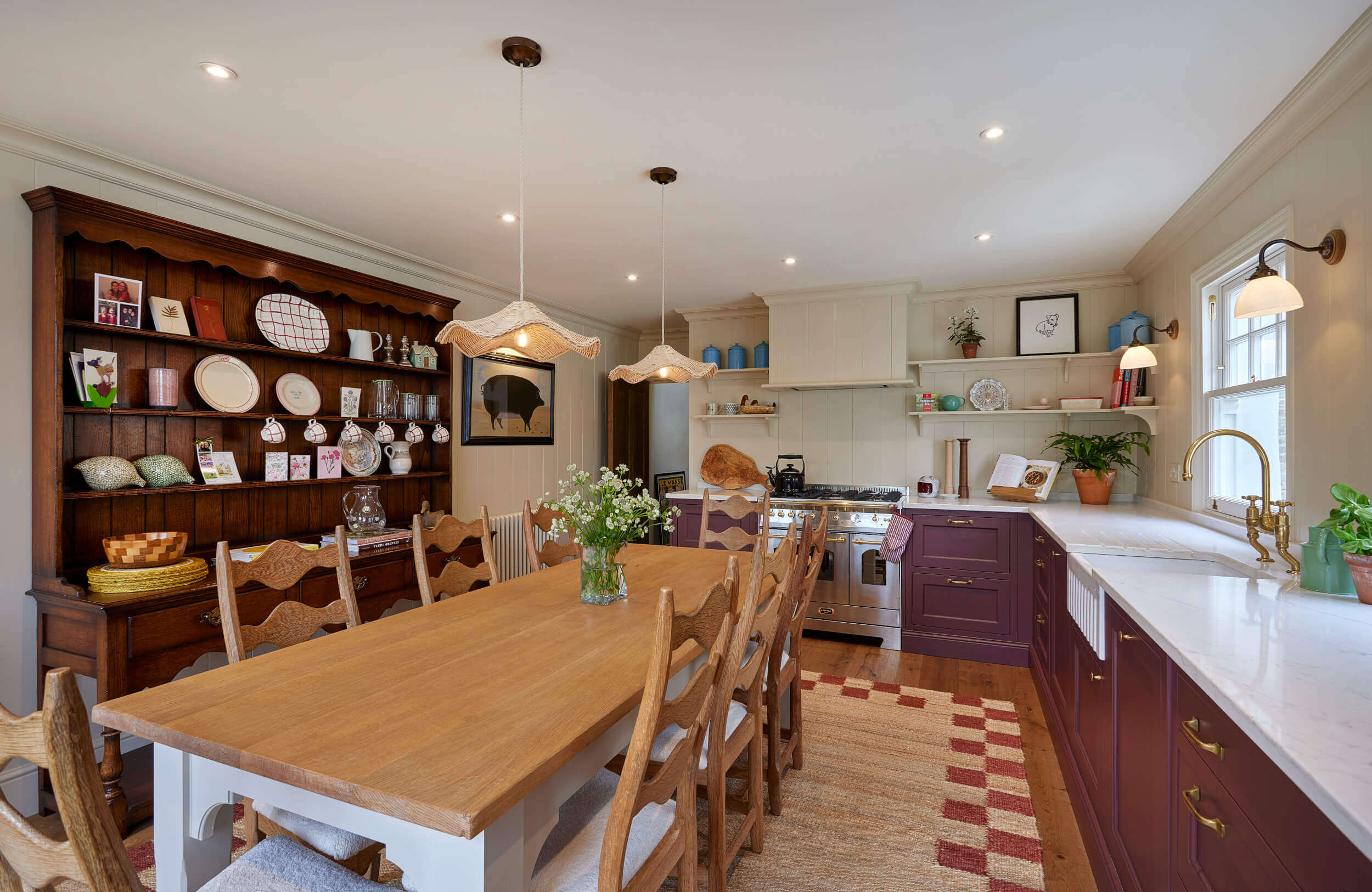
Design Ideas for Homeowners Planning an L-Shaped Kitchen
The best starting point for designing a beautiful L-shaped kitchen is to make the most of the space you have available while keeping an eye on how the kitchen flows and how practical it is.
1. Use Design Choices to Maximise Storage
Depending on the size of your kitchen, you’ll typically find that filling two walls with cabinets and wall units provides more than enough storage. If you have a very busy kitchen, a large family, or cook for several people, you can even incorporate floor-to-ceiling storage, integrated pantries, and corner cupboards that utilise all the available space.
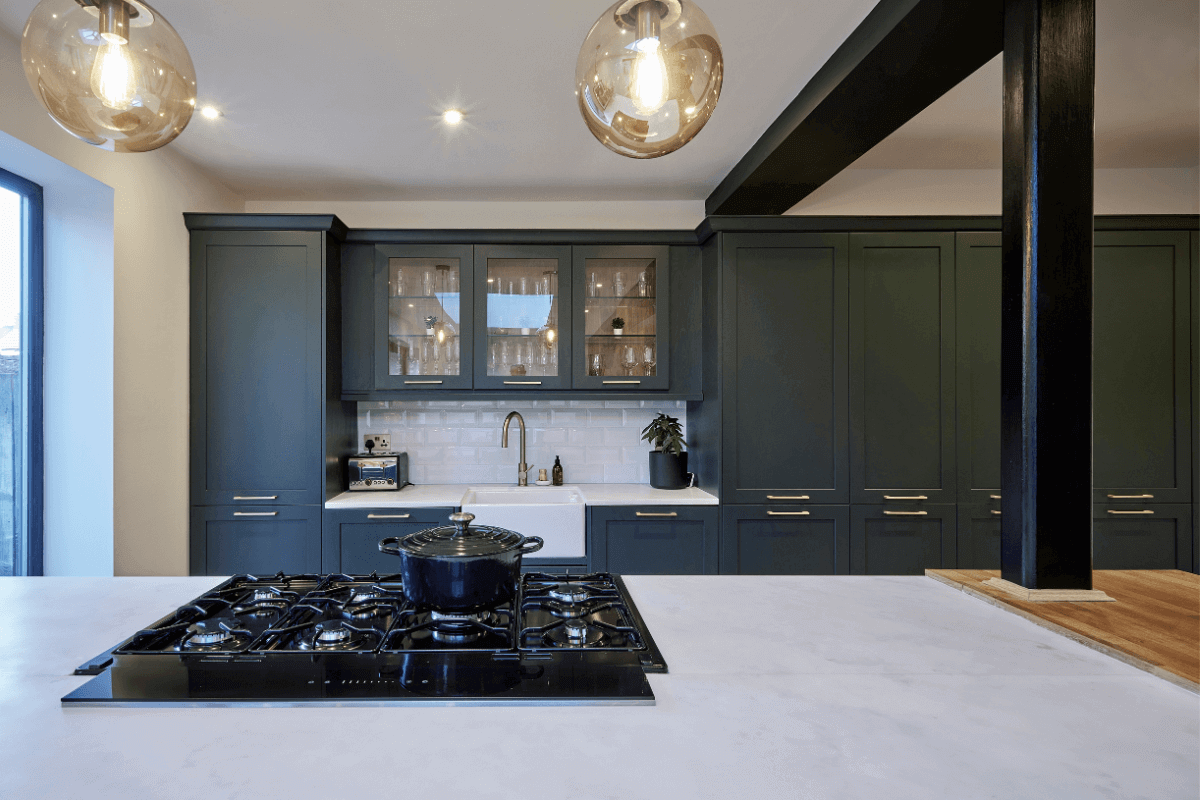
Smaller kitchens work well with L-shaped layouts, and you might want to consider open shelving or glazed rather than solid doors, which give you just as much storage while improving the flow of light.
2. Consider Seating Placements
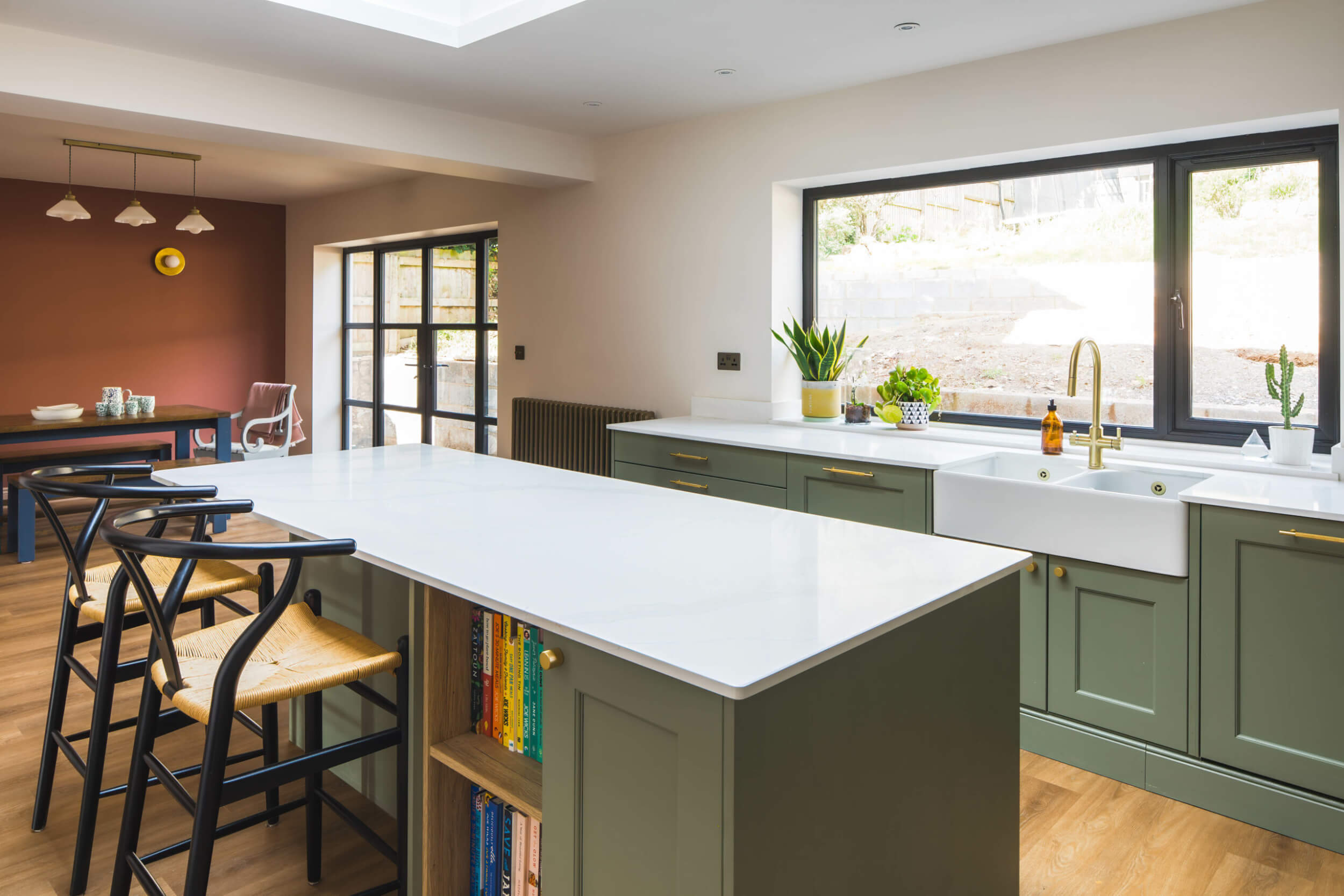
Most homeowners want at least some comfy seating, even if they have a separate dining room for sit-down meals, and the open space left on the two walls without cabinets gives you lots of options.
You could install a breakfast bar or an island or add a casual table, inviting guests and family members to stay in the kitchen to socialise while you’re cooking.
3. Break Up Large Empty Space
If you have a wider kitchen or a rectangular room, you’ll usually install L-shaped kitchens along one longer and one shorter side, which leaves a fairly generous amount of space unused.
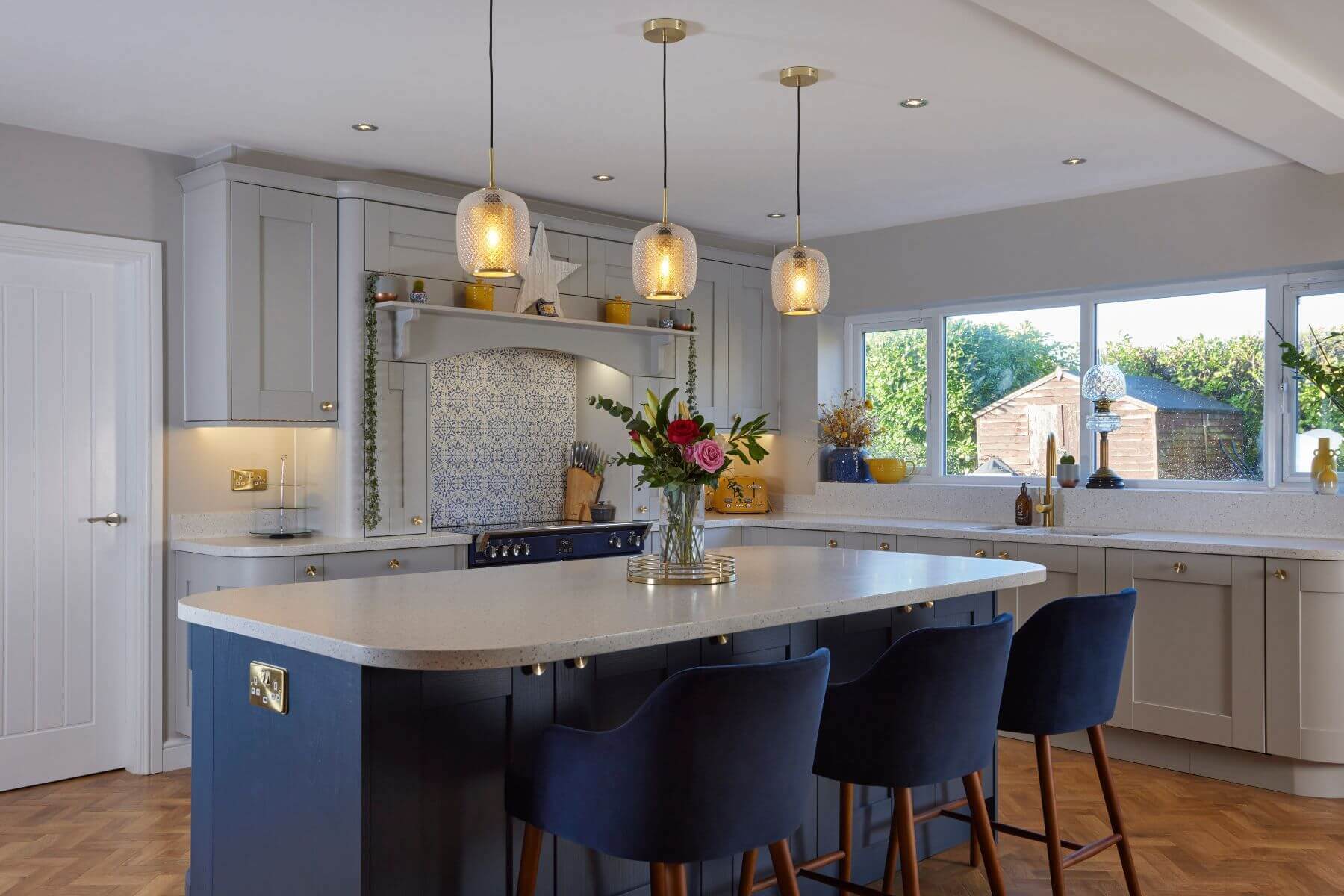
In this scenario, a kitchen island may be ideal, whether as a seating area or as an extra counter for food storage and preparation.