
Contents
1. Introduction: What’s the Best Option for a Small Kitchen?
2. Key Takeaways: Designing a Small Kitchen
3. Common Small Kitchen Design Mistakes
4. Smart Storage Solutions for Small Kitchens
5. Small Kitchen Design Challenges and Solutions
6. Professional Design Advice for Small Kitchens
7. Why Vertical Space Matters in Small Kitchens
8. The Benefits of Minimalist and Handleless Designs
9. Why Work With a Kitchen Designer?
10. How to Make the Most of Your Small Kitchen
11. Space-Saving Ideas and Features
12. Frequently Asked Questions
13. Conclusion and Next Steps
Professional Design Advice for Homeowners With Small Kitchens
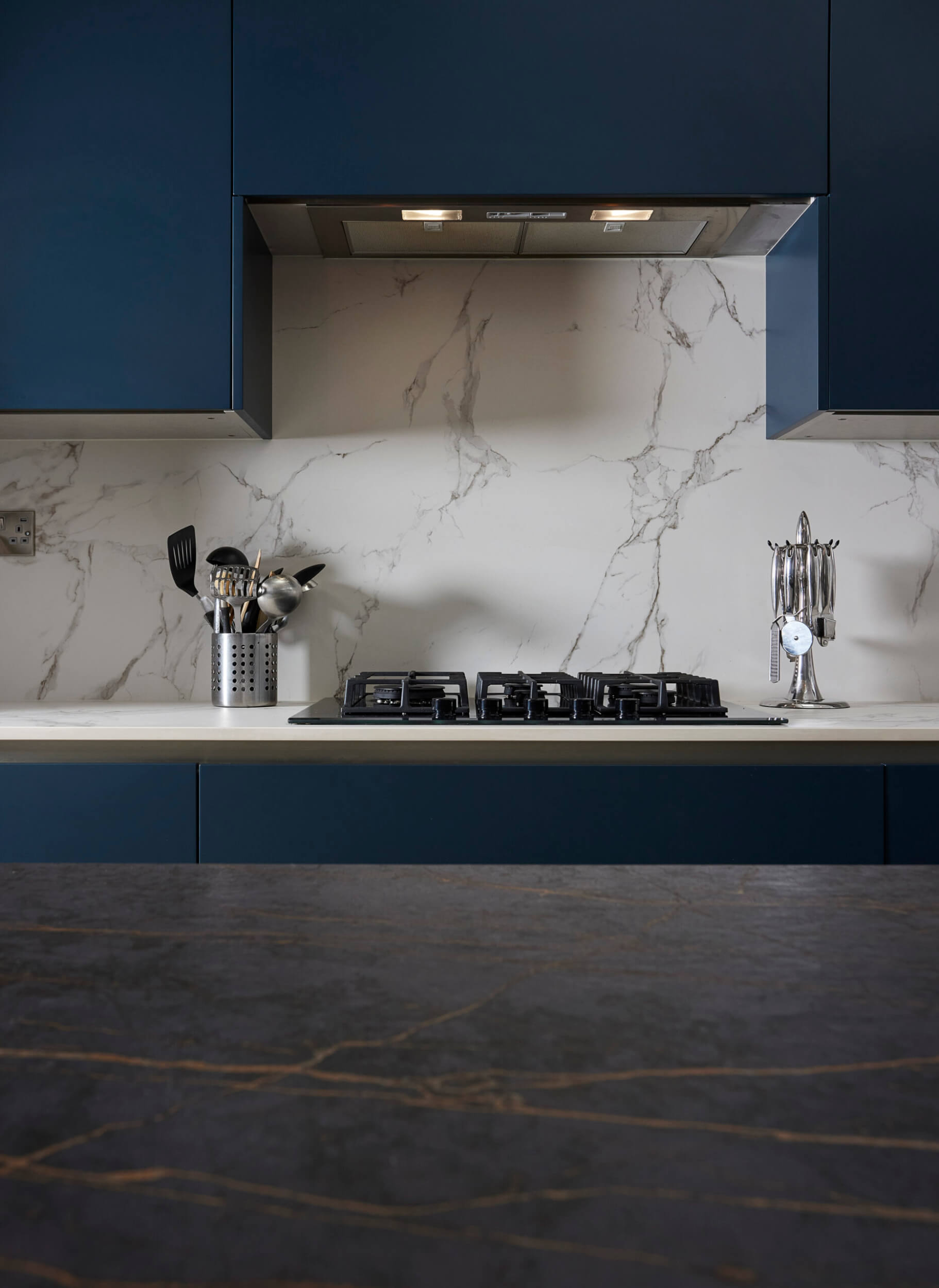
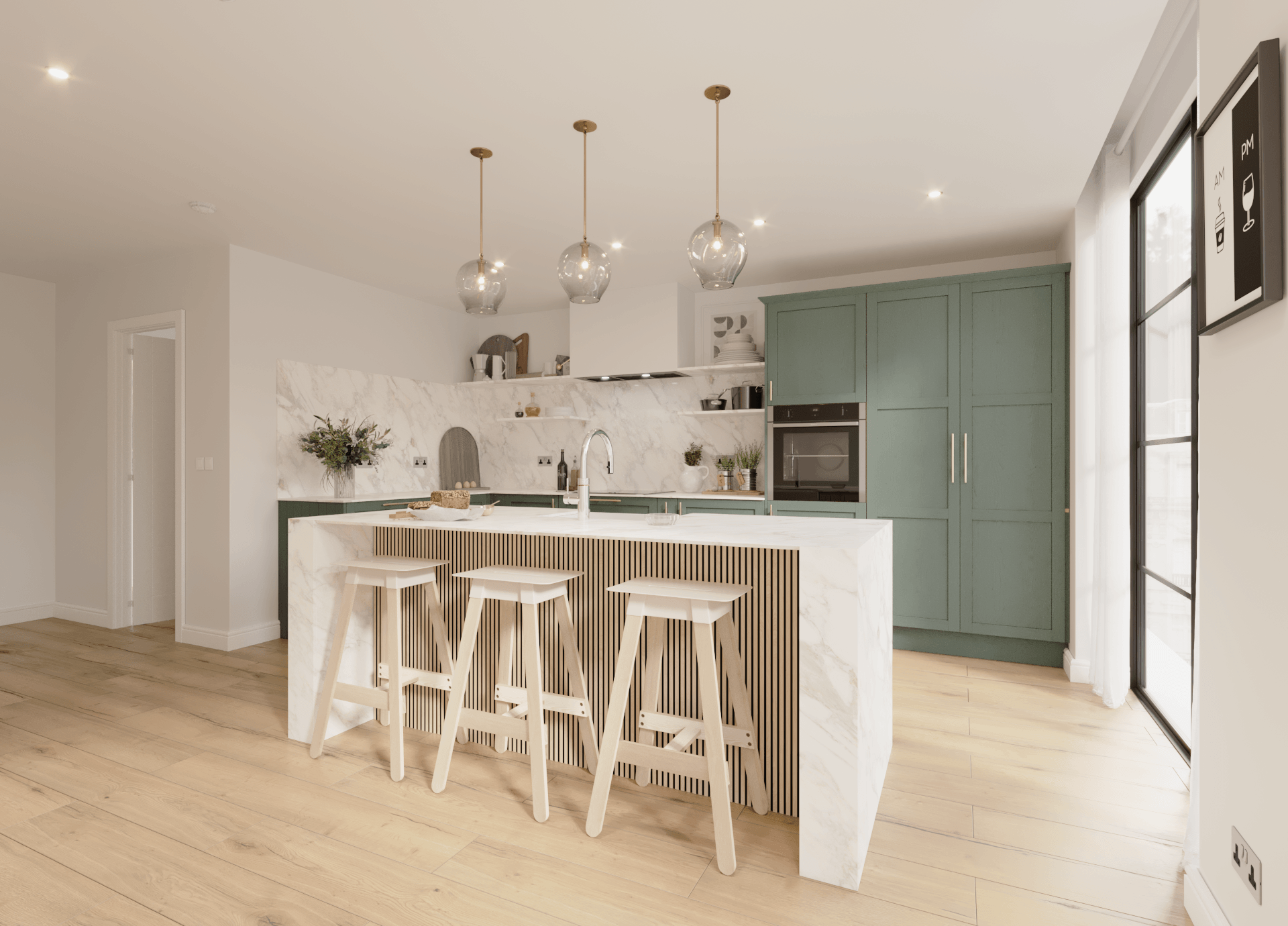
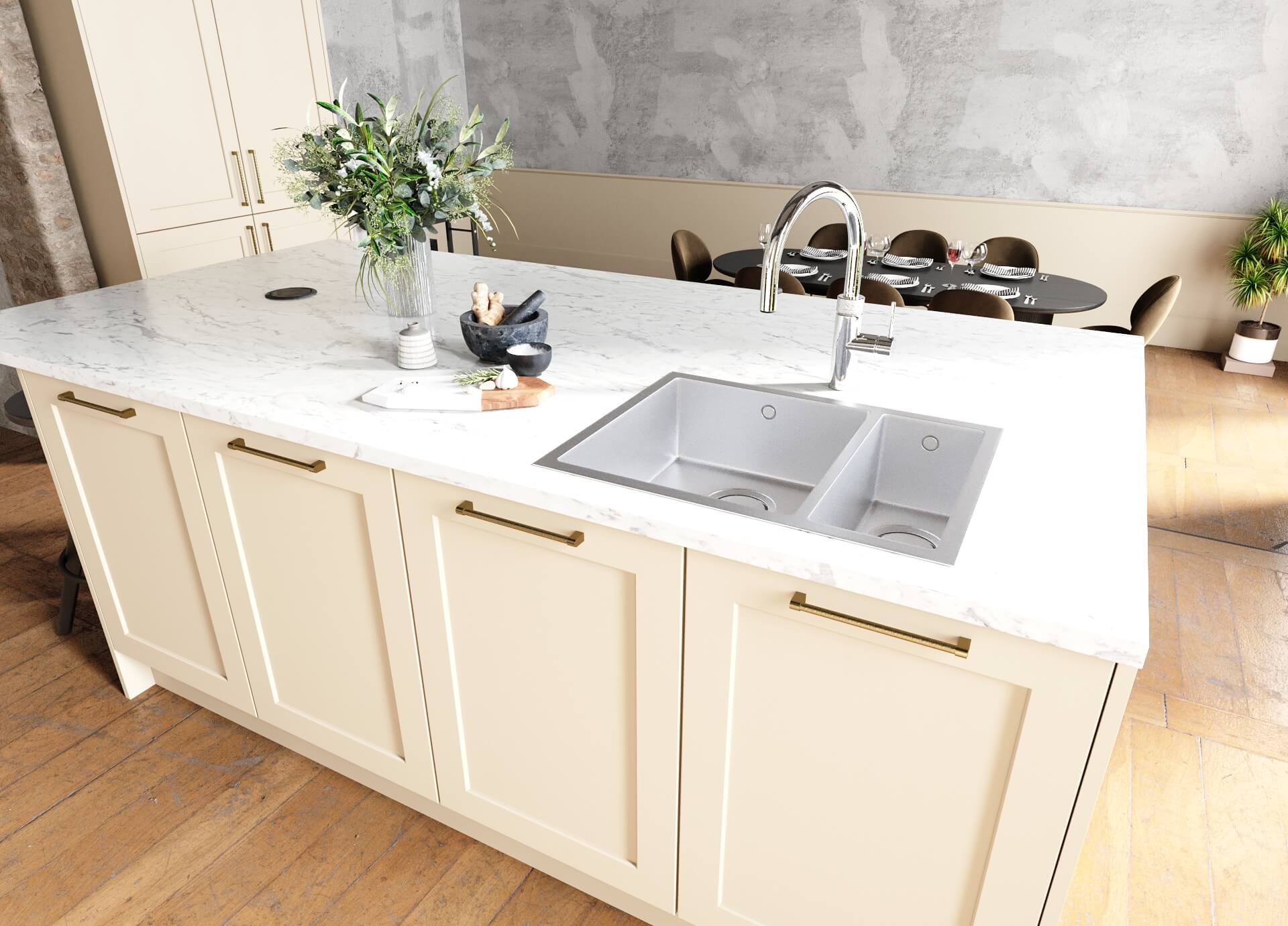
The best designs depend on the specifics of your home and kitchen, and the styles you like, but the top recommendations are to remove visual interruptions that affect your perception of space and to focus on clean lines that flow nicely.
Here’s why:
- Smaller rooms can quickly feel dark and cluttered if worktops aren’t clear or cabinets block natural light.
- Adding vertical and higher storage can clear worktops and ensure uninterrupted lines run across or down the kitchen, which draws the eye.
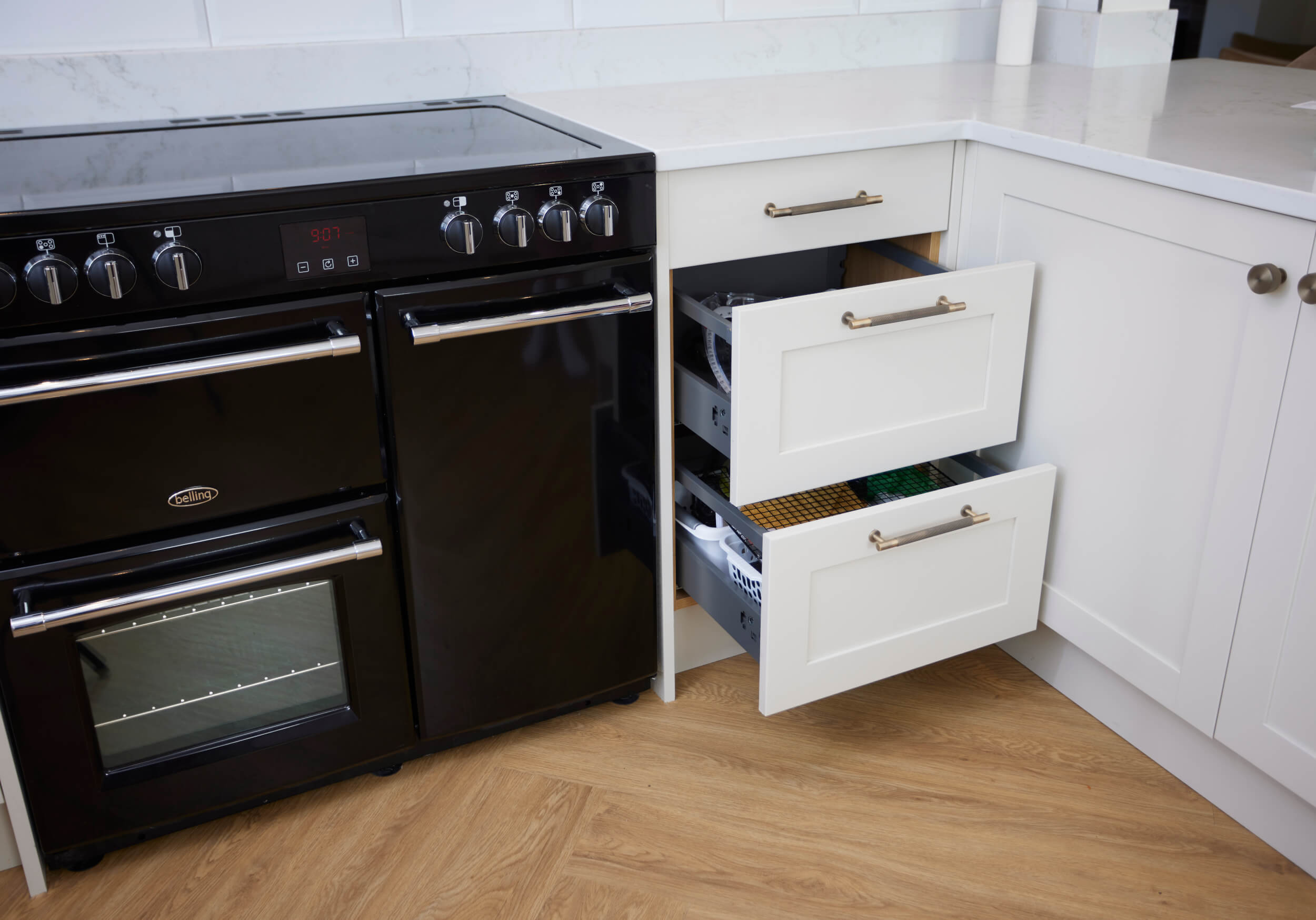
- Minimalist kitchens can pack in more storage per square foot because the lack of extra bulk and thicker doors ensures the space inside each unit is just as generous.
- Brightening a room immediately makes it feel larger, and if the kitchen has only a small window or no natural light, adding extra lighting points will make a difference.
Kitchens like slab and handleless designs are often ideal, and using a kitchen planner is a great way to try to visualise how these types of kitchens would fit into your home.
Reasons to Plan a Small Kitchen With a Kitchen Designer
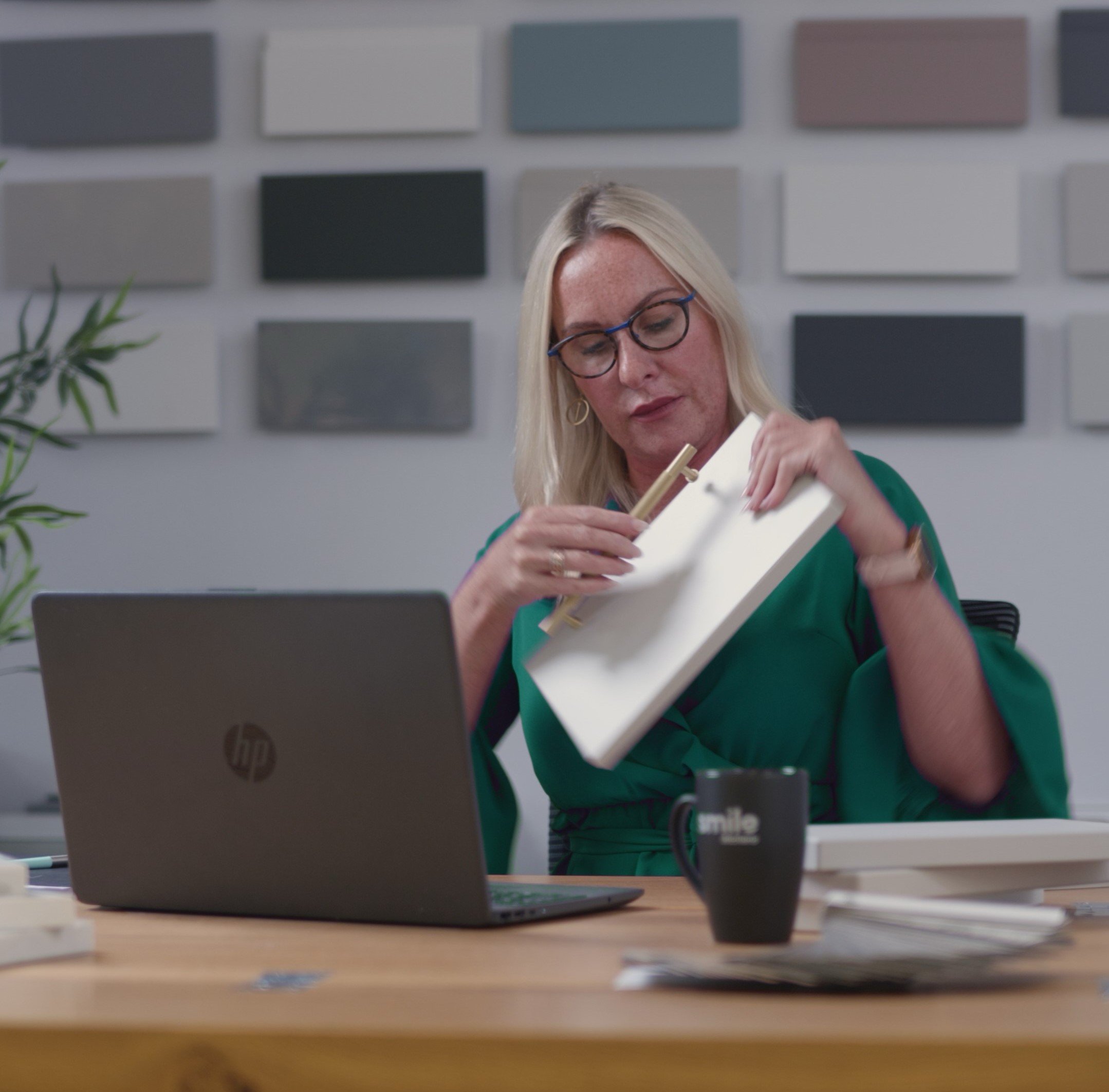
Professional kitchen design teams have years of experience transforming small kitchens into intentionally designed spaces. If space is limited, you’ll need to ensure each wall works as efficiently as possible.
Designers help you avoid errors and can come up with creative solutions, exploring layouts you might not have considered, especially if you’ve lived in your home for some time and can’t visualise how your kitchen might look in a layout different from how it is now.
Benefits include:
- 3D visualisations so you get a realistic idea of how the space will look and function before you need to commit to a final design.
- Optimised layouts to save space and ensure the kitchen is functional without restricting movement.
- Access to custom-made cabinetry with dimensions that easily fit into a small kitchen, using tailored cabinet heights or depths and slimline panels.
Smile Kitchens says, ‘Designing a small kitchen is a fantastic challenge, because every centimetre needs to serve a purpose. The great news is that, with the right style of cabinetry, space-maximising storage and creative layouts, small kitchens can be transformed from tiny, awkward rooms into practical spaces.’