Kitchen Lighting Ideas: Smile’s Complete Guide to Kitchen Lighting

By Dawn Filkins

4 min read

Discover inspiring kitchen lighting ideas, from task and ambient lighting to pendants and LEDs, with expert design advice from Smile Kitchens.

Table of Contents

– What Are the Main Types of Kitchen Lighting?

– How to Make the Most of Natural Light When Designing Kitchen Lighting

– Guidance on Choosing Lighting to Complement Your Kitchen Styling

– How Layers of Kitchen Lighting Can Add Design Flair

– Understanding Lighting Colour Temperatures for Kitchens

– The Common Kitchen Lighting Mistakes Homeowners Should Avoid

– Frequently Asked Questions

Book a Free Kitchen Design Consultation


Lighting is one of the most impactful aspects of a kitchen design, yet it’s very often overlooked. Rather than keeping the kitchen lighting as is or assuming that overhead lights are the only option, clever placement can highlight beautiful worktops and cabinets and create a warm, welcoming atmosphere.

Smile Kitchens’ designers always look at lighting as an integral part of your overall design, rather than a nice-to-have. Each kitchen is designed with the tone and shade of lighting that augments your theme and style, tailored to both your lifestyle and your kitchen décor.

This comprehensive guide to kitchen lighting ideas runs through everything you need to know, from the different types of kitchen lighting to how to select the ideal lighting for your kitchen.

What Are the Main Types of Kitchen Lighting?

Single ceiling lights might be the standard in basic kitchen layouts (unless you’ve upgraded to spotlights), but they’re rarely enough to illuminate the whole room, and they might mean the entire space relies on a single bulb to create ambience. 

There are, in fact, three main categories of kitchen lighting as follows:

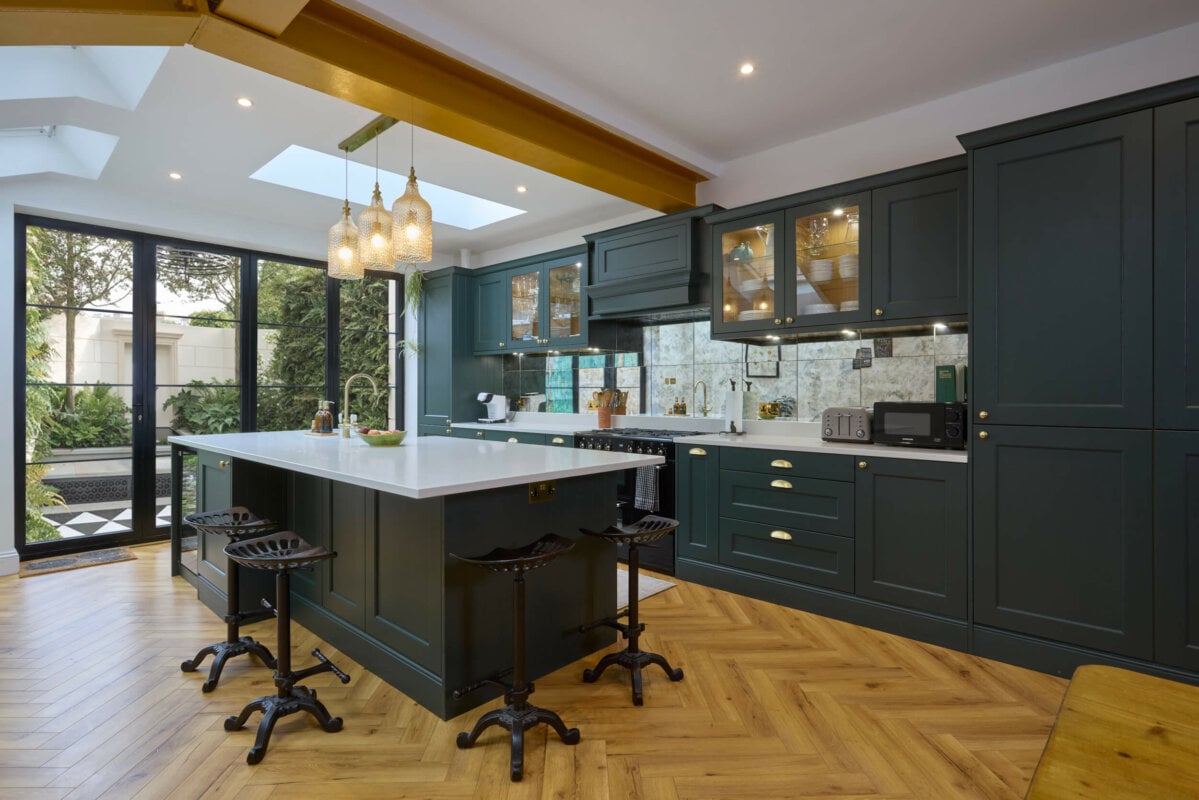
  • Ambient lighting, which is the primary light source. That could be ceiling spotlights, flush fittings in the ceiling, recessed LEDs and pendant lighting in larger kitchens.
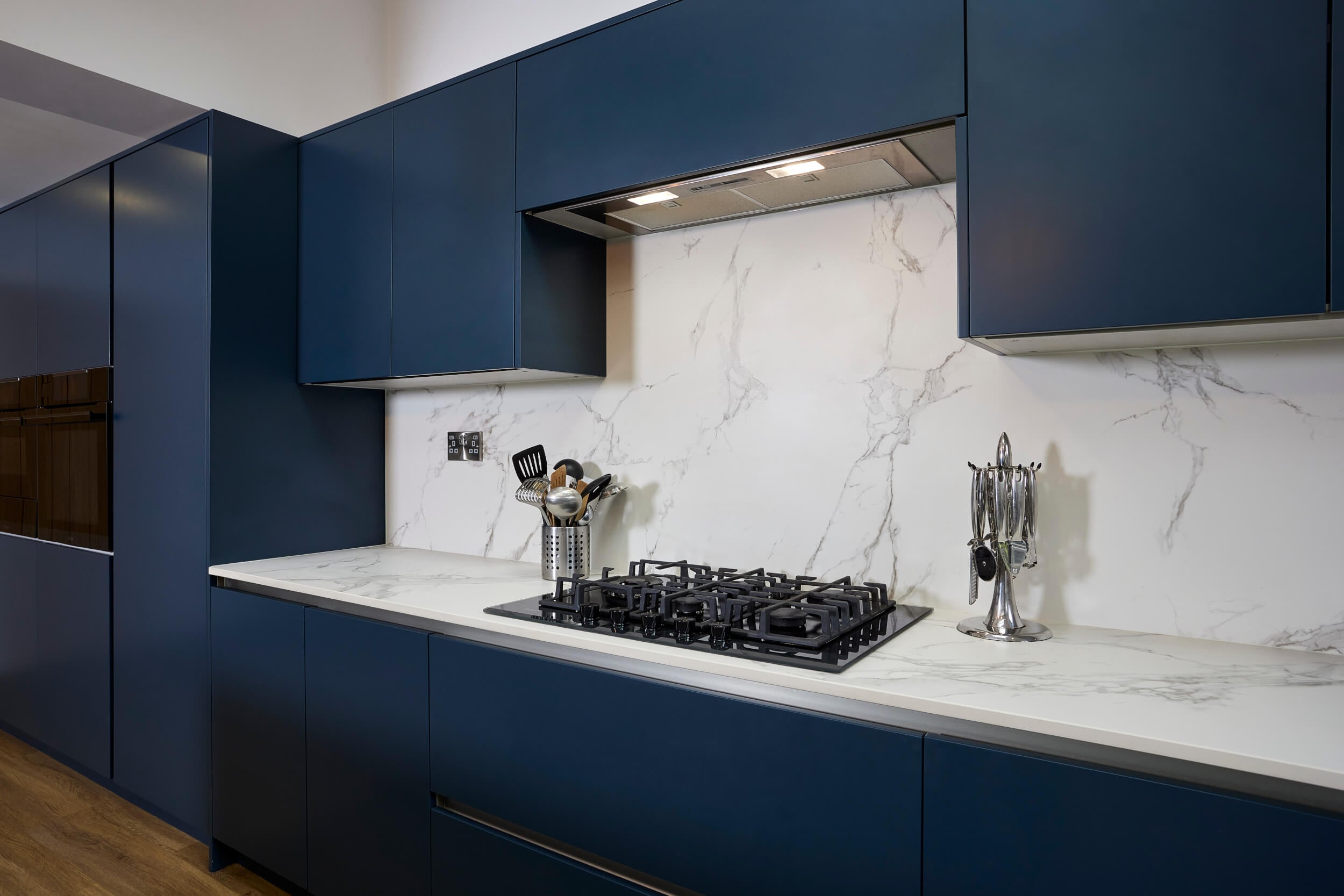
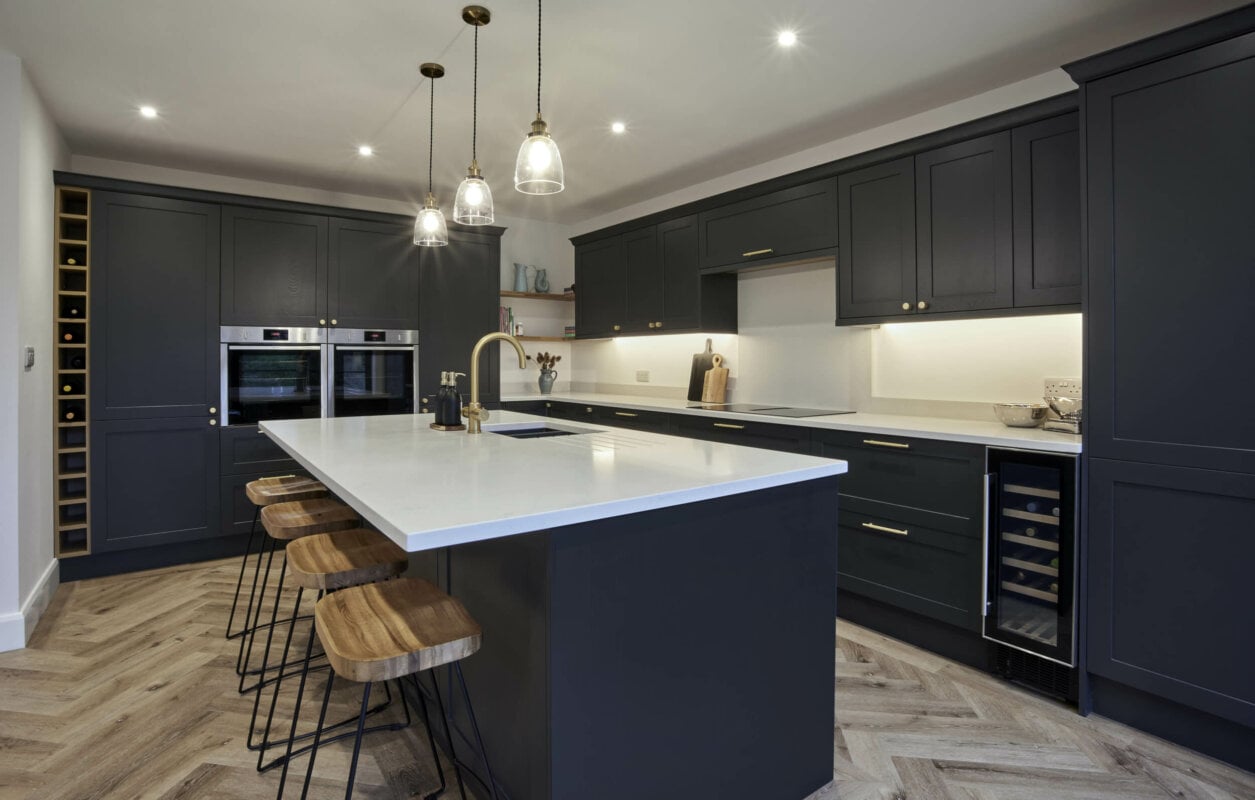
  • Task lighting provides extra light in areas where you need to see clearly. Kitchens can feature under-cabinet LED strips, lighting beneath shelving, directional spotlights over worktops, and lighting integrated into cabinets.
  • Accent lighting, which is there to provide atmosphere. You might want plinth lighting close to the floor, lighting within glass cabinets, shelf lighting, feature pendants or LEDs positioned within display cabinets.

Importantly, each category of kitchen lighting serves a different purpose. 

Ambient lighting removes dark corners and shadows, task lighting makes it easier to read recipe books or chop vegetables, and ambient lighting reflects the style you want your kitchen to have.

How to Make the Most of Natural Light When Designing Kitchen Lighting

The trick in kitchen redesign is to choose artificial lighting that accentuates and enhances natural daylight, rather than serving as an alternative to it.

It’s well worth taking the time to note how the sunlight moves through your kitchen at different times of day, or when it feels darker and shadier.

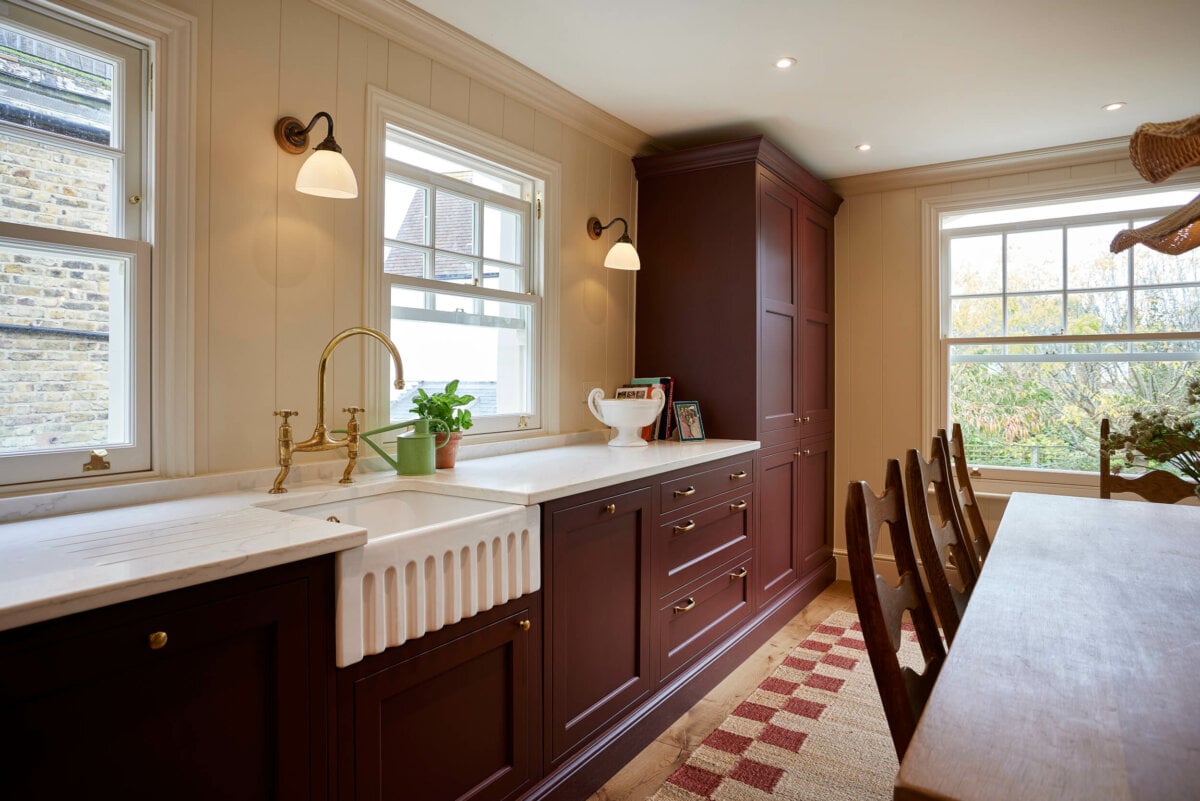
Maximising natural light is always ideal, which could mean ensuring appliances and features don’t obstruct windows, using lighter cabinet colours that reflect sunlight, installing glazed internal doors to allow light to flow through, and choosing window coverings that aren’t too bulky.

Guidance on Choosing Lighting to Complement Your Kitchen Styling

While there isn’t a specific design scheme that matches every type of lighting, there are some well-suited pairs, which we’ve summarised below.

Kitchen Style


Popular Lighting Options


Contemporary kitchens


Slimline spotlights, minimalist pendants and concealed LED strips


Shaker kitchens


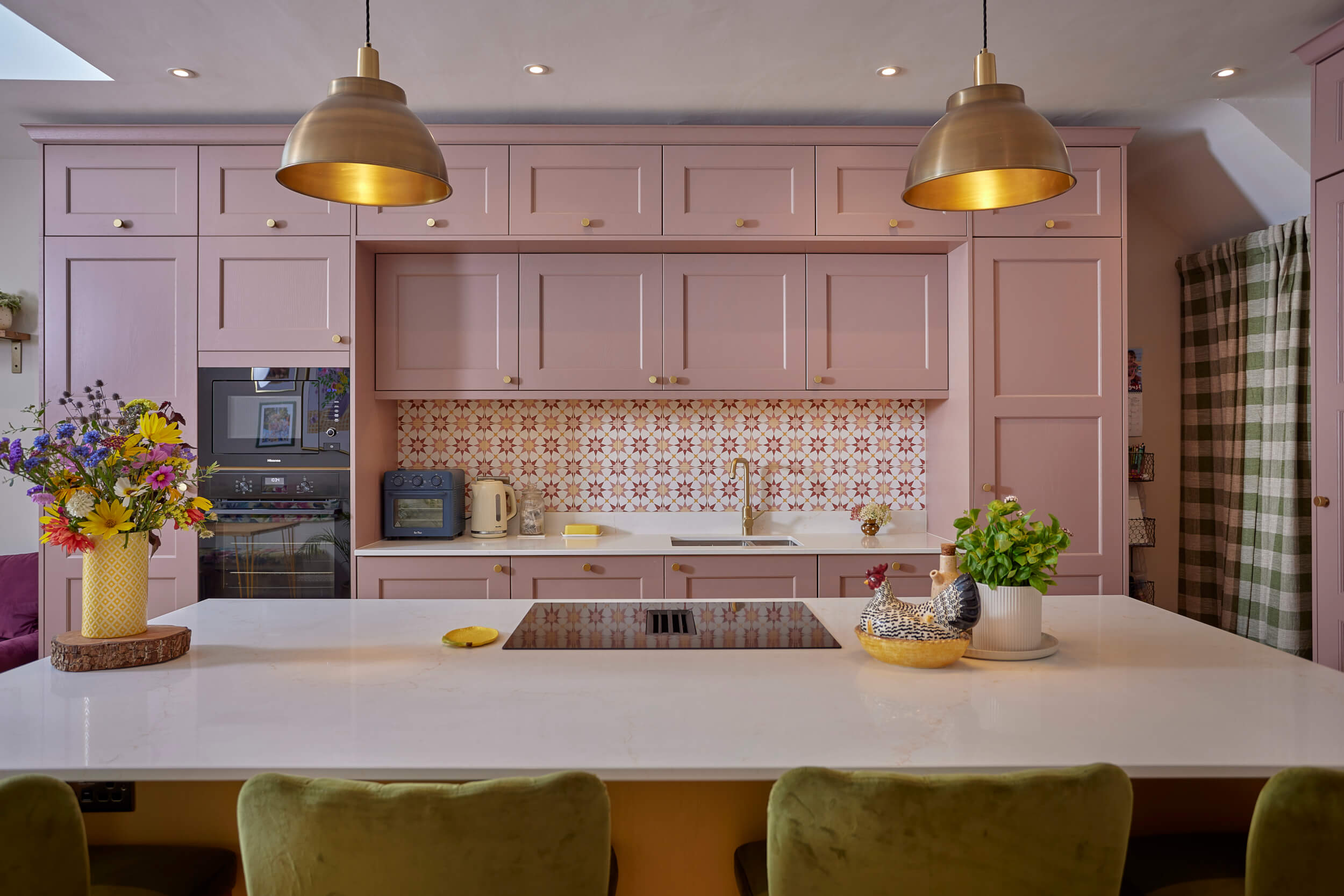
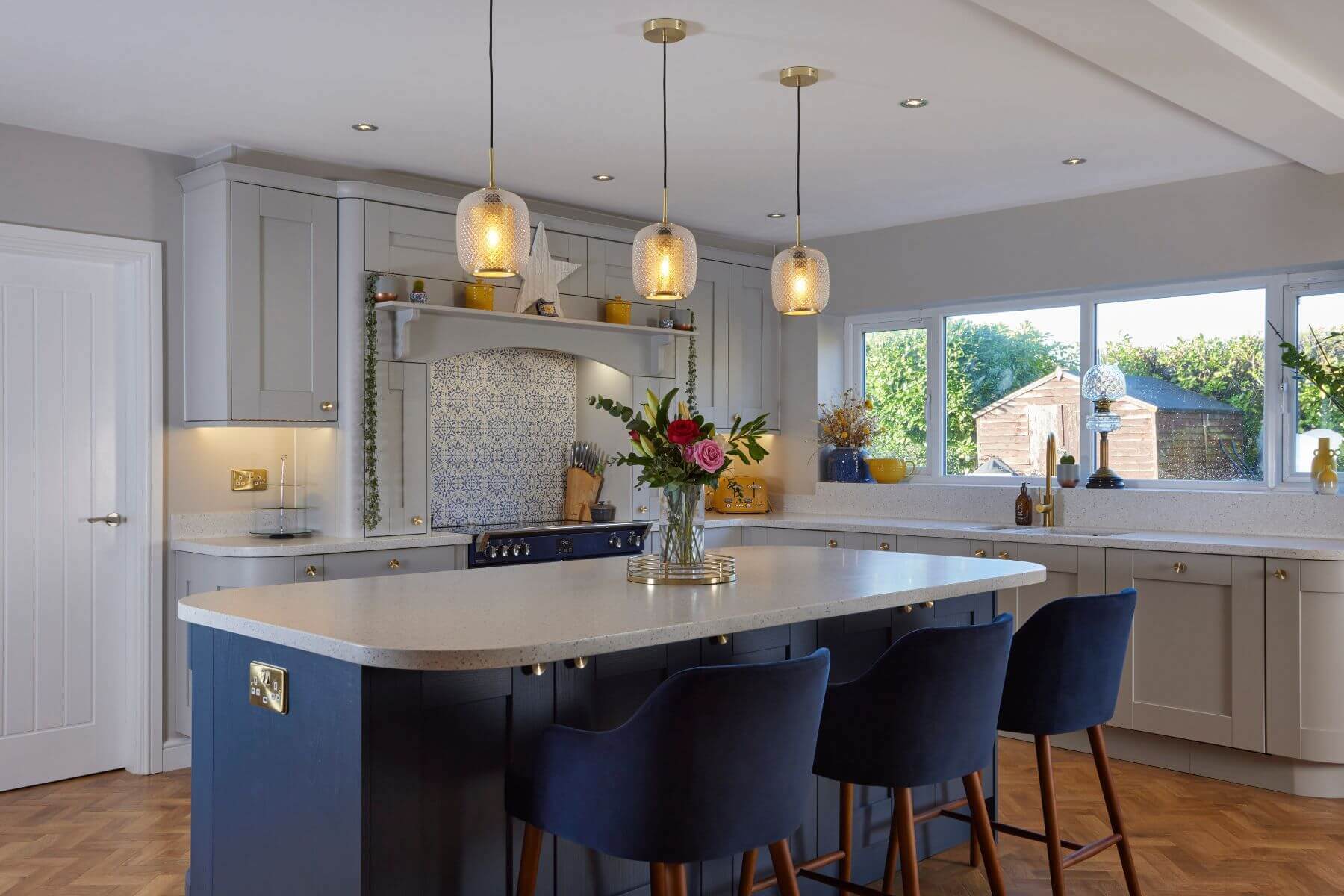
Classic pendant lights, warmer bulb temperatures and soft finishes like brass


Industrial-themed kitchens


Exposed metal pendants and bold, statement lighting


Scandi-inspired kitchens


Natural materials and woods, with warm, subtle illuminations


How Layers of Kitchen Lighting Can Add Design Flair

One of the distinctions between a standard kitchen and one that has been professionally designed is how the latter incorporates several styles and placements of lighting, using multiple smaller light sources rather than one bright overhead light.

There are endless combinations depending on the layout and style of your kitchen, but potential pairings might include:

  • Ceiling spotlights for general lighting
  • Under-cabinet LEDs for worktops where you prepare food
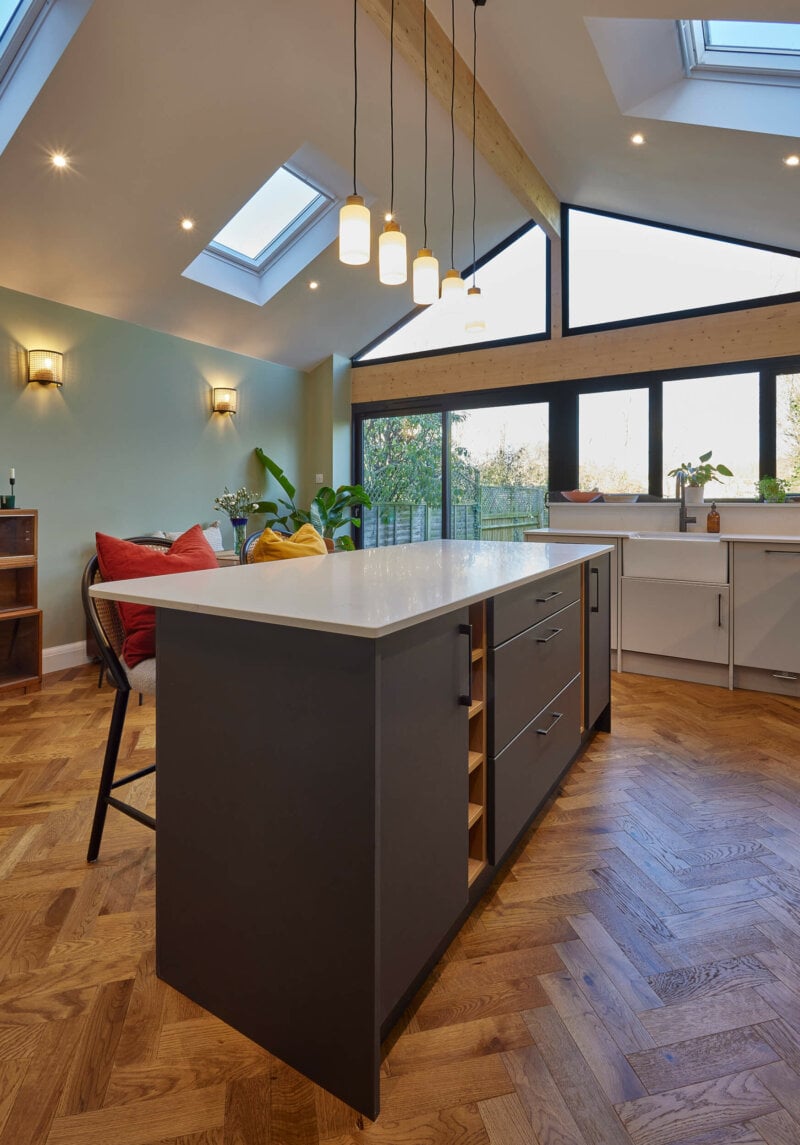
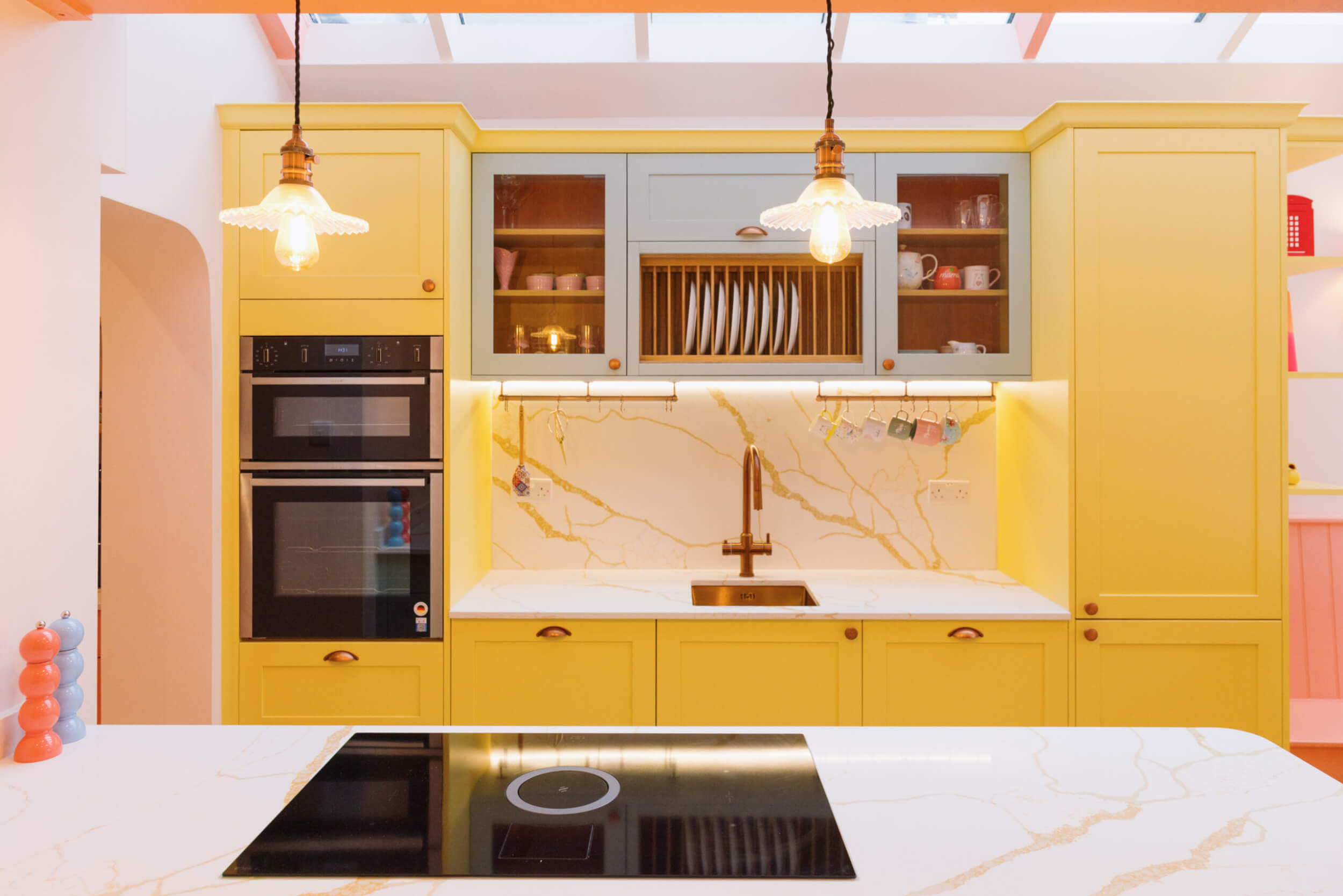
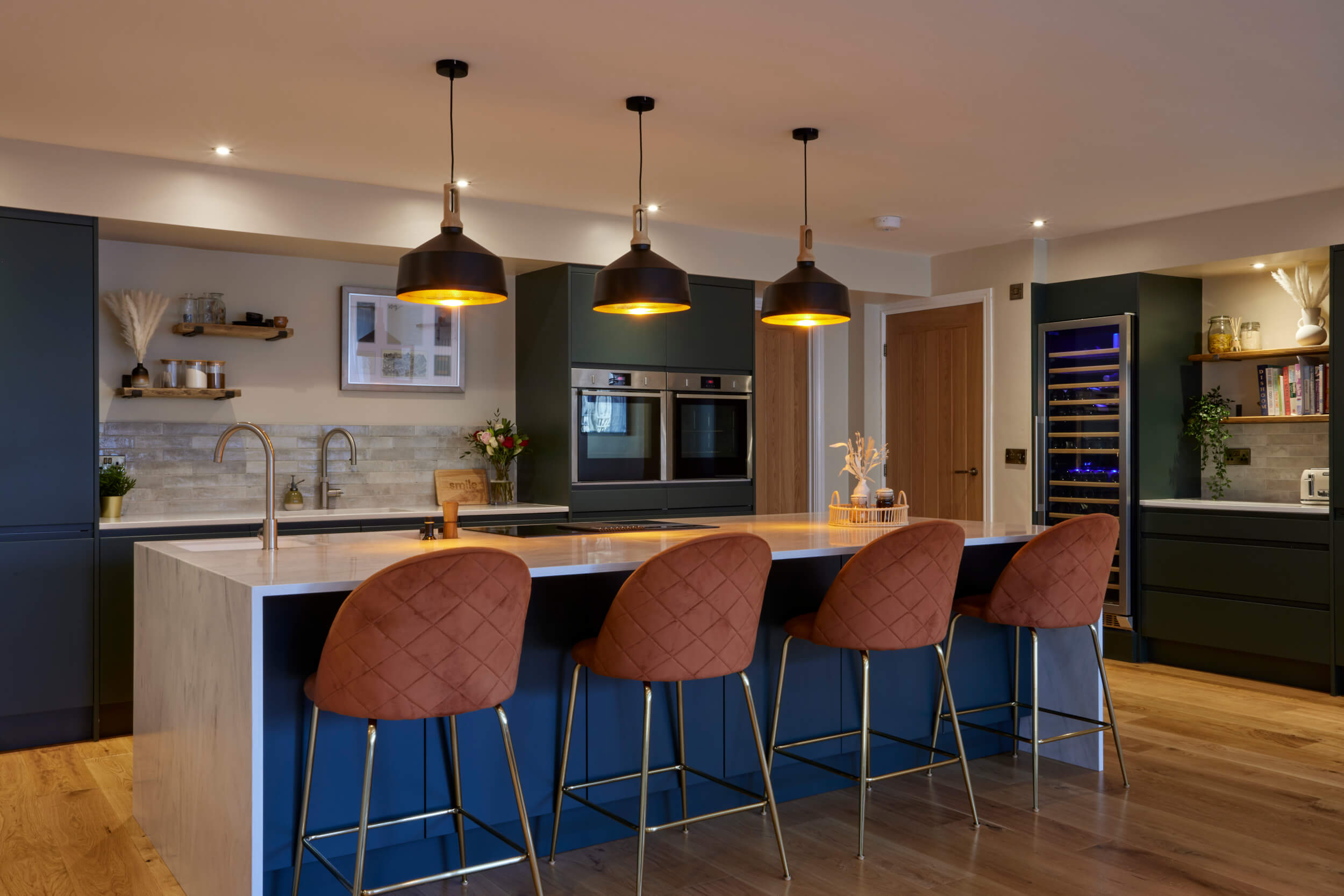
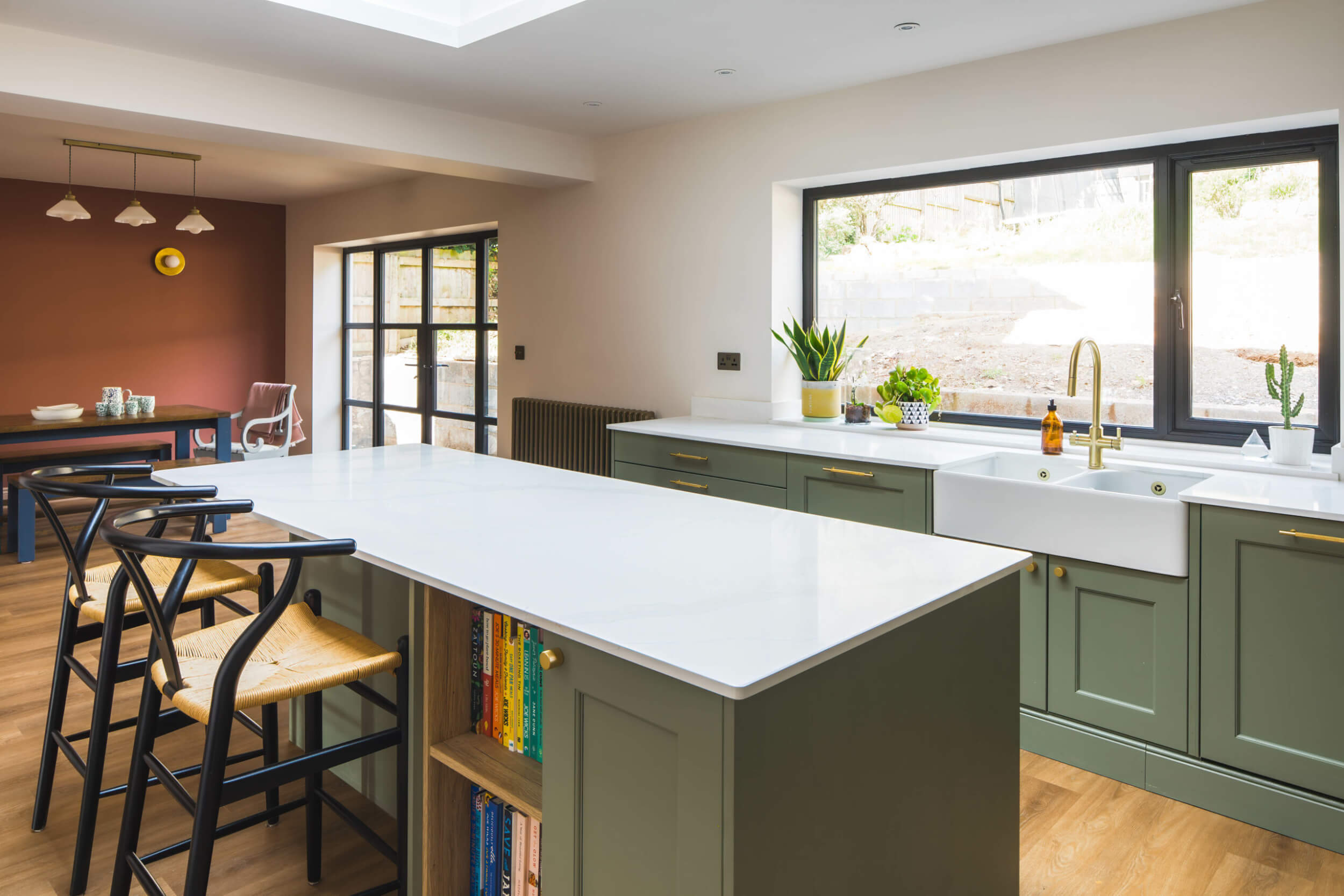
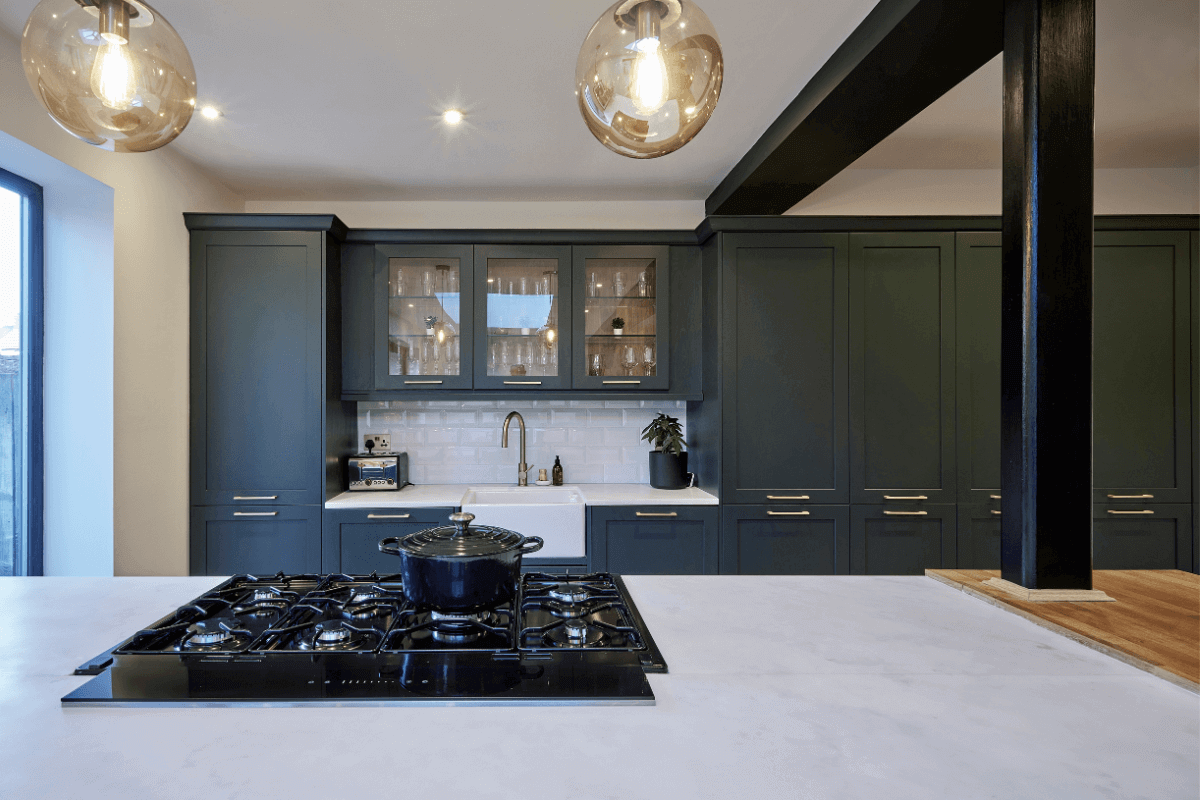
  • Pendant lights installed above an island or dining table
  • Plinth lighting for a softer glow during evening meals and entertaining
  • Internal cabinet lighting to show off glassware 

Essentially, this also means your kitchen is adaptable throughout the day, whether you want bright light for breakfast and packed lunches, soothing lighting for family dinners, or localised lighting for lunches.

It’s important not to forget kitchen islands and breakfast bars, because these features are often focal points and defined eating areas. Adding task lighting or a different set of lights for these specific spaces means they’re likely to be used far more often.

Generally, pendant lights should hang at around 75 to 90 cm above the worktop, which is close enough to provide sufficient lighting but not so close that they create a glare.

l shaped kitchen

Understanding Lighting Colour Temperatures for Kitchens

Picking the brightest possible lights and bulbs isn’t the focus, because the colour of your lights can also make a big impact on how inviting a kitchen feels. While this will depend on aspects like the colour of your flooring, walls, and cabinets, typically:

  • Warmer white is cosier and more inviting
  • Neutral white is balanced for everyday use
  • Cooler white is best for crisp task lighting

Choosing the right colour lighting for each part of your kitchen ensures it won’t feel overly utilitarian and functional, but it also won’t be difficult to use for batch cooking or fine chopping.

The Common Kitchen Lighting Mistakes Homeowners Should Avoid

Even a beautiful kitchen might not come into its own if the lighting isn’t right, and some of the issues our design teams often come across include the following:

  • Having just one ceiling light while other parts of the kitchen are dim
  • Installing worktops without any task lighting
  • Placing pendant lights too low to surfaces and eating areas
  • Choosing a lighting colour that feels too cool to be comfortable
  • Leaving darker corners and cabinets that are always in the shadows
  • Using single-lighting strengths without an adjustable dimmer switch

This is why we always recommend that you plan your lighting around your kitchen design, ensuring you know how each space will look and function before installation.

Want to see how kitchen lighting works? Take a look at our gallery of kitchens, showcasing elegantly planned spaces with the perfect balance of lighting, layout, and functionality.

Red Kitchens

Frequently Asked Questions

What Is the Best Lighting for a Kitchen?

There isn’t a single light placement, colour, or fixture that will be perfect for every kitchen, because these will vary with priorities, style preferences, design themes, and the size of the space. 

However, we often suggest dimmable lighting so you can make your lights brighter or softer, and a mix of the ambient, task, and accent lighting we’ve explained.

Which Lighting Colour Works Most Effectively in Kitchen Designs?

Just like the lighting fixtures you pick during the kitchen design process, the lighting colour should be based on the ambience and look you’d love your kitchen to have, whether warmer or neutral whites for a comfortable, inviting atmosphere or cooler whites for focused food prep areas.

Are Spotlights Better Than Pendant Lights in Kitchens?

Not necessarily, no, because although spotlights are a great way to break up lighting and ensure the light levels are always good, pendants are equally great for feature areas, islands and breakfast bars.

Book a Free Kitchen Design Consultation Explore Smile Kitchens